Posted by: missionventureministries | July 13, 2022

DO NOT BE AFRAID – DO NOT BE DISCOURAGED – Joshua 1:9

Joshua 1 vs 9

Keep this Book of the Law always on your lips; meditate on it day and night, so that you may be careful to do everything written in it. Then you will be prosperous and successful. Have I not commanded you? Be strong and courageous. Do not be afraid; do not be discouraged, for the Lord your God will be with you wherever you go” (Joshua 1:8-9). 

Life can be full of challenges, sorrows, and tough decisions. But even amidst hardship, the Lord counsels us to be strong and courageous. Understanding Joshua 1:9 in the Bible can help us face hard things with faith and confidence. 

God has given us the gift of salvation and assigned a mission for us to accomplish (Matthew 28:19-20), providing us with experiences that will help us carry out our parts of that mission. Along the way, we will have “rivers” to cross; however, because God is with us, we can walk across those rivers with courage and live victoriously, focusing our eyes on Him and the purpose He has for His eternal kingdom. God tells Joshua several times to be strong and courageous. 

If God has called us to lead, it means that He has also given us courage and strength to lead. When God calls us into leadership, He makes us a promise just like He made to Joshua.  He promises to give us everything we need to be successful and to accomplish His will because: “The Lord, He is the One who goes before you. He will be with you, He will not leave you nor forsake you; do not fear nor be dismayed” (Deuteronomy 31:8). 

We need to understand that the right way to lead is to lead by faith.  Hebrews 11:1 tells us that “faith is confidence in what we hope for and assurance about what we do not see.” Then Hebrews 11:6 shows us the importance of faith with this truth, “without faith it is impossible to please God, because anyone who comes to Him must believe that He exists and that He rewards those who earnestly seek Him.” 

Faith is never a risk and certainly not a leap into the unknown. Faith is believing in the promises of God, and it is in this assurance that we gain courage and strength. 

The Lord spelled out what Joshua must do in order to succeed at bringing the people into the Promised Land: “Be careful to do according to all that is written in it” (v. 8). Obedience is of utmost importance because God’s methods won’t always be understood until after there is total obedience. 

When the people approached Jericho, the Lord gave Joshua a very strange command; march around the city once a day for six days, then seven times on the seventh day. Then shout and the walls will fall down (Joshua 6:3-5). 

If Joshua had not followed God’s directions, he would not have succeeded. Like Joshua, we must trust the Lord and courageously obey no matter what He may require of us. 

James tells us that: “If any of you lacks wisdom, you should ask God, who gives generously to all without finding fault, and it will be given to you. But when you ask, you must believe and not doubt,…” (James 1:5–6). And we need to make sure that we are asking in the right spirit as David did: Show me your ways, Lord, teach me your paths (Psalm 25:4), and He will; and as we focus on Him and move forward in obedience, we will be equipped for everything that He calls us to do. 

Remember that part of being strong and of a good courage means trusting in the Lord as our true source of strength. In Joshua’s case, he didn’t have all the answers for the challenges before him. But he was counseled to go forward anyway, acting in faith. Like Joshua, we seldom have all the answers to our personal challenges, but God promises that when we turn to Him for guidance, we will succeed. God is all-powerful and all-knowing. He has the answers and gives us the strength we need to face any challenge before us. He was with Joshua, and God will be with us also as we obey His leadership. 

Whenever you are going through a storm, not only pray that God will deliver you, but also that He will grant you the souls of others with whom you have contact during the storm. He may be taking you through the storm for the very reason that He wants to use you to bring the gospel to others “on board” with you. 

We should be of good courage because God is our protector and defender (Psalm 46:1). We don’t have to be afraid because we are secure in the Father’s love (1 John 4:18). When God is for us, nothing can stand against us (Romans 8:31), and nothing can separate us from His great love (Romans 8:35–39). 

God uses times of turbulence and suffering to strengthen and refine us, so as we follow Joshua’s lead let us serve the Lord (Joshua 24:15), we can be sure that God is working out His purposes for our good and for His glory (Romans 8:28).

*******

DISCLAIMER MVM

Posted by: missionventureministries | July 6, 2022

IN WHOM SHALL WE TRUST? – Psalm 121

Psalm 121

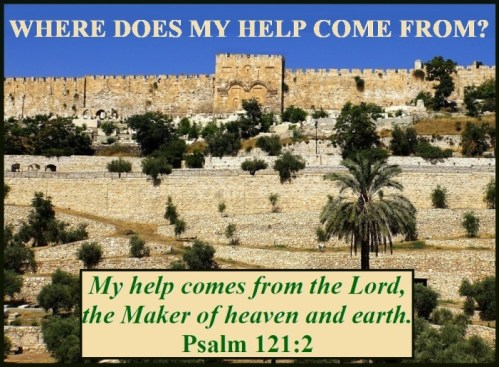
“I will raise my eyes to the mountains; from where will my help come? My help comes from the Lord, Who made heaven and earth.” (Psalm 121:1–2) 

The city of Jerusalem is situated in a mountain range and Jewish tradition claims that God’s people sang these pilgrimage “Songs of Ascent” referring to Psalms 120-134 as they journeyed to the temple for one of the yearly worship festivals. 

This psalm is a general declaration of the worshiper’s trust in God as the guardian and protector of life’s journey. The psalmist trusted that God the Creator was tirelessly watching over him, sleeplessly protecting him. He knew that the help he desired would come from the Lord; therefore, to those who love Him and obey Him, we must also trust the eternal promises of God. 

The Bible is full of incredible promises of help from the Lord for those who hope and trust in Him: “You who fear the Lord, trust in the Lord; He is their help and their shield” (Psalm 115:11). 

In Psalm 23, the Lord is our Shepherd, leading and guiding us through all of life’s hardships and joys. 

In the New Testament, believers in Jesus say, “My help comes from the Lord,” because Christ is their Good Shepherd who lays down His life for the sheep (John 10:11-15). 

God’s watchful eye is always open, looking with love and care upon His people. “He will not allow your foot to slip; He who watches over you will not slumber (Psalm 121:3). When we look to the LORD, we have confidence in the fact that God does not sleep. The idea is so strong that it is repeated again in Psalm 121:4 for “Behold, He who watches over Israel will neither slumber nor sleep.” 

Travelers on their way to Jerusalem to observe annual festivals faced many difficulties. This could include threats from animals or robbers in the hills (Psalm 121:1-2). Danger also came in the form of the burning rays of the blazing sun in the Middle East. 

However, in continuing reassurance the psalmist writes: “The Lord is your protector; the Lord is your shade on your right hand. The sun will not beat down on you by day, nor the moon by night” (Psalm 121:5-6). These verses note God’s provision against these dangers. Like a shepherd and protector, God “watches” His people, representing His divine intervention and protection. 

God’s protection here is symbolized as a shade which blocks the intense rays of the sun. Similarly, the psalmist sates in Psalm 63:7 that “for You have been my help, and in the shadow of Your wings I sing for joy.” Another psalmist states that the “One who dwells in the shelter of the Most High will lodge in the shadow of the Almighty. I will say to the Lord, “My refuge and my fortress, My God, in whom I trust!” (Psalm 91:1-2) and “in the shadow of Your wings I will take refuge until destruction passes by” (Psalm 57:1). 

The “right hand” in Scripture typically implies strength and authority. In the midst of our daily efforts, God provides protection, power, and defense as we go about our lives, as we see when the psalmist continues in the following verse. 

“The Lord will protect you from all evil; He will keep your soul” (Psalm 121:7). This continues the encouraging response stated in verses 3–6 to the psalm’s initial questions in Psalm 121:1-2. A “keeper” is someone who guards, watches, protects and guides someone as we see in Psalm 97:10, “He preserves the souls of His saints; He delivers them out of the hand of the wicked,” which include the thoughts of a watchful guardian. 

And the last verse states: “The Lord will guard your going out and your coming in from this time and forever” (Psalm 121:8). Going out and coming in translates a Hebrew expression referring to daily work and daily activities. Going out referred to a man’s leaving home in the morning to labor and coming in referred to his returning home after work. Throughout all the activities of the day, the believer should be confident of the Lord’s presence and protection. 

No matter what trouble we face in this dark world, God is with us, shining His light into the darkness (John 1:4; 2 Corinthians 4:6) and providing everything we need for life and godliness (2 Peter 1:3). All of our days, He is our Helper and the God who sustains our lives (Psalm 54:4). 

Psalm 121 enlightens us in how God, the all-powerful Creator and ever-present Protector, is the only real and trustworthy source of help for humankind. 

First Peter 3:12 assures us that “the eyes of the Lord are on the righteous, and His ears are open to their prayer.” As we journey through life as pilgrims, we can count on the Lord to watch over us. No struggle comes to us without His awareness or outside of His control (John 16:33). 

So who shall we trust in? “My help comes from the Lord, Who made heaven and earth” (Psalm 121:2). 

*******

DISCLAIMER MVM

Posted by: missionventureministries | June 30, 2022

4th of July Founding Father’s Christian Message

4th of July message 2022

Although our nation is rapidly becoming anti-Christian in belief and practice, we Christians can still best serve our nation and our Savior by practicing and proclaiming Christ’s wonderful saving gospel of free salvation from sin, and regeneration unto righteousness. 

May God bless you as you seek to live a holy life and to do His will.

Fourth of July 2022


Mission Venture Ministries

Anytime, Anything, Anywhere for Jesus, because He is so worthy


Right - Copy

DISCLAIMER MVM

Right - Copy

Posted by: missionventureministries | June 29, 2022

A CLEAR MESSAGE OF SALVATION – John 3:16-18

John 3 vs 16-18

John 3:16-18 gives us the clear message of salvation: “For God so loved the world that he gave his one and only Son, that whoever believes in him shall not perish but have eternal life. For God did not send his Son into the world to condemn the world, but to save the world through him. Whoever believes in him is not condemned, but whoever does not believe stands condemned already because they have not believed in the name of God’s one and only Son.” 

As we read these verses we are made aware that saving faith has three elements: knowledge, conviction, and action. The first component being the knowledge required to believe in Jesus as our Savior. 

Who is Jesus? He is the Son of God. At the request of God the Father, Jesus set aside His divine rights, took on human form, and dwelled on earth (Philippians 2:6-7). 

What did He accomplish? To be acceptable to God, sacrifices had to be made according to Leviticus 22:20, the offering must be without defect. Jesus lived a perfect life, which qualified Him to be our substitute, bearing God’s judgment for our sins. And thus through His death on the cross, the believer is forgiven for their transgressions and has peace with God. 

Why did He have to die? We can not save ourselves, since even our best deeds are stained by sin (Isaiah 1:18). When we accept Christ’s atoning work on our behalf, we become a member of His family and are no longer enemies of God. 

Many people know that they are sinners and in need of God’s forgiveness and that only Jesus can save them; but knowledge alone does not bring salvation, since even the demons understood that Jesus was the Son of God (Luke 4:41). Salvation therefore requires knowledge, conviction, and action. 

Knowing that God loves us is a wonderful reality, but often this important truth becomes simply information and loses the power to transform lives unless we make a daily practice of receiving God’s unconditional love and letting it change us. Jesus said: “I am the vine; you are the branches. If you remain in me and I in you, you will bear much fruit; apart from me you can do nothing” (John 15:5). 

We need to understand that God is love, and He is both everlasting and unchanging. His unconditional commitment to us comes from who He is, to those who trust in Him, as Isaiah writes: “I will not forget you. Behold, I have inscribed you on the palms of My hands” (Isaiah 49:15-16). 

In His grace, God freely gives salvation to those who believe in Jesus. We can’t earn it, nor do we deserve it. He however promises, “I will instruct you and teach you in the way which you should go; I will advise you with My eye upon you” (Psalm 32:8). 

When we heed God’s call, we can exclaim as David did: “My soul waits in silence for God alone; from Him comes my salvation” (Psalm 62:1). 

Our heavenly Father knows when we live according to His will, and He promises to reward us according to what we have done for Him once we accept Him as our Savior and make Him the Lord of our life. 

Revelation 22:12 says, “Behold, I am coming quickly, and My reward is with Me, to reward each one as his work deserves.” Yes, Jesus will reward the believers in heaven and that will be glorious but there are many blessings that we can experience now. For example, there’s a profound sense of fulfillment when we lead a person to Jesus and teach them how to walk by faith. 

Whether the service done in Jesus’ name is large or small, it will be blessed; but we must be careful and mindful that our actions and motives are for Christ’s glory and not self-serving, since all praise and honor belong to God.

*******

DISCLAIMER MVM


Posted by: missionventureministries | June 22, 2022

A MESSAGE FOR TODAY – Psalm 1:1–2

Psalm 1 vs 1-2

“Blessed is the one who does not walk in step with the wicked or stand in the way that sinners take or sit in the company of mockers, but whose delight is in the law of the Lord,  and who meditates on His law day and night” (Psalm 1:1–2) 

The blessed person “does not walk in step with the wicked.” The “wicked” are ungodly people, sinners, and those characterized by not following or obeying God. 

To not walk in the counsel of the ungodly means to reject any advice from these people. It includes avoiding any influence that might direct one’s way of life toward doing ungodly things. Walking involves progress; as a result the verse instructs us to, “not walk in step with the wicked or stand in the way that sinners take or sit in the company of mockers.” 

The apostle Paul warned, “Do not be misled: ‘Bad company corrupts good character’” (1 Corinthians 15:33). And Proverbs 22:24-25 cautions us to “not make friends with a hot-tempered person, do not associate with one easily angered, or you may learn their ways and get yourself ensnared.” 

A Christian cannot expect to make godly progress if they seek counsel from sinners or make plans with unbelievers: Therefore, “do not be yoked together with unbelievers. For what do righteousness and wickedness have in common? Or what fellowship can light have with darkness?” (2 Corinthians 6:14). 

The reason is that the person who chooses the righteous way of life avoids thinking like the ungodly, behaving like the wicked, associating with the godless and doing things that will damn them to an eternity apart from God. Instead, they will “walk with the wise and become wise, for a companion of fools suffers harm” (Proverbs 13:20). 

A believer who chooses not to walk in the counsel of the ungodly will apply biblical truth to their daily life, letting God’s Word be a lamp to guide their feet and a light for their path (Psalm 119:105). Their “delight is in the law of the Lord,” and they “meditates on His law day and night,” (Psalm 1:2). Such a person will grow in faith and spiritual maturity since “faith comes from hearing the message, and the message is heard through the word about Christ” (Romans 10:17). 

God blesses the steps of the righteous because they “fear the Lord and delight in obeying His commands” (Psalm 112:1). Rather than taking pleasure in sin and the things of the world, they live clean lives as children of God, shining like bright lights in a world full of crooked and perverse people (Philippians 2:15). 

The Bible tells us that loving God and obeying His Word will result in abundant blessings because “blessed rather are those who hear the word of God and obey it” (Luke 11:28). And as we read the Scriptures daily, study them, memorize them, and meditate on them many times during the night and day, our thinking changes, and we no longer love the world or the things in it and no longer walk in the counsel of the ungodly. We no longer imitate the behavior of this world; instead, God transforms us by changing how we think. Then we can experience God’s good, pleasing, and perfect will for us (Romans 12:2). 

People who walk in the counsel of the ungodly listen to worldly advice, make plans with the wicked, and willfully participate in a sinful way of life. Romans 8:5–7 describes these people as “Those who live according to the flesh have their minds set on what the flesh desires; but those who live in accordance with the Spirit have their minds set on what the Spirit desires. The mind governed by the flesh is death, but the mind governed by the Spirit is life and peace. The mind governed by the flesh is hostile to God; it does not submit to God’s law, nor can it do so.” 

God however calls His children to choose the way of righteousness – to be set apart and to be holy. He calls us out of darkness to walk in His light (1 Peter 1:15–16; 2:9). That is the path to the blessings of life and peace. 

God helps us in our weakness by giving us His Holy Spirit who reveals the mind of Christ to us and enables us to carry out His will (1 Corinthians 2:14-16; Philippians 2:13). On the other hand, when we suppress the work of the Holy Spirit by rebelling against His will for us, we stifle the design of God, sabotage our own spiritual growth, and grieve the Holy Spirit (Ephesians 4:30).

If God was gracious enough to redeem us from sin and death and give us new life in Christ, the very least we can do is offer our lives back to Him in complete surrender and holiness, which is for our benefit (Deuteronomy 10:13). Because of God’s mercies, we should be living sacrifices, “holy and pleasing to God” (Romans 12:1). 

For the Christian, the choice is clear. To avoid worldliness, we must mature in the faith, growing up in all things in Christ so that we are no longer spiritual infants, tossed about by the lies of the world (Ephesians 4:14-15). We must come to know the difference between the wisdom of God and the foolishness of worldly wisdom, and that is only achieved by careful and diligent study of the Word, seeking God’s wisdom in prayer (James 1:5), and enjoying the fellowship of other mature believers who can encourage us to reject worldliness and embrace godliness. 

Remember that “God did not call us to be impure, but to live a holy life” (1 Thessalonians 4:7). He wants us to live a decent life and follow the path of good, which is the one He determined for us. But He gives us free will so that we can do what we want; therefore, impurity is still a possible way. However, it is a path that we should avoid. We should honor the life that God has given us and always seek to live according to His will because, one day, in heaven, we will be free from sin and all its effects. Until then, we “fix our eyes on Jesus, the author and perfecter of our faith” (Hebrews 12:2) and keep running our race by listening and being obedient to our Lord. 

*******

DISCLAIMER MVM

1 John 4 vs 1-3

Dear friends, do not believe every spirit, but test the spirits to see whether they are from God, because many false prophets have gone out into the world. This is how you can recognize the Spirit of God: Every spirit that acknowledges that Jesus Christ has come in the flesh is from God, but every spirit that does not acknowledge Jesus is not from God. This is the spirit of the antichrist, which you have heard is coming and even now is already in the world. (1 John 4:1-3) 

Believers must be discerning in spiritual matters, so how will they accomplish this? 

First we need to understand the meaning of discernment since biblically it means having the ability to properly make determinations of what we are presented with, applying God’ wisdom given to us thru His word.  

From the day that Satan deceived Eve in the garden, until the last days, when the final antichrist will deceive the world (2 Thessalonians 2:3-12), evil spirits have promoted false teaching to lead people away from being true to God. When John says, “Many false prophets have gone out into the world,” we need to realize that these were outwardly normal looking people who didn’t appear evil or satanic. 

Many false prophets use Christian lingo and even profess to believe in Jesus. They have a charismatic personality and make convincing arguments. Jesus called them ravenous wolves in sheep’s clothing (Matthew 7:15). Paul warned that such people are false apostles, deceitful workers, masquerading as apostles of Christ. And no wonder, for Satan himself masquerades as an angel of light (2 Corinthians 11:13-14). 

We need spiritual discernment because Satan and his forces are alive and working, promoting falsehood at every opportunity. So, how do we test the spirits? 

John clarifies this for us by telling us that there are two spirits: 

  • God’s Spirit, which is called the Spirit of Truth because it inspires truth (vv. 4:2, 6); and
  • The spirit of antichrist, which promulgates falsehood, and does not acknowledge the Lordship of Jesus Christ (vv. 3, 6). 

And he warns us how important it is to understand that we cannot believe everyone we hear and that we cannot believe everything that is alleged to come from God, but like the Bereans we need to check the Scriptures (Acts 17:11). We are to test the spirits, to discern whether a message is the truth that comes from God. Therefore, we are not to just accept what some teacher or preacher is saying; we are to examine what is being taught by the word of God.

We know that God speaks and reveals truth, and the enemy speaks lies and is a deceiver, therefore it is very critical that we be able to discern the difference. If information comes from the Holy Spirit it is life-giving, life-sustaining, life-producing and God-glorifying. If it is not sent and energized by the Holy Spirit, it comes from seducing spirits or false prophets, because many false prophets have gone out into the world. This was and continues being a huge problem and those without discernment have been and are continually being victimized. 

It is very sad when we discover that many so called “religious leaders” are false teachers and people are having a hard time finding a church where the Word of God is being taught accurately and faithfully. 

Unfortunately there are many churches that claim and appear to be “Christian churches” but are not teaching the word of God. Meaning, they are downplaying or removing altogether the doctrines of sin, repentance, the Trinity, salvation by grace alone through faith in the finished work of Jesus Christ, and the deity of Jesus Christ, and replacing them by more “seeker sensitive ideas.” 

The Bible teaches that, “The time will come when men will not put up with sound doctrine. Instead, to suit their own desires, they will gather around them a great number of teachers to say what their itching ears want to hear – (2 Timothy 4:3). These false teachers are teaching their followers doctrines and practices that are not in harmony with God’s word, like the “contemplative prayer” and the “labyrinth prayers” which are actually taken from “New Age and Hindu practices” which are being introduced and accepted by many churches that are moving towards the Emergent Church movement today.

These teachers are hypocritical liars and are teaching doctrines of demons motivated by seducing spirits. This is an enourmous problem for those that are uninformed and the world is literally drowning in a sea of demonic lies. We live in a time when we must be so close to the Fahter and ask Him to fill us daily with His Spirit of discernment.

John continues giving instructions on how to know the Spirit of God: “By this you know the Spirit of God: Every spirit that confesses that Jesus Christ has come in the flesh is from God.” When someone comes and affirms that Jesus Christ is God in flesh that is the divine truth taught by the Holy Spirit. But every spirit that does not acknowledge Jesus is not from God. This is the spirit of the antichrist, which you have heard is coming and even now is already in the world.” False teachers deny the deity of Jesus Christ and therefore as believers and students of the Bible we recognize them as being controlled by the devil and his lies. So: “Who is the liar? It is whoever denies that Jesus is the Christ. Such a person is the antichrist—denying the Father and the Son” (1 John 2:22).

The false teacher does not believe that Jesus Christ is the Savior of the world. He may accept Jesus Christ as a great teacher and a great religious leader, perhaps the greatest, but he does not believe that Jesus Christ is the Savior and the only way to God, when Jesus says that: “I am the way and the truth and the life. No one comes to the Father except through me” (John 14:6). The false teacher believes there are other ways to God. Therefore, beware!

The spirit of the antichrist was very much alive in John’s days and today our enemy the devil prowls around like a roaring lion looking for someone to devour (1 Peter 5:8). When we think of the antichrist, we think of some future person, the beast of Revelation. However, all teaching that presents untruth about Christ have the spirit of antichrist which has been in the world for nearly 2000 years and is yet to come in its final terrifying satanic form.

Before we accept any teaching, we need to be sure of the person’s view of Christ, their view of salvation, and their view of Scripture. Do they acknowledge that: “All Scripture is God-breathed and is useful for teaching, rebuking, correcting and training in righteousness”? (2 Timothy 3:16). Do they manifest a regenerate life? Do they submit to the Word of God? Since “by this we know the Spirit of truth and the spirit of error” (1 John 4:6).

Paul and John gave significant attention to protecting believers from false teaching, as they knew of the existence of influential false teachers. Paul warns Timothy to be on guard against falsehood (1 Timothy 6:20; 2 Timothy 4:15). John warns his readers to be on guard against idols (1 John 5:21). Peter adds that believers should be on guard so they are not carried away by error (2 Peter 3:17). 

Testing everything and holding fast to what is good (1 Thessalonians 5:21) remains an important discipline for every believer, in all eras of their life. And in order to do this, a Christian must “be diligent to present yourself approved to God, a worker who does not need to be ashamed, rightly dividing the word of truth” (2 Timothy 2:15).

*******

DISCLAIMER MVM

Posted by: missionventureministries | June 8, 2022

I AM HAPPY THAT GOD CREATED ME TO BE A GIRL

I AM GLAD GOD MAKE ME TO BE A GIRL

I AM HAPPY THAT GOD CREATED ME TO BE A GIRL


*******

DISCLAIMER MVM

Posted by: missionventureministries | June 8, 2022

I AM HAPPY THAT GOD CREATED ME TO BE A BOY

I AM GLAD THAT GOD MADE ME A BOY

I AM HAPPY THAT GOD CREATED ME TO BE A BOY

*******

DISCLAIMER MVM

Posted by: missionventureministries | June 8, 2022

HIDDEN FAULTS VS PRESUMPTUOUS SINS – Psalm 19:12-13

Psalm 19 vs 12-13

“Who can discern his errors? Declare me innocent from hidden faults. Keep back your servant also from presumptuous sins; let them not have dominion over me! Then I shall be blameless, and innocent of great transgression.” (Psalm 19:12-13) 

David, the author of this psalm voices his frustration at his inability to apply his life totally in accordance with God’s revealed plan. He recognizes and asks for God’s forgiveness for his failure and asks for strength to avoid habitual sin patterns and willful rejection of God’s commandments. 

“Hidden faults” are sins committed in ignorance or without knowledge. It is therefore important to be as specific as we possibly can when we seek God’s forgiveness; since sin creates a barrier between us and God. 

When Jesus began His ministry, His first words were, “The time has come. The kingdom of God is near. Repent and believe the good news!” (Mark 1:15). And what is the good news? “For God so loved the world that He gave His one and only Son, that whoever believes in Him shall not perish but have eternal life” (John 3:16). 

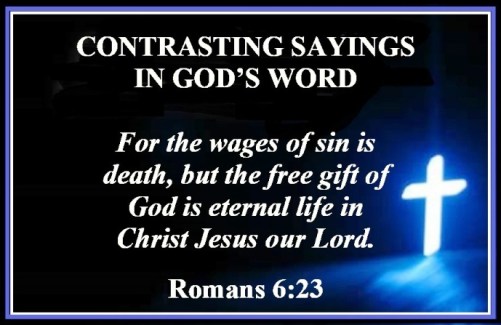
We know that the consequence of sin is death, as Scripture teaches us, “For the wages of sin is death, but the free gift of God is eternal life in Christ Jesus our Lord” (Romans 6:23). 

Leviticus 5:17-19 speaks of individuals committing unintentional hidden sins of “ignorance”. Unintentional hidden sins are spoken of by David in Psalm 19:12: “Who can understand his errors? Cleanse me from secret faults.” Our hidden sins may be obvious to people who know us, but they are hidden from our awareness, so if we have someone that loves us and we can trust, we should ask them if they see any hidden sins in us so that we can make it right with God and those who we probably are offending. 

The consequence of habitually suppressing the truth results in God giving the sinner over to “the sinful desires of their hearts” , “shameful lusts” and “a depraved mind” (Romans 1:24, 26, 28). This means that God may allow the sinner to serve as his own god and to reap the destruction of his body and soul. It is a fearful thing to be “given over” to our own destructive ways as Hebrews 10:31 tells us: “It is a fearful thing to fall into the hands of the living God.” 

God has made it clear that “the soul who sins will die” (Ezekiel 18:4). Those who habitually live their lives outside of Christ, yet have been convicted by the gospel of Christ, should follow the example of the first converts of the church: “They were cut to the heart and said to Peter and the other apostles, ‘Brothers, what shall we do?’” The answer was simple yet profound: “Repent!” (Acts 2:37-38). 

David committed a presumptuous sin when he committed adultery with Bathsheba and she became pregnant. Then he had her husband killed to cover up his sin (2 Samuel 11). 

In Numbers 15, the law outlined the actions to be taken for sins knowingly committed. “But the person who does anything presumptuously . . . brings reproach on the Lord, and he shall be cut off from among his people. Because he has despised the word of the Lord, and has broken His commandment, that person shall be completely cut off; his guilt shall be upon him” (Numbers 15:30–31). 

Presumptuous sins are deliberate. They are committed with the full knowledge that they are sins and in full awareness of what God has said we are not to do. Presumptuous sins are premeditated, and the intent to sin is intensely deliberated before the act. Presumptuous sins can only be committed when the conscience is suppressed and a person willfully does it and nothing is going to stop them, they just go and do it. 

In other words, presumptuous sin is committed in direct contradiction to what a person knows is true. That is why David prays, “Keep back your servant also from presumptuous sins; let them not have dominion over me!” (Psalm 19:13). 

Unless we ask God to restrain us our heart it might fill with a proud and insolent contempt against God. Therefore, like David we should humbly ask God for protection from both kinds of sins. May our Lord grant us wisdom to recognize defiance within us and give us strength to resist our human tendency to sin. 

Consequently if we are prone to sin we should learn to pray as David did in Psalm 139:23- 24: “Search me, O God, and know my heart; try me, and know my anxieties; and see if there is any wicked way in me, and lead me in the way everlasting.” 

And Hebrews 5:12-14 shows us that the more we know God’s written Word, the easier we will be able to distinguish good and evil in our lives. Therefore, “as obedient children, do not conform to the evil desires you had when you lived in ignorance. But just as He who called you is holy, so be holy in all you do; for it is written: “Be holy, because I am holy” (1 Peter 1:14-16). 

*******

DISCLAIMER MVM

Hebrews 12 vs 14

As obedient children, do not conform to the evil desires you had when you lived in ignorance. But just as He who called you is holy, so be holy in all you do; for it is written: “Be holy, because I am Holy.” (1 Peter 1:14-16) 

The apostle Peter instructed believers to live as God’s obedient children, because Scriptures says, you must be holy because I am holy (1 Peter 1:14–16). Once we are saved, we strive not to slip back into our old ways of living but pursue a lifelong endeavor toward personal holiness. 

God’s holiness is a critical aspect of His character. He not only desires, He commands that His people seek after His holiness “I am the Lord your God; consecrate yourselves and be holy, because I am holy” (Leviticus 11:44). Seeking after a lifestyle that reflects God’s holiness is so very important that we see the writer of Hebrews urge Christians to “make every effort to live in peace with everyone and to be holy; without holiness no one will see the Lord” (Hebrews 12:14). 

The affirmation ‘without holiness no one will see the Lord’ reflects a sense of seeing Christ at His return, like 1 John 3:2 states: “Dear friends, now we are children of God, and what we will be has not yet been made known. But we know that when Christ appears, we shall be like Him, for we shall see Him as He is.” If our ultimate goal is to be like Christ and see Him when He returns, our daily pursuit must be toward complete purity of speech, thought and lifestyle. 

Another reminder of not being able to see the Lord unless we are holy is where Paul writes to the church Ephesus: “For of this you can be sure: No immoral, impure or greedy person—such a person is an idolater—has any inheritance in the kingdom of Christ and of God” (Ephesians 5:5). 

John wrote that in the future, glorious New Jerusalem, “Nothing impure will ever enter it, nor will anyone who does what is shameful or deceitful, but only those whose names are written in the Lamb’s book of life” (Revelation 21:27). 

In His Sermon on the Mount, Jesus said, “Blessed are the pure in heart, for they will see God” (Matthew 5:8). People who desire to live in close fellowship with the Lord and see Him face to face must turn away from self-seeking desires and unholy attitudes. They must “seek first His kingdom and His righteousness” (Matthew 6:33). 

Those who are truly born again, are the temple of the living God (2 Corinthians 6:16-18). In light of this revelation, and, “since we have these promises, dear friends, let us purify ourselves from everything that contaminates body and spirit, perfecting holiness out of reverence for God” (2 Corinthians 7:1). 

And Paul told Timothy, “Therefore, if anyone cleanses himself from these things, he will be an implement for honor, sanctified, useful to the Master, prepared for every good work” (2 Timothy 2:21). 

It’s vital to understand that, Christ has perfected for all time those who are sanctified (Hebrews 10:14) and made us holy through Christ’s finished work, the offering of His body on the cross (Hebrews 10:10). We are saved by Jesus “to a holy calling, not because of our works but because of his own purpose and grace, which he gave us in Christ Jesus before the ages began” (2 Timothy 1:9). 

And “He saved us, not on the basis of deeds which we did in righteousness, but in accordance with His mercy, by the washing of regeneration and renewing by the Holy Spirit” (Titus 3:5). 

Therefore, motivated by the knowledge that “without holiness no one will see the Lord,” we should desire and continuously strive “to put on the new self, which in the likeness of God has been created in righteousness and holiness of the truth” (Ephesians 4:24). 

So, how can we become holy? Holiness only results from a right relationship with God by believing in Jesus Christ as Savior, repenting of our sin and accepting His free gift of eternal life. If we have not placed our faith in God’s Son alone to save us from our sins, then our pursuit of holiness is in vain. So, we must first make sure that we are born-again believers (please read John 3:1-21). 

Then, if we truly are believers, we recognize that our position in Christ automatically sets us apart from the world (1 Peter 2:9); and once we are God’s children, we have a relationship with the living God! Therefore, we must live a set-apart life, not trying to “blend in” with the world, but instead living according to God’s Word as we study Scripture and grow in it. 

*******

DISCLAIMER MVM

« Newer Posts - Older Posts »

Categories