Posted by: missionventureministries | July 4, 2019

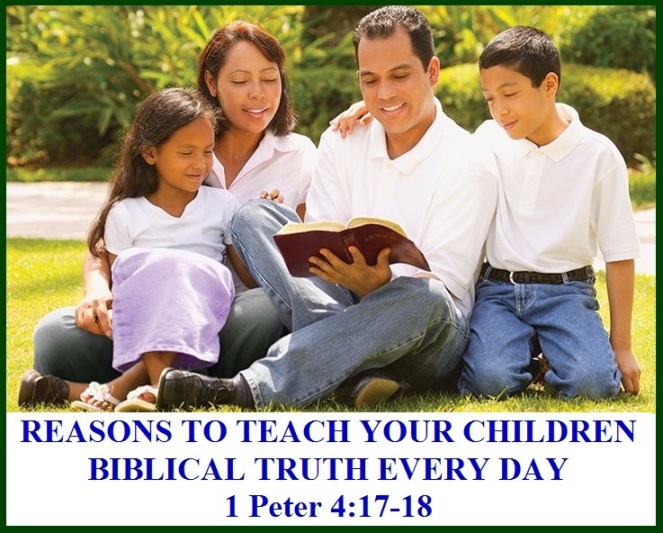
WHAT IS THE OUTCOME OF THOSE WHO DO NOT OBEY GOD? – 1 Peter 4:17-18

It is time for judgment to begin with God’s household; and if it begins with us, what will the outcome be for those who do not obey the gospel of God? And, “If it is hard for the righteous to be saved, what will become of the ungodly and the sinner?” (1 Peter 4:17-18) 

As we get familiar with God’s word, we see that judgment is a recurring theme throughout the Bible. God’s plan includes a final judgment on the wicked and all who reject the sacrifice of Jesus Christ as payment for their sins (Hebrews 10:26–27). As we read 1 Peter 4:17 we see that God’s judgment begins at the household of God and that Christians face God’s judgment, too: “For it is time for judgment to begin at the household of God; and if it begins with us, what will be the outcome for those who do not obey the gospel of God?”

As we look at this verse, Peter is urging the church—the house of God—which was facing persecution, to persevere. The believers were also struggling to separate from the former worldly sins that had once enslaved them:  Therefore, since Christ suffered in his body, arm yourselves also with the same attitude, because whoever suffers in the body is done with sin. As a result, they do not live the rest of their earthly lives for evil human desires, but rather for the will of God. For you have spent enough time in the past doing what pagans choose to do—living in debauchery, lust, drunkenness, orgies, carousing and detestable idolatry. They are surprised that you do not join them in their reckless, wild living, and they heap abuse on you” (verses 1–4). Peter reminds them that the wicked will face God’s judgment and that they will have to give account to Him who is ready to judge the living and the dead (verse 5) but that believers in Christ must hold themselves to a higher standard than they once did. The “fiery trials” that they were facing were to help refine them like gold (verse 12).

God allows difficulties and suffering in the lives of His people to purify them. When we are persecuted for the cause of Christ, we share in His sufferings as Peter writes in verses 13–14: But rejoice inasmuch as you participate in the sufferings of Christ, so that you may be overjoyed when his glory is revealed. If you are insulted because of the name of Christ, you are blessed, for the Spirit of glory and of God rests on you. And when we share His suffering, is because we want to know Him better (Philippians 3:10). Paul also repeats this same theme in Romans 8:17: “Now if we are children, then we are heirs—heirs of God and co-heirs with Christ, if indeed we share in His sufferings in order that we may also share in His glory.” Part of God’s judgment upon sin is physical suffering. When His children experience such suffering, it is not to harm us, but to make us more like Christ. “Judgment” for the children of God can be considered discipline (Hebrews 12:4–11), and is designed to purge the sin from our life and teach us obedience.

A loving father does not discipline other kids, because they are not his. A father disciplines his own children. Likewise, the discipline of our heavenly Father begins at His own household, with His own children, the church. He is reserving for the wicked an ultimate, final judgment that His children will never experience (Romans 8:1). Scripture makes a distinction between God’s purifying discipline of the church and His ultimate condemnation of the wicked: “Nevertheless, when we are judged in this way by the Lord, we are being disciplined so that we will not be finally condemned with the world” (1 Corinthians 11:32).

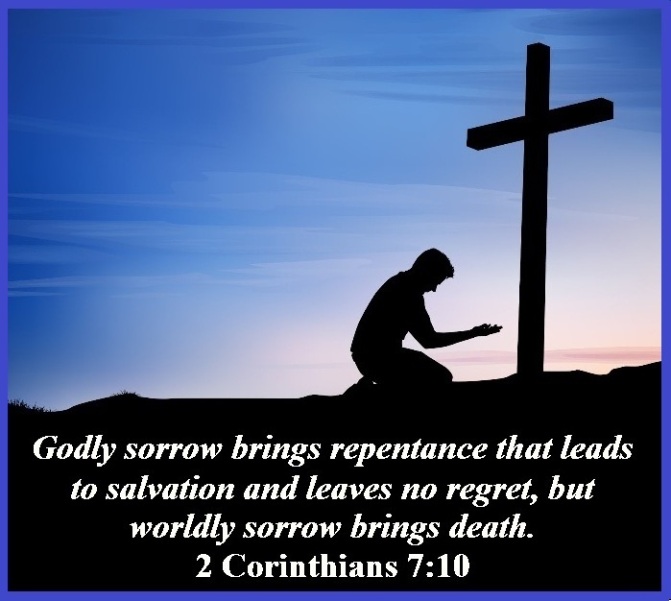
In this present age, God allows painful circumstances in the lives of His own household, not to condemn but to mature, convict, and bring repentance (2 Corinthians 7:10). Through suffering we learn patience (James 1:2–4). This kind of judgment is to encourage us to abandon selfishness and draw nearer to Him (James 4:8). The ultimate, final judgment for unbelievers will be eternal separation from God, from life, and from all that is good and pure (Matthew 8:11–12; Revelation 21:8).

The judgment that begins at the household of God also includes church discipline. Church discipline is not for unbelievers but for believers: “What business is it of mine to judge those outside the church? Are you not to judge those inside?” (1 Corinthians 5:12). Believers are commanded to take responsibility for other followers of Christ who may be wavering and headed toward sin (James 5:20). And many pastors and church leaders need to also be disciplined.

First Corinthians 5:11–13 commands us to avoid fellowship with anyone claiming to be a brother or sister in Christ but who insists on maintaining a sinful lifestyle. Jesus lays out the process for church discipline in Matthew 18:15–17. Someone who has been confronted multiple times and warned that the choices he is making are in opposition to God needs to repent. If he refuses to listen to the church, we are to turn away from him in the hope that this drastic action will bring about repentance. As believers, we are to pursue holiness and encourage each other to pursue it, too (1 Peter 1:15–16).

In verse 18, Peter seems to be quoting from Proverbs 11:31 – If the righteous receive their due on earth, how much more the ungodly and the sinner! And reinforces the point that if the justified sinner is saved only with great difficulty, suffering, pain and loss what will be the end of the ungodly?

The shallow professing, so-called Christian thinks how much sin can I get by with and not be judged? While a true born again Christian longs to honor Jesus in everything that they say and do and they want Jesus to be the center of attention, every moment that they live.

As we see, God’s desire is that His people learn to walk in holiness and fellowship with Him (Romans 8:29). As any loving parent would do, God will bring unpleasant consequences upon His children for rebellion. He expects the ones He has redeemed by the blood of His Son to set the example for the rest of the world. If the church is not in pursuit of holiness, the world sees no need to change their life style; therefore, judgment begins in the household of God, with His own children, as He teaches us to live like Christ.

*******

Posted by: missionventureministries | June 26, 2019

GUARD YOURSELVES FROM IDOLS – 1 John 5:21

The apostle John writes: “Dear children, guard yourselves from idols.” 1 John 5:21

According to the Webster dictionary, the definition of idolatry is “the worship of idols or excessive devotion to, or reverence for some person or thing.” An idol is anything that replaces the one, true God. Whatever we treasure more than God, whatever drives our thoughts and actions, becomes an idol, and these idols dull our heart and turn us away from God.

Idolatry extends beyond the worship of images and false gods. It is a matter of the heart, associated with pride, self-centeredness, greed, gluttony and love for possessions. Jesus said: “No one can serve two masters. Either you will hate the one and love the other, or you will be devoted to the one and despise the other. You cannot serve both God and money” (Matthew 6:24).

Since an idol can be anything that takes the place of God as the most important focus and priority in our life, let’s take a look at some things that are or can become idols in our life.

PRIDE by definition is an excessively high opinion of oneself. This results in that the status of the person; their needs, desires, greatness and public image are his main interest and concern, regardless of how it affects others.

Proud people think that they are important or superior because of whom they are, what they have, or what they have done. Pride is when we take the credit for our accomplishments and forget that God is the One who has given us our ability. God hates this kind of pride and sooner or later there will be consequences as we see what happened to king Nebuchadnezzar in Daniel 4:28-37.

If we don’t recognize that pride is an idol and a constant temptation and do not repent of it, we will not grow spiritually to the measure God wants for us. “This is what the Lord says: Let not the wise boast of their wisdom or the strong boast of their strength or the rich boast of their riches, but let the one who boasts boast about this: that they have the understanding to know me, that I am the Lord, who exercises kindness, justice and righteousness on earth, for in these I delight, declares the Lord” (Jeremiah 9:23-24).

SELFISHNESS comes from the world, the flesh, and the devil, and greatly impedes our spiritual growth because the whole emphasis of Scripture is on our relationships to God and to others.

The desire to be first; the longing to have the most are not the characteristics of a person under the control of the Holy Spirit; in fact, the opposite is true. Scripture tells us, “If you harbor bitter envy and selfish ambition in your hearts, do not boast about it or deny the truth. Such “wisdom” does not come down from heaven but is earthly, unspiritual and demonic. For where you have envy and selfish ambition, there you find disorder and every evil practice” (James 3:14-16).

Only through surrender to our Father can we break free from the idol of self and selfishness and in so doing, find the freedom to be all that God created us to be; men and women of purpose designed to glorify our Creator God.

GREED could be described as an unquenchable desire to have more money or possessions for self-gratification, while ignoring God, eternity and the need of others. Paul states “the love of money is a root of all sorts of evil” (1 Timothy 6:10).

Greed puts a wrong value on temporal things. It treats temporal things as if they, and we, will endure on earth forever. But, in fact, we could die today or all our possessions could be taken from us instantly, as we read in the biblical example in parable of the rich fool in Luke 12:13-21.

SELF-CENTEREDNESS, a self-centered person is excessively concerned with themselves and their own needs. They are selfish and tend to ignore the needs of others and only do what’s best for them.

Jesus addresses the very core of the sin of self-centeredness with this clear declaration: “Whoever wants to be my disciple must deny themselves and take up their cross and follow me” (Matthew 16:24). To deny oneself means letting go the material things that are used to gratify self. To deny oneself is to let go of selfish desires and earthly security and focus instead on the interests of God (Matthew 6:33); it literally means to turn from self-centeredness to God-centeredness where self is no longer in charge and God is, with Christ ruling our hearts.

We all have a tendency toward self-centeredness which is another idol worship practice. The question is, which will we allow to have control of our lives; the flesh or the Spirit? (Romans 13:14; 1 Peter 2:11; 1 John 2:15-16)

GLUTTONY Eating and drinking are not contrary to God’s will. However, the purpose that drives our desire to eat and drink can be. If we are eating and drinking excessively for the purpose of escaping hardships in life, we are gluttons. We should not substitute eating and drinking for dependence on God to sustain us through times of trouble. The purpose of eating and drinking is to sustain our bodies and not to make food or drink an idol that subdues our senses.

God has blessed us by filling the earth with foods that are delicious, nutritious, and pleasurable. We should honor God’s creation by enjoying these foods and by eating them in appropriate quantities. God calls us to control our appetites, rather than allowing them to control us. The Scriptures warns us that “their end is destruction, their god is their belly, and they glory in their shame, with minds set on earthly things” (Philippians 3:19).

LOVE OF POSSESSIONS – The Bible is clear about material possessions.  If they are a higher priority in our life then God is; we need to repent!  God gives us blessings so that we can be a blessing to others, not to maintain a luxurious lifestyle to benefit our greed. 

We need to be reminded that life is not about the here and now, but about eternity.  We can’t take our things to Heaven, but we can definitely use them to benefit others while we are still living.  Jesus said: “For what will it profit a man if he gains the whole world and forfeits his soul? Or what shall a man give in return for his soul?” (Matthew 16:26)

And on another occasion He warned us: “Do not lay up for yourselves treasures on earth, where moth and rust destroy and where thieves break in and steal, but lay up for yourselves treasures in heaven, where neither moth nor rust destroys and where thieves do not break in and steal. For where your treasure is, there your heart will be also” (Matthew 6:19-21).

Idols are not only made out of material things like stone, wood, etc. People that don’t know the word of God make people their god also, like worshiping their leaders, musicians and performers. In the Bible we see where people tried to make a god, an idol out of Herod; and God killed Herod with a very shameful and painful death right in front of them. God showed these wicked, idol worshippers how stupid they were, because “on the appointed day Herod, wearing his royal robes, sat on his throne and delivered a public address to the people.  They shouted, “This is the voice of a god, not of a man.” Immediately, because Herod did not give praise to God, an angel of the Lord struck him down, and he was eaten by worms and died. But the word of God continued to spread and flourish” (Acts 12:21-24).

Our hearts and minds must be centered on God and on having a kind heart towards others. This is why when asked what the greatest commandment is, Jesus replied, “you shall love the Lord your God with all your heart, with all your soul, and with all your mind.’ This is the first and great commandment. And the second is like it: ‘You shall love your neighbor as yourself’” (Matthew 22:37-39). When we love the Lord and others with everything that is in us, there will be no room in our hearts for idolatry.

“Therefore, my dear friends, flee from idolatry”

1 Corinthians 10:14

*******

Posted by: missionventureministries | June 20, 2019

FOR A FATHER TO THINK ABOUT – Proverbs 17:6

“Grandchildren are the crown of old men, and the glory of children are their fathers.” (Proverbs 17:6) 

A good father is one who provides and is always there when the child needs him. 1 Timothy 5:8 tells us “…if anyone does not provide for his own, and especially for those of his household, he has denied the faith and is worse than an unbeliever.”

We live in a day in which many men have abandoned their responsibility of providing for their wives and children. But being a good father is more than just bringing home a paycheck and meeting the physical needs of your children. It’s not enough to just be a good father according to the world’s standards; because, they also need to be the spiritual leaders in their homes.

Currently we are suffering from a lack of “fatherhood” in the world. Fathers are abdicating their responsibilities and leaving children to be reared solely by their mother, grandmother, relative, or the state system. And while these do their best, a dad cannot be replaced.

The Bible teaches that, “the glory of children are their fathers,” however, this does not happen automatically. It requires a father who looks at his responsibility to lead his family and who seeks to fulfill that responsibility not for just a day, or a week, or a year; but seeks to do his best before God throughout his life.

The Bible tells us that men should bring up their children “in the training and instruction of the Lord” (Ephesians 6:4) and the warning is to “not embitter your children, or they will become discouraged” (Colossians 3:21). Biblical messages to fathers frequently reflect the very real societal need for family discipline and godly leadership in the home; “train up a child in the way he should go, and when he is old he will not depart from it” (Proverbs 22:6). Remembering that correction is good and will bring a child to their senses by removing their foolish thoughts (Proverbs 22:15). Every parent who loves their children establishes rules. We need to teach our children that there are boundaries, rules and regulations.

When a father establishes boundaries his child’s character is strengthened. Our children need to know there is a difference between what the world says is okay and what God says is okay. They need to know that there is an omnipotent, omniscient, omnipresent, unchanging God who has given us a standard of conduct to live by. The Bible teaches that keeping God’s commandments and standards invites God’s blessings and that violating them invites His discipline.

Although this verse certainly implies godly leadership, the immediate focus is on the children. We are told that children, receive “glory” from their fathers! So how is this to come about?

When this verse speaks about glory, in the biblical sense, it centers on the value, the worthiness, or the reputation of the person. For instance, the Scripture teaches that the Lord Jesus “shall come in the glory of his Father” (Matthew 16:27; Mark 8:38), and that the reputation of God the Father was conferred on Christ Jesus: “For He received from God the Father honor and glory” (2 Peter 1:17).

So, fathers need to learn this critical principle. Your reputation is reflected onto your children. Your behavior in the workplace is assumed to be an indicator of your children’s potential. What you say or do in moments of unguarded or uncontrolled passion will pass on to your children; for good or bad. The common saying “like father, like son” is recognized across time and culture as an accurate measure of human existence.

We also need to remember that the old saying that actions speak louder than words is so true when it comes to teaching our children. The example we live has much more influence on them than anything we could ever say. Children learn by what they see their parents doing.

The Lord warns that “the iniquity of the fathers” will be passed “upon the children’s children, unto the third and to the fourth generation” (Exodus 34:7). Would it not be far better that children receive glory from your righteous life than shame from your iniquity? (Psalm 89:45)

So let us follow the beautiful example the Bible gives to us in Deuteronomy 6:5-9 “You shall love the Lord your God with all your heart, with all your soul, and with all your strength. “And these words which I command you today shall be in your heart. You shall teach them diligently to your children, and shall talk of them when you sit in your house, when you walk by the way, when you lie down, and when you rise up. You shall bind them as a sign on your hand, and they shall be as frontlets between your eyes. You shall write them on the doorposts of your house and on your gates.”

*******

Posted by: missionventureministries | June 13, 2019

WHAT HAPPENS AFTER DEATH? – John 5:24-29

“Most assuredly, I say to you, he who hears My word and believes in Him who sent Me has everlasting life, and shall not come into judgment, but has passed from death into life. Most assuredly, I say to you, the hour is coming, and now is, when the dead will hear the voice of the Son of God; and those who hear will live. For as the Father has life in Himself, so He has granted the Son to have life in Himself, and has given Him authority to execute judgment also, because He is the Son of Man. Do not marvel at this; for the hour is coming in which all who are in the graves will hear His voice  and come forth—those who have done good, to the resurrection of life, and those who have done evil, to the resurrection of condemnation. (John 5:24-29) 

What happens when you die depends on what happens before you die. The Bible categorizes the human race into two categories, the saved and the lost. The saved are those who have trusted Jesus Christ as their Lord and Savior, while the lost are the ones who haven’t trusted in Him; and what happens to the saved is radically different from what happens to the lost. 

The Bible is abundantly clear on this subject that when the saved person dies, their soul goes directly into the presence of the Lord. This contradicts the teaching called “soul-sleep,” which implies that at death a believer “sleeps” in a kind of suspended animation until the day of the resurrection.  

Jesus told the thief on the cross, “I tell you the truth, today you will be with me in paradise” (Luke 23:43). The repentant thief passed from life into the realm called “paradise.” How could the thief be that very day in paradise as Jesus told him, if his soul went to sleep when he died? The apostle Paul wrote: “To be absent from the body is to be present with the Lord” (2 Corinthians 5:8); therefore, at the moment of death the believer’s soul passes immediately into the presence of Jesus Christ.  

We also need to understand that the Bible uses the term “sleep” to describe death only in the case of true believers, and never for non-Christians as we read in a couple of Old and New Testament examples in 1 Kings 2:10 and John 11:11.  

Paul tells us: “I pray God your whole spirit and soul and body be preserved blameless unto the coming of our Lord Jesus Christ” (1 Thessalonians 5:23). 

So as we see, mankind is composed of body, soul, and spirit, and the three are not the same.  

  • The body is purely physical and will pass on someday but while in this life it is the temple of the Holy Spirit (1 Corinthians 6:19), for the believer.
  • The soul is the animate life, or the seat of the senses, desires, affections, and appetites; and will live after death in one place or another, meaning heaven or hell.
  • The spirit is that part of us that connects, or refuses to connect, to God. Our spirit relate to His Spirit, either accepting His promptings and conviction, thereby proving that we belong to Him (Romans 8:16) or resisting Him and proving that we do not have spiritual life (Acts 7:51).

Now that we have clarified the composition of man, let us focus on the aspects of physical death, spiritual death and eternal or second death. 

Physical death is “separation” of the immaterial part of a person from the material part of a person.  Ecclesiastes 12:7 tells us that “the dust will return to the earth as it was, and the spirit will return to God who gave it.” 

Death is not a cessation of consciousness (e.g. “soul-sleep”). However, the Bible describes physical death for the believer as “those who are asleep” (1 Thessalonians 4:13‑14), referring to the body, not the soul. As an analogy, in physical sleep there is a temporary cessation of physical activity, but not spirit‑soul activity; and the finality for physical death will be a physical resurrection as stated in 1 Corinthians 15:52 for the believer and for  the unbeliever in Revelation 20:11-15. 

Spiritual death on the other hand is separation from God. “Do not fear those who kill the body but are unable to kill the soul; but rather fear Him who is able to destroy both soul and body in hell” (Matthew 10:28). 

In Genesis 2:17 God warned Adam that, on the day that he disobeyed the commandment, he would surely die. Obviously, Adam did not die physically the day he sinned, but he did die spiritually. Their nature had become contrary to God’s nature, because it had fallen. And because it was fallen, it could no longer share the same level of fellowship that it had before the fall. As a result, all the descendants of Adam are born spiritually dead, because; “the person without the Spirit does not accept the things that come from the Spirit of God but considers them foolishness, and cannot understand them because they are discerned only through the Spirit” (1 Corinthians 2:14). Although the “natural man” may not feel spiritually dead, he is; and the remedy for spiritual death is to be made alive by faith in the Messiah (John 5:24; Ephesians 2:5; Colossians 2:13).  

Eternal death or the second death as mentioned in (Revelation 20:14, 21:8) is a separation from God in eternity (Matthew 25:41; 2 Thessalonians 1:9; Revelation 14:11) and it is permanent. This type of death is a result of not believing in Jesus Christ as one’s Savior (John 3:17-18; John 8:24; Acts 4:12). The place of eternal death or the second death, the place where the unbelievers will be for eternity is the Lake of Fire (Revelation 20:11-15; 21:8). 

To summarize: For the believer in Jesus Christ, the Bible tells us that after death believers’ souls are taken to heaven, because their sins have been forgiven by having received Christ as Savior (John 3:16, 18, 36). And at the resurrection of the believers, their physical body is resurrected, glorified, and then reunited with their soul. This reunited and glorified body-soul-spirit will be the possession of believers for eternity in the new heavens and new earth (Revelation 21-22). 

Conversely, for those who do not receive Jesus Christ as Savior, death means everlasting punishment. Revelation 20:11-15 describes all the unbelieving dead being resurrected, judged at the Great White Throne, and then being cast into the Lake of Fire.  

Please give this some serious thought, because, physical death is not the end of the road. For the believer, it is the doorway to heaven. For the unbeliever, however, it is the beginning of a passageway into unimaginable suffering. These are all biblical truth, even if you don’t believe them. Therefore, be ready to make your choice while you can, so you won’t be surprised by what happens next. 

If you would like to know about how to be saved click on this link; ABOUT SALVATION and remember that every second that we live is precious; “we have only one life that soon will pass, only what’s done for Christ will last.”

*******

Posted by: missionventureministries | June 6, 2019

A BIBLICAL UNDERSTANDING ABOUT SPEAKING IN TONGUES – Acts 2:11

“We hear them declaring the wonders of God in our own tongues!” (Acts 2:11)

Let us start by first clarifying that the gift of speaking in tongues in the New Testament occurred 2000 years ago when a Christian was given the gift by the Holy Spirit to speak a language he did not know in order to teach someone the gospel of Jesus Christ, (1 Corinthians 14:6).

The gift of tongues was present for only a while, because the Scripture tells us that “as for tongues, they will cease” (1 Corinthians 13:8). However, if the gift of speaking in tongues were active in the church today, it would be performed in agreement with Scripture. It would be a real and intelligible language (1 Corinthians 14:10). It would be for the purpose of communicating God’s Word to a person of another language (Acts 2:6–12), and it would be done “in a fitting and orderly way” (1 Corinthians 14:40), “for God is not a God of disorder but of peace—as in all the congregations of the Lord’s people” (1 Corinthians 14:33). 

Sadly, due to pride, like in the church of Corinth, a phenomenon referred to glossolalia or “ecstatic utterances,” which means making unintelligible sounds while in a state of ecstasy, is occurring in a number of churches today.  

Please understand that glossolalia is babbling in a nonexistent language, while xenoglossia is a supernatural ability to speak fluently a language the speaker has never learned. In contrast to speaking a real language, studies have shown that glossolalia is a learned behavior.  

There are basically two aspects to glossolalia. First, it equates to making ecstatic sounds, which practically everyone is able to do or mimic, and is an easy learned behavior. The other aspect of glossolalia is ecstasy or the demonstration of trance-like elation, which is very dangerous. Sadly many have been taught and believe that the chief purpose of the gift of speaking in unintelligible ecstasy or glossolalia is to manifest the Holy Spirit who is being poured out upon them just as it happened on the day of Pentecost. To think in this way is to slap the face of Jesus who sent us the Holy Spirit to guide us. Instead some choose to mock Him with this kind of performance; or maybe they do not realize that they are being dominated by a demon. 

Please read the Scriptures for yourself and do not be mislead by so many false prophets of today, remember Jesus warned us of them in (Matthew 7:15; Matthew 24:24). 

We receive the Holy Spirit through faith in the Lord Jesus Christ. When we believe that He died for our sins and that He was raised from the dead, at that moment we are born again. At that same moment we receive the Holy Spirit “For we were all baptized by one Spirit so as to form one body” (1Corinthians 12:13). 

Simply put, there is a tremendous difference between what happened in Acts 2 and the practice of glossolalia in the church of Corinth and many churches today. 

Let me explain that glossolalia is a phenomenon of psychiatry and language studies, generally linked to situations of religious fervor, in which the individual believes to express himself in a language unknown to him, and non-existent, but which he considers to be of divine origin; however, these speeches are characterized by repetition of the sound chain, with no systematic meaning and still with rare predictable language units, and the speaker is unable to repeat any of the pronouncements already pronounced, unless they were practiced beforehand by the desire to speak in an unknown languages. 

Paul made it perfectly clear that the chief purpose of the gift of speaking in tongues (understandable languages) was to be a sign for those who did not believe and to spread the good news, the gospel of Christ with others (1 Corinthians 14:19, 22). You don’t do this with ecstatic speech, yelling, confusion and falling on the floor like a drunken person out of their mind.

Remember that it is dangerous to seek something that God is not giving, because you’re wide open to Satan’s counterfeit. Research has been completed where 50 supposed tongue speakers were speaking in unknown tongues, the interviewers demanded that the speakers identify themselves; 95% of the speakers were identified as a demon manifesting itself, the other 5% were mentally unstable people.

In Corinth, the counterfeit practices of heathenism had taken over the church. Sadly, the same thing is happening today. Ecstatic, feeling-oriented experiences are never associated in the New Testament with the true work of the Holy Spirit, never! Paul says: “But everything should be done in a fitting and orderly way” (1 Corinthians 14:40).  It’s not the Holy Spirit’s way to have a worship service where everybody jumps up and starts praying in unknown tongues, rolling on the floor, laughing uncontrollably, barking like dogs and having a total chaotic state. Beware; this kind of behavior is nothing more than the confusion of paganism that has engulfed the church and Satan and his demons are rejoicing over this kind of performance.

When we read the Bible, it offers no evidence that Jesus ever spoke in tongues. If Christ were going to speak in tongues, it would have been reasonable by the logic of some of today’s false teachers, for Him to do so at His baptism when “the Holy Spirit descended on Him like a dove” (Mark 1:10). However, as we continue reading verse 11, the Father spoke from heaven in words that all could understand, and we have no record of Jesus ever speaking in tongues.

We do however have record of Jesus speaking in Aramaic, the common language spoken in Israel at that time (Mark 5:41 and Acts 26:14), besides His native language of Hebrew.  

The first occurrence of the true speaking in tongues occurred on the day of Pentecost in Acts 2:1-4. When this happened, the apostles went out and shared the gospel with the crowds, speaking to them in their own language: “We hear them declaring the wonders of God in our own tongues!” (Acts 2:11). The Greek word translated tongues literally means “languages.”

According to the apostle Paul, and in agreement with the tongues described in Acts, speaking in understandable tongues is valuable to the one hearing God’s message in his or her own language, but it is useless to everyone else unless it is interpreted or translated.

The apostle Paul who spoke several languages explained it this way: “But in the church I had rather speak five words with my understanding, that by my voice I might teach others also, than ten thousand words in an unknown tongue” (1 Corinthians 14:19). Meaning, if he spoke, Latin, Greek, Aramaic and Hebrew to name a few, why would he speak Hebrew to his Latin speaking audience in Rome? 

Mission Venture Ministries has been gifted by God to teach, interpret and translate in more than one language. So to explain further, if you would read our weekly post in a language other than the one you understand what good would it do? It would just be gibberish and you wouldn’t gain anything from it.

Remember, that if the gift of speaking in tongues were active in the church today, it would be performed in agreement with Scripture. It would be a real and intelligible language because: “Unless you speak intelligible words with your tongue, how will anyone know what you are saying? You will just be speaking into the air. Undoubtedly there are all sorts of languages in the world, yet none of them is without meaning. If then I do not grasp the meaning of what someone is saying, I am a foreigner to the speaker, and the speaker is a foreigner to me” (1 Corinthians 14:9-11).

God most definitely can give a person the gift of learning to speak in different languages to enable him or her to communicate with others and to share the gospel.

Just imagine how much more productive missionaries could be if they did not have to go to school to learn a foreign language, and were instantly able to speak to people in their own language. However, today the speaking in tongues does not occur in the manner it did in the New Testament, despite the fact that it would be immensely useful if it were so.

As we have learned so far, the gift of tongues at the time of the apostles was the supernatural ability to speak a foreign language that the speaker had never learned. We see this gift in use in Acts 2:4–12, as the Jews in Jerusalem heard the gospel preached in a wide variety of languages.  

The goal was that all could understand and benefit from the truth being spoken. According to the apostle Paul, and in agreement with the tongues described in Acts, the gift of tongues was meant to communicate God’s message directly to another person in his or her native language. Of course, if those present could not understand the language being spoken, the tongues were useless—and that’s what made the interpreter, necessary; because, the goal was the edification of the church (1 Corinthians 14:5).

One of the problems in the Corinthian church was that people who spoke gibberish interrupted during the service, drawing attention to themselves, but their words made no sense because no one could understand them. This was very frightening, presumptuous and disrupting to those that were there to learn. 

Paul told the Corinthians that, if two or three real tongues-speakers wanted to speak in a meeting, then a spiritually gifted interpreter must also be present. In fact, “if there is no interpreter, the speaker should keep quiet in the church and speak to himself and to God” (1 Corinthians 14:28). 

It is unfortunate that many today see “glossolalia or ecstatic utterances” as a form of supernatural discourse that comes from God, when it is a lie of the enemy and an offense to God.

Many church goers have been taught that a person has to learn to speak in tongues to prove that they are really saved. Then, after studying Paul’s letters and the scriptural teaching concerning the cessation of the gift of tongues, they ask, “What should I do now?” Simply: Stop! Stop babbling because this does not come from the Holy Spirit.

There are many warnings in the Bible, and this is one of them that gives us a lot to think about. In Matthew 7:22-23 Jesus said: “Many will say to me on that day, ‘Lord, Lord, did we not prophesy in your name and in your name drive out demons and in your name perform many miracles?’ Then I will tell them plainly, ‘I never knew you. Away from me, you evildoers!’”

They were falsely prophesying in Jesus’ name, they had not cast out demons, because demons do not cast out demons and they were lying when they claimed to have done miracles in His name. That is why it is so important that our faith is based on the Word of God and that we only do the will of the Father who is in heaven.

Blessed are the pure in heart: for they shall see God.

Matthew 5:8

*******

Posted by: missionventureministries | May 30, 2019

JESUS CAME TO SEEK AND TO SAVE THE LOST – Luke 19:10

“For the Son of Man came to seek and to save the lost.”  (Luke 19:10) 

Jesus is stating this, in response to the crowd, which where grumbling that He had gone to be the guest of a man who was a sinner, the chief tax collector, Zaccheus. They did not understand that this was the reason He had come to earth to seek and to save the lost. 

Tax collectors were not popular; they were looked upon as the scum of the earth. They served Rome for personal gain and took unfair advantage of their own countrymen. Zaccheus was not just a tax collector, but a chief tax collector, which made people despise the man even more.  

In light of the public hatred of tax collectors, Jesus picked Levi or Matthew as one of His twelve apostles! This shows Jesus’ love for the lost and the transforming power of His saving grace.  

God was definitely tugging at Zaccheus heart to fight the crowds and finally to climb into that tree so that he could see Jesus. He probably had heard that this Teacher had chosen a tax collector named Levi, to be one of His disciples, and that Jesus socialized with notorious sinners. Perhaps his guilty conscience nagged him, and he thought, “Maybe Jesus could forgive my sins.”  

Jesus Himself plainly taught, “No one can come to Me, unless the Father who sent Me draws him.” (John 6:44) And again He repeats it in the same context, “No one can come to Me, unless it has been granted him from the Father” (John 6: 65). If Zaccheus was in that tree to seek Jesus, it was because the Father was drawing him to Jesus. 

Jesus easily could have passed under that tree and never looked up. The crowd was all around Him as He was passing through Jericho (Luke 19:1), on His way to Jerusalem and the cross (Luke 18:31-34; 19:28). But when our Lord came to the place, He looked up and said, “Zaccheus, hurry and come down, for today I must stay at your house” (Luke 19:5). Zaccheus had wanted to see Jesus, but he had no prior knowledge that Jesus wanted to see him! Out of all the people in that great crowd, the Savior focused on this little man; Jesus invited Himself to his house and wanted to talk to Zaccheus personally. 

Have you had an experience, where the Spirit of God was dealing with your soul? Perhaps you were listening to a sermon and you felt that it was being aimed directly at you, and Jesus was calling you personally. Perhaps even now you can hear the Savior calling you and saying, “follow Me.”

Many churches have forgotten the Savior’s purpose, to seek and to save those who are lost. Therefore it is our duty as disciples of Jesus Christ to remember that:

  • Love changes people, that is what Jesus did and it should become our way of emulating the Savior as well.
  • No one is beyond the power of God’s grace to reach the lost. Christ is able to save “to the uttermost.” We should offer the Gospel boldly to the worst and most wicked of sinners, and say, “There is hope.”
  • We see here a picture of Christ’s compassion toward sinners, and His power to change human hearts. We cannot emphasize strongly enough that Jesus stands ready to save those who are ready to receive Him as Lord and Savior.
  • A converted person is a transformed person. People who are genuinely converted will give outward evidence of their inward conversion. A converted sinner will live a life completely different from their former life; and the words of Zacchaeus, “The half of my goods I give to the poor,” are an unmistakable proof that Zacchaeus was a new creature.
  • Our Master’s mission is active, not passive. He doesn’t wait for people to come to Him; He actively seeks the lost in order to save them. Therefore, God can give us both natural and supernatural insight into people so that we might help them.
  • Our ministry must require boldness and not fear, trusting in the Holy Spirit to guide us in what He is calling us to do.

We are His disciples, and His mission is our mission. Rescuing souls from an eternity in the Lake of Fire is the greatest purpose of the universe, time and eternity. True men and women of God and servants of Jesus yearn as He does to “seek and save the lost.”

As Charles Thomas Studd wrote: “Two little lines I heard one day, traveling along life’s busy way; bringing conviction to my heart, and from my mind would not depart; only one life, twill soon be past, only what’s done for Christ will last.”

*******

Posted by: missionventureministries | May 23, 2019

THE BIBLICAL CURE FOR ANXIETY – Matthew 6:27

“Can any one of you by worrying add a single hour to your life?” (Matthew 6:27)

Anxiety, worry, fret, distress, agitation, tension, irritability are emotions that we experience, and that effect our life, our decisions, and ultimately the direction of our life. Jesus addresses this issue in Matthew 6:25-34. He does not want us to be anxious and full of worry; He wants us to live life trusting in Him. He does not want us making decisions based on fear of the future; rather, He wants the direction of our life to be established on eternal truths instead of temporal things and empty promises that the world offers.

The Bible tells us that to worry and be anxious is not good; and it basically means that we fret because we don’t trust God. We don’t trust that He will help us through the situations that we’re facing and we don’t depend on Him to take care of us.

As Jesus was teaching, the word “worry” is found at least six times! The main thought in each occurrence is that we should not worry about the future. We shouldn’t worry about what we’re going to eat, drink, or wear (verse 31), for God knows all about these “needs” (verse 32) and He will surely provide for all our needs if we “seek first the kingdom of God and His righteousness” (verse 33).

Jesus asks a question in verse 27: “Can any one of you by worrying add a single hour to your life?” The argument is very realistic, because, anxiety doesn’t get you anywhere; it doesn’t do you any good to worry. Whatever problem is causing you to feel anxious, you can be sure your anxiety will not lessen the problem. It will only make you miserable while you try to deal with it; so learn not to be anxious.

The truth is, no amount of worrying can lengthen your life. Instead, worrying robs you of sleep, health and many other things. In fact, it is only when you are worry-free that God’s anointing flows freely in you, strengthening, healing, and restoring to you the years that the locust has eaten, (Joel 2:25).

Secondly, it is foolish to be anxious, because, it demonstrates that we are “men of little faith.”

Our anxiety level is a good indicator of how much we really trust the Lord. It seems incredible, but we seem to have an easier time trusting that God will save our soul from Hell because of what Jesus has done for us on the cross than to trust that He will provide for our daily needs. If we can trust God for our eternal salvation, can’t we also trust Him for our daily needs? Jesus said, ‘Therefore do not worry about tomorrow, for tomorrow will worry about itself,’ (Matthew 6:34). 

How can we avoid anxiety? First, trust in God. If God provides food for birds and clothes flowers with beauty, will he not provide the necessities of life for humans who make obeying Him a priority in their life? (Matthew 6:25-26, 28-30). Second, take one day at a time. Jesus said to never be anxious about the next day, because, the next day will have its own concerns.

So what is the remedy for not worrying? There are many Bible verses that provide the answer to this question one of them being Philippians 4:6-7: “Be anxious for nothing, but in everything by prayer and supplication, with thanksgiving, let your requests be made known to God; and the peace of God, which surpasses all understanding, will guard your hearts and minds through Christ Jesus.” Not to anxious about anything means we won’t be worrying about something and this is possible only through prayer and thanksgiving. If there is any concern about food, drink, clothing, or any other need we have, we simply need to bring those needs to the Lord in prayer. We need to ask and after asking we need to start thanking God for His provisions because He will provide for us. If we do this, worry will vanish from our lives and it will be replaced by “the peace of God, which surpasses all understanding.”

Make sure of your commitment to Jesus Christ. Then ask Him to help you put your worries into His hands every day. When anxieties come, bring them to God in prayer. When worries threaten, answer them with God’s promises by casting “all your anxiety on Him because he cares for you” (1 Peter 5:7). 

We may not be able to prevent anxious thoughts from entering our mind, but we can count on the Lord to provide for our needs, protect us from evil, guide us, and keep our soul secure for eternity. Remember that God will keep in perfect peace those whose minds are steadfast, because they trust in Him, (Isaiah 26:3). And my God shall supply all your need according to His riches in glory by Christ Jesus (Philippians 4:19). 

Jesus said: “The thief comes only to steal and kill and destroy; I have come that they may have life, and have it abundantly and to the fullness. “I am the good shepherd. The good shepherd lays down his life for the sheep” (John 10:10-11). 

Are you serving the thief who wants to kill and destroy and steal your life and joy? Or are you serving the “Good Shepherd” who is longing to give you an abundant life overflowing with joy and peace?  

People who worry and fail to trust God merely exist; however, the people who love and trust God are living abundantly and to the fullest. 

*******

Posted by: missionventureministries | May 16, 2019

OBEYING GOD – John 4:34

“My food is to do the will of Him who sent Me and to accomplish His work” (John 4:34).

 Why is obedience to God so important? Because it proves our love for Him (1 John 5:2-3), demonstrates our faithfulness to Him (1 John 2:3-6), glorifies Him in the world (1 Peter 2:12), and opens avenues of blessing for us (John 13:17).

By faith, Abraham obeyed God’s call even though he didn’t know where he was going (Hebrews 11:8). And that’s exactly how we should obey the Lord. He doesn’t reveal the entire way because with each step into the unknown, He’s strengthening our faith.

Faith is necessary to please God (Hebrews 11:6), and if our faith is genuine and true, we will live a lifestyle characterized by righteousness, modeling the example set for us by Jesus Christ. We obey His commands, not because we have to, but because we want to, because we love Him. Once we believe in Christ and are saved, we are a new creation and we want to obey Him because: “If anyone is in Christ, he is a new creation; the old has gone, the new has come!” (2 Corinthians 5:17)

When we obey the Lord, we can live a life of joy, without shame, rooted deeply in the Lord and confident in our eternal hope. “Where the Spirit of the Lord is, there is freedom” (2 Corinthians 3:17).

When God’s children obey their Heavenly Father, He is glorified. Jesus told us that His purpose and desire is for others to “see your good deeds and glorify your Father in heaven” (Matthew 5:16). Of course, performing “good deeds” requires obedience to the One who calls us to good deeds. A Christian’s testimony of holiness is a strong witness that God is at work in the world. “Blessed are all who fear the LORD, who walk in obedience to Him” (Psalm 128:1).

Christians must take a stand against worldly practice and obey the Lord. Daniel has given us an outstanding example of how to do this, not only courageously, but graciously and successfully. “But Daniel purposed in his heart that he would not defile himself with the portion of the king’s delicacies, nor with the wine which he drank; therefore he requested of the chief of the eunuchs that he might not defile himself.” (Daniel 1:8)

As one of the Israelites from the royal family and the nobility (Daniel 1:3), he realized that he had the responsibility of maintaining a godly standard as a testimony for the true God when he was asked “to serve in the king’s palace” (Daniel 1:4); after he and his friends had been carried into captivity.

Daniel knew that the king’s wine would be harmful were he to partake of it. Also, the king’s meat would certainly be prepared in an unlawful way and come from unclean sources that would be prohibited for him, as a Jew, to eat (Leviticus 11:7-8; 17:10-14). Therefore, he determined in his heart to take a stand against it and not to defile himself.

The Babylonians thought they were doing him and his friends a great favor, and Daniel appreciated this; so, Daniel handled the situation in a very wise and courteous manner and suggested: “Please test your servants for ten days, and let them give us vegetables to eat and water to drink. Then let our appearance be examined before you, and the appearance of the young men who eat the portion of the king’s delicacies; and as you see fit, so deal with your servants” (Daniel 1:12-13).

God honored Daniel’s graciousness, as well as his courageous faithfulness, and so will He do for us as well. Being assertive like Daniel was, is what a Christian should learn to do in a non-Christian world. We must “be ready always to give an answer,” and it should be done, not arrogantly, but “with meekness” (1 Peter 3:15).

Being obedient to God means living by the Spirit and walking in His love, as we abide in Him, trusting Him to guide our life, to train us to live righteously and to empower us to be all He created us to be.

We need to listen to the voice of the Holy Spirit, trust the law He has written on our hearts, and obey from a heart that is filled with God’s love.

Jesus was teaching us that obeying the Father brought Him fulfillment. It wasn’t the approval of the crowds who came to hear Him speak, but the joy of pleasing the Father that satisfied Him. It would be good for us to learn this important lesson from our Savior, so that He can use us to accomplish His purposes in this world.

We need to understand that God works all things, according to His purpose. Nothing can happen without God permitting it. Psalm 57:2 says, “I cry out to God Most High, to God who fulfills His purpose for me.” God has numbered our days and will fulfill every purpose He has for each one of us if we are obedient to His calling.

Like the prodigal, if we have gone astray we can always choose to be obedient and come back to Him and He will welcome us with open arms.

Keep in mind that when we choose to obey God, He will bless us. Therefore, let’s obey the Lord and watch Him work in our life.

*******


Posted by: missionventureministries | May 9, 2019

WHEN WE CONFESS AND RENOUNCE SIN WE FIND MERCY – Proverbs 28:13

“Whoever conceals their sins does not prosper, but the one who confesses and renounces them finds mercy.” (Proverbs 28:13)

One of the sad truths is that Christians can sin. No matter how diligently we devote ourselves to practicing righteousness, sometimes we can fail and we sin. When we realize that we have disobeyed God, our immediate response should be to confess and get right with Him. However; we do not have to sin; sin is a choice, and NO, the devil didn’t make you do it.

The Bible tells us that, “If we say that we have no sin, we deceive ourselves, and the truth is not in us” (1 John 1:8). And the remedy available is also found in Scripture. “If we confess our sins, He is faithful and just to forgive us our sins, and to cleanse us from all unrighteousness” (1 John 1:9). This forgiveness is based on the fact that the blood of Jesus, His Son, purifies us from all sin(1 John 1:7).

In the first part of verse 13 we find the world’s way of dealing with sin along with the result such action brings; “He who conceals his sins does not prosper.”

A sinner in his pride always wishes to be thought of better than he is; and since man’s conscience bears witness that his actions are evil, he seeks to cover or hide his sin.

When a person conceals their sin by denying it, it still does not remove its effects. God’s Word states that despite man’s effort to conceal his sin, “he shall not proper.” God’s natural, moral and spiritual laws cannot be avoided; He cannot be mocked (Galatians 6:7). Although sin in its spiritual nature cannot be seen by human eyes and weighed by human scales, it is real and so are its effects.

The voice of God summoned Adam from his hiding place to receive his sentence (Genesis 3:9). Abel’s hidden blood cried from the ground in Genesis 5:10-12. Conscience lashed out and stole the joy of life from Joseph’s brothers (Genesis 42:21-23). Saul’s covering his sin cost him his kingdom (1 Samuel 15:21-23). The leprosy of Naaman clung to Gahazi and his seed forever (2 Kings 5:27). We need to understand that the deeds done in the deepest darkness are visible and clear to an omniscient God.

When we read the account of Achan in Joshua chapter 7; nothing was to be plundered from the city of Jericho, but Achan buried gold and clothing underneath his tent. When his sin was eventually discovered, he and his family died as a result. And here we see again that the man who conceals his sin shall not prosper. Rather than admit his guilt and perhaps call on the mercy of God or at least demonstrate reverence for Him, Achan attempted to hide and paid the price.

It is important to comprehend that the sins that entangle us must never be ignored because the transgression we try to cover up will eventually bring us down.

The opposite activity of concealing is confessing and forsaking our transgressions; “but the one who confesses and renounces them finds mercy.”

Genuine confession stands opposed to the covering of sin. “Blessed is the one whose transgressions are forgiven, whose sins are covered. Blessed is the one whose sin the Lord does not count against them and in whose spirit is no deceit” (Psalm 32:1-2).

Confession is to be made to the one against who sin has been committed. All sin is against God; therefore all sin needs to be confessed to God. If acts of sin have also been committed against another person, confession should be made to them also.

We do not admit our wrongdoing for God’s benefit for He knows all. God demands complete confession for our good. Because, it brings the divine victory over pride and self-deception and initiates our return to God, just as we read in the story Jesus told about the prodigal son.

“When he came to his senses, he said, ‘How many of my father’s hired servants have food to spare, and here I am starving to death! I will set out and go back to my father and say to him: Father, I have sinned against heaven and against you. I am no longer worthy to be called your son; make me like one of your hired servants.’ So he got up and went to his father.

“But while he was still a long way off, his father saw him and was filled with compassion for him; he ran to his son, threw his arms around him and kissed him. “The son said to him, ‘Father, I have sinned against heaven and against you. I am no longer worthy to be called your son.’ “But the father said to his servants, ‘Quick! Bring the best robe and put it on him. Put a ring on his finger and sandals on his feet.  Bring the fattened calf and kill it. Let’s have a feast and celebrate. For this son of mine was dead and is alive again; he was lost and is found.’ So they began to celebrate” (Luke 15:17-24).

Notice that once sin is confessed and forsaken, mercy is found. Mercy means compassion or kind leniency shown toward an offender; resulting in not receiving the due justice for our sin. Once we earnestly confess and renounce, mercy places sin under the shed blood of Christ where it is forgotten and never remembered again by God (Hebrews 8:12, Isaiah 43:25).

This amazing forgiveness by our Lord and Savior should take us to our knees and pray each day as David did. “Search me, God, and know my heart; test me and know my anxious thoughts.  See if there is any offensive way in me, and lead me in the way everlasting” (Psalm 139:23-24).

Confession is the solution to the problem of guilt. What about you? Is there something in your life that you are covering up? It won’t work. You can’t fool God. Admit your transgression to the Lord and experience His mercy, love, and grace. Confession is the key that opens the door to forgiveness and purification of the soul.

God is the only One who has the solution and He gives us this wonder working promise, “Come now, and let us reason together,” Says the LORD, “Though your sins are like scarlet, They shall be as white as snow; Though they are red like crimson, They shall be as wool” (Isaiah 1:18).

It is only through the shed blood of Jesus Christ that sin’s stain can be removed, and we can be forgiven and cleansed. So, how can we be inspired to not sin and live a life that honors God and our Savior?

Get to know God in His great Holiness, dignity and majesty and spend much time in prayer, reading the Word and humbly walking with Him. Humility is the best protection against sin, rebellion and pride. 

*******

Posted by: missionventureministries | May 2, 2019

UNDERSTANDING BIBLICAL DISCERNMENT – Proverbs 17:24

The discerning sets his face toward wisdom, but the eyes of a fool are on the ends of the earth. (Proverbs 17:24)

Discernment is the ability to decide wisely between truth and error, right and wrong. Discernment is the process of making careful distinctions in our thinking about truth, especially about God’s Word.

The Bible makes it clear that discernment is something that we should all desire and that it is necessary to help us to grow in our faith and keep us from being deceived (Hebrews 5:14).

Spiritual discernment has to do with the capacity of knowing truth, and comes from a saving relationship with Jesus Christ. As we grow in our relationship with Him, we will also gain spiritual discernment, which is a growing ability to know and obey the truth.

We need discernment in order to understand the Bible itself. Our human minds cannot understand the Scriptures without the discernment that comes from the Holy Spirit. “The natural person does not accept the things of the Spirit of God, for they are folly to him, and he is not able to understand them because they are spiritually discerned” (1 Corinthians 2:14). The wisdom we need for our lives is contained within God’s word, but it is impossible to comprehend, unless we have the discernment to understand them (2 Timothy 3:12–17).

Discernment also means “to diligently search, to examine.” We see a great example of this with the Christians of Berea. They not only listened to Paul’s teaching, but after hearing what he said they went to the scriptures to see if what he taught was true.  Because the Bereans checked Paul’s teaching against Scripture, he commended them saying: “Now these were more noble-minded than those in Thessalonica, for they received the word with great eagerness, examining the Scriptures daily to see whether these things were so” (Acts 17:11). 

Christians who spiritually discern are able to properly distinguish between true and false teaching. Those with discernment have wisdom. Moreover, in the Bible we’re told that a true believer possesses the mind of Christ. “But he who is spiritual appraises all things, yet he himself is appraised by no one. For who has known the mind of the Lord, that he will instruct Him? But we have the mind of Christ” (1 Corinthians 2:15-16)

As we see, God only gives the spiritual man the knowledge of His will, because he has the mind of Christ. 

So how do Christians grow in spiritual discernment? By allowing the Holy Spirit to be their guiding light; your word is a lamp to my feet (Psalm 119:105); and thorough carefully studying the Bible.

We as born again Christians are commanded to test what’s being taught. The apostle John tells us to “test the spirits to see whether they are from God.” Why is “testing” so important? “Because many false prophets have gone out into the world” (1 John 4:1).

Seeking discernment is a goal for all who desire to walk righteously: Hosea 14:9 says: “Whoever is wise, let him understand these things; whoever is discerning, let him know them. For the ways of the Lord are right, and the righteous will walk in them, but transgressors will stumble in them.”

We are commanded to “hate what is evil; cling to what is good” (Romans 12:9). But, unless we have true discernment, how can we determine what is “evil” and what is “good”? We can only do it because of the continued presence of the Holy Spirit in us, we never have to make a decision alone, or trust our limited resources. He is always with us to guide us to all truth, and to remind us of the words of Jesus Christ, “the Advocate, the Holy Spirit, whom the Father will send in My name, will teach you all things and will remind you of everything I have said to you” (John 14:26 and 16:13). So we have the responsibility to put the word of God in our mind, so that He can make us remember it; so that we maintain the purity of the gospel, and know how to distinguish the truth from heresy.

So, to gain spiritual discernment, we must seek God and to do this we are instructed to pray for wisdom. James 1:5-6 says, “If any of you lacks wisdom, let him ask of God, who gives to all generously and without reproach, and it will be given to him. But he must ask in faith without any doubting…”

Therefore, we must look for wisdom in God’s Word because, “All Scripture is inspired by God and profitable for teaching, for reproof, for correction, for training in righteousness; so that the man of God may be adequate, equipped for every good work” (2 Timothy 3:16–17).

As we seek to know Jesus more, study the truth of God’s Word, learn to put truth into practice in our life and rely on the Holy Spirit within us, we will grow in spiritual discernment.

We can be confident that God will provide us with the wisdom and discernment we need, when we ask Him for it, because He desires us to live an empowered Christian life, filled with the understanding we need to follow Christ.

In summary, spiritual discernment is the ability to distinguish with clarity what is true and what is false when it comes to God’s Word. Consequently, a person with strong spiritual discernment can distinguish if a teaching, idea, or doctrine that they are hearing comes from God or comes from another source.

In our world with many competing voices that claim to speak for God, we need spiritual discernment. Without discernment, we are going to be led astray by false teachers and wrong ideas.

If we want to have discernment, we need to read God’s word, learn God’s word, and constantly apply it to our life. This will give us the training we need to withstand the wrong ideas about God in the world.

God has called and empowered His children to be warriors of truth and to protect the weak believers among us; He will not bless us if we become religious weakling and “yes men and women” for false religious leaders and manipulators. So study the Bible and “You will know the truth and the truth will set you free” (John 8:32).

So like Paul, we pray, that your love may abound still more and more in real knowledge and all discernment, so that you may approve the things that are excellent, in order to be sincere and blameless until the day of Christ (Philippians 1:9-10).

*******

« Newer Posts - Older Posts »

Categories