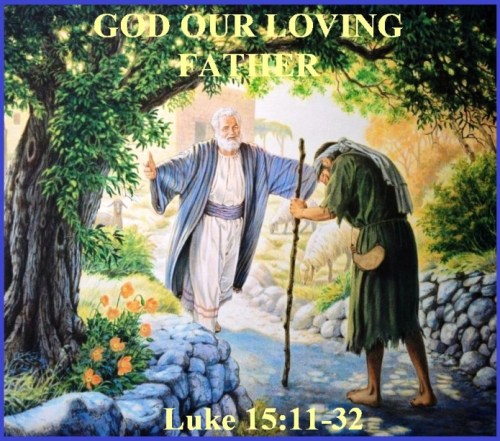
The parable of the prodigal son gives us a beautiful perspective on God’s forgiveness in Luke 15:11-32.
“There was a man who had two sons. The younger one said to his father, ‘Father, give me my share of the estate.’ So he divided his property between them.”
In the Old Testament for a son to come to his father and say, “give me my inheritance,” was similar to him saying, “Dad, I want you dead.” Typically, a son would receive his inheritance at the time of his father’s death. The fact that the younger brother instigated the early division of the family estate showed a rebellious and proud disregard for his father’s authority, not to mention a selfish and immature attitude. However, instead of rebuking the son, the father divided his wealth between them. The father knew that the son made a foolish and greedy request; nevertheless he did not stop him and gave him his share. At times a loving father needs to let their children learn their own lessons just as God does also.
“Not long after that, the younger son got together all he had, set off for a distant country and there squandered his wealth in wild living. After he had spent everything, there was a severe famine in that whole country, and he began to be in need. So he went and hired himself out to a citizen of that country, who sent him to his fields to feed pigs. He longed to fill his stomach with the pods that the pigs were eating, but no one gave him anything.”
While on his journey the younger son squandered his whole estate living irresponsibly and when the money ran out, he had to find a job. Pigs were unclean animals and Jews were not even allowed to touch them. However, the only job he could find was feeding pigs, even eating their food to fill his belly. This reveals that he had fallen as low as he could possibly go. This son represents a person living in rebellion and disobedience to God until something tragic happens to wake him up.
“When he came to his senses, he said, ‘How many of my father’s hired servants have food to spare, and here I am starving to death! I will set out and go back to my father and say to him: Father, I have sinned against heaven and against you.
Sometimes we have to hit rock-bottom before we come to our senses and recognize our sin or wrong doings. Fortunately, the son came to his senses and thought about the servants in his father’s house who were treated better than what was happing to him at the moment. He was very remorseful so he got up and went to his father’s house. While on his way home, he was thinking of all the things he had done and probably began to think completely differently about his father, himself and his home. As we see he was very repentant of what he had done.
“But while he was still a long way off, his father saw him and was filled with compassion for him; he ran to his son, threw his arms around him and kissed him.”
The father’s love waited in anticipation for his son to return one day, and when he saw him he ran which was unusual for grown men in the Jewish culture of the day. The father in this parable illustrates God the Father’s sheer joy when a prodigal child returns – rather than wait for them to get to Him, He will run towards them, longing to welcome them home. God waits patiently, with loving compassion to restore us when we return to Him with humble hearts.
“The son said to him, ‘Father, I have sinned against heaven and against you. I am no longer worthy to be called your son.’ But the father said to his servants, ‘Quick! Bring the best robe and put it on him. Put a ring on his finger and sandals on his feet. Bring the fattened calf and kill it. Let’s have a feast and celebrate. For this son of mine was dead and is alive again; he was lost and is found.’ So they began to celebrate.”
When the son started to confess his sins his father in his joy of having the son back tells his servants to take care of him because in the father’s eyes his full restoration has already been granted. This act would have been culturally completely unexpected after what the son had done, yet he is given back his full status as a son. The father holds nothing back to receive or to celebrate his son.
“Meanwhile, the older son was in the field. When he came near the house, he heard music and dancing. So he called one of the servants and asked him what was going on. ‘Your brother has come,’ he replied, ‘and your father has killed the fattened calf because he has him back safe and sound.’
Here we see that the older brother is informed of what was happening as he is drawn by the sound of the party as he learns from a servant that his younger brother had come home. The servant explains that everyone is celebrating because the father has received his younger son back full of joy and has granted him forgiveness.
The celebration is because of the father’s incredible display of grace.
“The older brother became angry and refused to go in.
What was the older brother’s problem? To put it simply, he was jealous, and the news of his brother’s return made him angry rather than joyful. In his mind his younger brother broke with Jewish law and deserved punishment, not grace and forgiveness. As such he refuses to go into the feast because, if he entered, it would look as if he was honoring his younger brother, which was not the case and he refused to do.
So his father went out and pleaded with him.
True to his nature, the father comes out and offers love and grace. He comes to help the older son understand. Sadly, the elder brother confronts the love and forgiveness of the father with bitter resentment and jealousy and answers his father quite defiantly.
“Look! All these years I’ve been slaving for you and never disobeyed your orders. Yet you never gave me even a young goat so I could celebrate with my friends. But when this son of yours who has squandered your property with prostitutes comes home, you kill the fattened calf for him!”
He accuses the father of favoritism and insults his brother. He’s irritated and upset that his brother has returned and that the father had taken him in. In this sense he was a perfect illustration of the religious leaders who were angry that Jesus received tax collectors and sinners. This son was also a prodigal since he lived in the father’s house but failed to understand the father’s heart. Even though he lived with him he was a stranger to him.
“‘My son,’ the father said, ‘you are always with me, and everything I have is yours. But we had to celebrate and be glad, because this brother of yours was dead and is alive again; he was lost and is found.’”
Again in his merciful heart the father reassures the elder brother that his rights are protected – “everything I have is yours.” He wants him to understand that extending grace to his brother did not affect his inheritance or the love he had for him.
“But we had to celebrate and be glad, because this brother of yours was dead and is alive again; he was lost and is found.”
He’s trying to help the elder brother understand the meaning of grace.
In this parable we see God’s amazing forgiveness, love and patience for each of his children.
The prodigal son demonstrated a repentant heart that was broken when he came to his senses and decided to return home to his father. Repentance is a brokenness and change of life-direction marked by:
- Hunger for restoration. He longed for something more than what he had available to him when he was focused on greed and sin. He longed to go home.
- Humble remorseful confession. He willingly acknowledged that he has sinned against heaven, and against his father and that he was no longer worthy to be called his son.
- Pleading for mercy. He recognized that he deserved nothing and pleaded for mercy, to serve as a slave, without a demand for restoration to his previous position in the family.
The older son is an illustration of the self-righteous Pharisees – they looked faithful and upright on the outside, but their inner attitudes were prideful, greedy, and self-indulgent. The older son’s words and actions show us his lack of love and respect for his father and brother when his brother returns.
He was so focused on himself that he only perceived injustice in the situation and could not have joy in having his own brother repent and return to the family. He had no compassion or forgiveness in his heart.
The Pharisees thought their works in keeping the law would earn them blessings and eternal life. Neither the older son nor the Pharisees had any understanding of the grace of God or the meaning of forgiveness.
This forgiving father shows us a beautiful picture of our heavenly Father and His loving concern for the lost of the world. Jesus wants us to respond like the father in the story. When others make mistakes, we shouldn’t respond in anger or condemn them. We are to run towards them with forgiveness and grace just as our Father in heaven does every time one of His children stumbles and falls.
We need to remember that “If we confess our sins, He is faithful and righteous to forgive us our sins and to cleanse us from all unrighteousness” (1 John 1:9).
The message is clear – be happy when the lost are found, when they repent and come home to the Father.
*******



Leave a comment