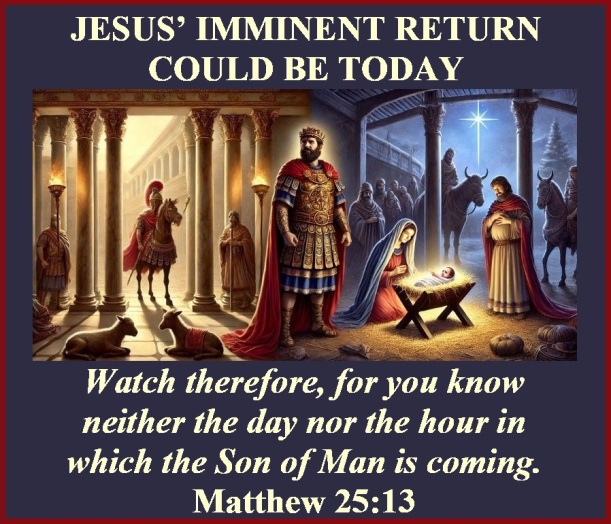
Watch therefore, for you know neither the day nor the hour in which the Son of Man is coming. (Matthew 25:13)
In the days of Herod the Great, few people expected the birth of the Messiah. The rabbis had misread the sings of the Old Testament prophecy. But Jesus arrived exactly at the right moment, in the fullness of time.
Today, few people are expecting the imminent return of Christ. But every sunrise is a reminder of His impending return. Matthew 25:13 is a warning that Jesus gave about spiritual readiness and vigilance in light of His return. It comes at the end of the parable of the ten virgins, which emphasizes the need to be prepared before it is too late.
The command “keep watch” means to stay spiritually awake and alert, and not to be complacent. The reason given is that believers do not and cannot know the exact time of Christ’s coming, which is kept hidden by God to prevent date-setting and to encourage constant faithfulness.
In practical terms, “keeping watch” involves ongoing trust in Christ, obedience to His teaching, prayer, and a life that reflects readiness rather than last-minute panic. The larger context of Matthew 24 – 25 links this watchfulness to faithful service, not passivity, so the verse calls for an active, prepared life while waiting for Jesus’ return.
Matthew 25:13’s call to “watch” and be ready is echoed all through the New Testament in passages about Christ’s return, spiritual alertness, and faithful living. Several passages closely mirror both the wording and the logic of Matthew 25:13, tying watchfulness to the unknown timing of Christ’s coming.
Key examples include:
- Matthew 24:42–44 and Luke 21:36, which also command believers to stay awake and ready because they do not know the day or hour when the Son of Man will come.
- Mark 13:33–37, where Jesus again tells disciples to “take heed, watch and pray,” using a mini‑parable of a master who may return at any watch of the night so servants must stay alert.
- Paul extends this theme of watchfulness in 1 Thessalonians 5:6, which urges believers not to “sleep as others do” but to “watch and be sober;” directly linking spiritual wakefulness to the coming “day of the Lord.”
- 1 Corinthians 16:13 and 2 Timothy 4:5, exhort Christians and ministers to “watch” in all things, stand firm in the faith, and fulfill their calling in light of future accountability.
- Acts 20:31 shows Paul modeling this watchfulness as he reminds the Ephesian elders that he “did not cease to warn” them night and day, tying pastoral vigilance to the same alert posture Jesus commands in Matthew 25:13.
Other passages broaden the idea of watchfulness to moral seriousness and prayerful readiness. For example: 1 Peter 4:7 and 1 Peter 5:8 call believers to be self‑controlled, sober, and watchful both because “the end of all things is at hand,” and because the devil seeks to devour those that are not prepared and alert.
Keeping watch is a call to live in a state of sustained, active readiness for Christ’s return by means of guarding one’s life, cultivating holiness, and staying responsive to God’s will. It involves practices such as prayer, obedience, repentance, and perseverance in love and good works.
To keep watch is to live each ordinary day as if the Master could return at any time, so that nothing essential is left undone. It means to nurture a living faith that is ready to meet Christ whenever He comes, whether at the rapture for His church saints or at the moment of personal death. One thing we need to know for sure is that the Lord is coming and it could be today.
Maranatha Lord Jesus!
*******



Leave a comment