Posted by: missionventureministries | July 24, 2024

WHAT DOES IT MEAN TO HEAR AND OBEY GOD’S WORD – Psalm 119:16

Psaslm 119 vs 16

“I delight in Your decrees; I will not neglect Your word.” (Psalm 119:16) 

To walk wisely, we must actively and diligently obey and apply God’s Word to our lives. It is not enough to hear God’s Word, to read it, or to meditate on it. We must put it into action. 

Those who are willing to obey God’s Word are going to be the ones who are most clearly and directly impacted by God’s Word. They have set their minds and hearts to know God’s Word. They read the Bible with the thought, “I have got to see what God wants me to do. I’m gong to discover today some of the ways God wants me to live and respond and initiate action. The reason I am reading my Bible is for guidance for my life, not just to read it because I should.” 

This verse expresses two key sentiments: 

  • Delight in God’s decrees: The psalmist finds joy and pleasure in God’s laws and commandments. This reflects a positive attitude towards divine instruction, seeing it as a source of happiness rather than a burden. 
  • It is a commitment to remember: The writer pledges not to forget or neglect God’s word. This implies a dedication to keeping God’s teachings at the forefront of one’s mind and actions. 

This verse is part of Psalm 119, the longest chapter in the Bible, which is an extended meditation on the value and importance of God’s law. Throughout this psalm, the author repeatedly expresses love for God’s commandments and a desire to follow them faithfully. 

This particular verse emphasizes the emotional and intellectual engagement with God’s word. It’s not just about knowing the rules, but finding genuine pleasure in them and making a conscious effort to keep them in mind. 

In the context of the surrounding verses, we see that this delight and commitment are part of a broader approach to God’s word that includes: 

  • Rejoicing in following God’s statutes (verse 14)
  • Meditating on God’s precepts (verse 15)
  • Considering God’s ways (verse 15) 

This verse encapsulates a devoted attitude towards divine instruction, combining both affection (“delight”) and dedication (“will not neglect”). 

Delighting in God’s decrees, holds significant spiritual and practical implications for believers, since this verse emphasizes the joy and fulfillment that come from engaging with God’s laws and teachings. 

Here are the key aspects of its significance: 

Emotional Response: The psalmist’s declaration of delight indicates a deep emotional connection to God’s decrees. This joy is not superficial; it reflects a profound appreciation for God’s guidance and wisdom. The Hebrew term used suggests a lively and exuberant delight, akin to jumping for joy. 

Spiritual Growth: Delighting in God’s word fosters spiritual growth. When believers immerse themselves in Scripture, they gain insights into God’s character, His promises, and His instructions for righteous living. This engagement leads to transformation and alignment with divine truth, enhancing one’s spiritual journey. 

Commitment to God’s Word: The commitment expressed in “I will not neglect your word” underscores the importance of actively remembering and applying God’s teachings. This dedication is essential for maintaining a close relationship with God and for living a life that reflects His will.

Practical Application: The psalmist illustrates that delighting in God’s decrees involves not just admiration but also practical application. This means meditating on, obeying, and walking according to God’s laws, which ultimately leads to a fulfilling and purposeful life. 

Guidance in Life: God’s decrees serve as a moral compass, providing direction in decision-making and daily living. By delighting in these teachings, believers can navigate life’s challenges with confidence, knowing they are aligned with God’s will. 

Foundation for Happiness: The psalmist implies that true happiness and fulfillment stem from obedience to God’s word. By prioritizing God’s decrees, individuals can experience peace and joy that surpasses worldly pleasures. 

In review, the significance of delighting in God’s decrees in Psalm 119:16 lies in its capacity to foster joy, commitment, spiritual growth, and guidance, ultimately leading to a more fulfilling and righteous life. 

Delighting in God’s decrees significantly impacts one’s relationship with Him by fostering a deeper connection, enhancing spiritual growth, and cultivating a joyful obedience. Here are the key ways this delight influences the believer’s relationship with God: 

Joyful Engagement: When individuals find delight in God’s commands, they engage with Him more joyfully and willingly. This joy transforms the perception of obedience from a duty to a delight, making the relationship with God more vibrant and fulfilling. The psalmist’s expression of delight suggests a loving and intimate relationship with God, where His laws are cherished rather than viewed as burdensome. 

Increased Trust: Delighting in God’s decrees implies a trust in His wisdom and goodness. Believers who find joy in His commands are more likely to rely on them during challenging times, knowing that God’s guidance leads to their ultimate well-being. This trust strengthens the bond between the believer and God, as they recognize His authority and care in their lives. 

Transformation through Obedience: Delighting in God’s decrees leads to a commitment to obey them, which in turn fosters spiritual growth. As believers align their lives with God’s word, they experience transformation and renewal. This process deepens their understanding of God’s character and His desires for them, enhancing their spiritual maturity and relationship with Him. 

Reflecting God’s Character: When believers delight in and follow God’s decrees, they reflect His character in their lives. This alignment with God’s will not only brings personal fulfillment but also serves as a testimony to others about the goodness of living according to His commands. Such a lifestyle draws others to God and strengthens the community of faith. 

Peace and Fulfillment: Obeying God’s commands out of delight brings a sense of peace and fulfillment that transcends mere compliance. This joy in obedience indicates a heart that is aligned with God’s purposes, leading to a more satisfying and meaningful life. The psalmist illustrates that true delight comes from understanding and living out God’s word, which ultimately leads to abundant blessings. 

Modeling Faith: A believer’s delight in God’s decrees can have a contagious effect, particularly on younger generations. When parents and mentors model joy in obedience, it encourages others, especially children, to develop a similar attitude towards God’s commands. This modeling fosters a community that values and delights in God’s word, strengthening collective faith and commitment. 

In summary, delighting in God’s decrees enriches the believer’s relationship with Him by promoting joyful engagement, trust, spiritual growth, and a fulfilling obedience that reflects God’s character. This dynamic relationship ultimately leads to a deeper understanding of God’s love and purpose in their lives. 

Psalm 119:16 serves as a powerful reminder for modern Christians about the importance of engaging with Scripture, committing to its teachings, and allowing it to shape their lives.   

 *******

DISCLAIMER MVM

Posted by: missionventureministries | July 17, 2024

UNDERSTANDING PATIENCE THE BIBLICAL WAY – Romans 12:12

Romans 12 vs 12

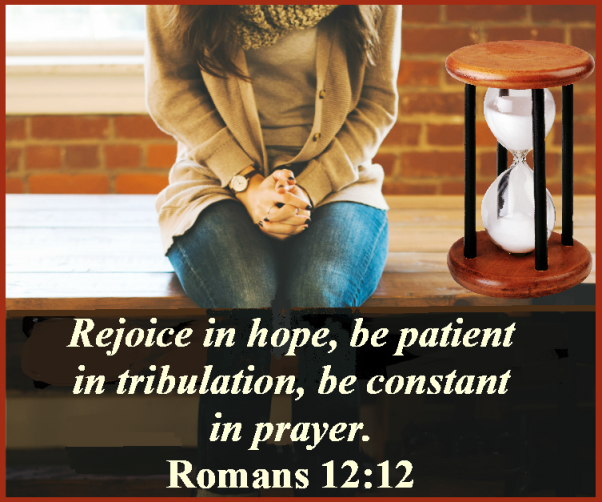
“Rejoice in hope, be patient in tribulation, be constant in prayer.” (Romans 12:12) 

In the Bible, the word patience can refer to both longsuffering and perseverance. It reveals itself when we are willing to wait without frustration while suffering or experiencing some strong desire to do things our own way. What’s more, being patient means accepting whatever God chooses to give or not to give and willingly receiving it on His timetable. 

Patience is crucial in the Christian faith because it demonstrates our trust in God’s sovereignty and His timing. In the meantime, we must pray, obey, and seek His direction. The danger of impatience is that we might miss out on the Lord’s blessing and perfect plan. But when we trust in our Father’s will and His perfect timing, we will know inner peace. 

When everything is going our way, patience is easy to demonstrate. The true test of patience comes when our rights are violated and we are treated unfairly. Impatience, intolerance, or irritability toward anything that hinders or delays what we seek ends up appearing to be justified anger. The Bible, however, praises patience as a fruit of the Spirit (Galatians 5:22) which should be produced by all followers of Christ (1 Thessalonians 5:14). Patience reveals our faith in God’s timing, supreme power and love. 

Remember to carefully examine whether you are resolving the problem in your own strength or releasing the circumstance to Almighty God. We are to “rest in the Lord and wait patiently for Him,” (Psalm 37:7) and to always remember to seek God’s way and His perfect timing. 

Patience is the capacity to tolerate challenges or delays without getting upset; it is the capacity to calmly endure and to have forbearance, meaning to refrain from taking action when the time is not right. Most of us would like to have more patience in our lives, but it’s not always easy and therefore we need to seek the Lord and ask for His wisdom. 

Patience is the subject of many Bible studies, counseling sessions, and prayers because life can lead us to react incorrectly, to frustration, and to disappointment. We may find ourselves praying for more patience when we’ve been waiting on the Lord to give us clarity in our lives or we are praying for a long time for God to change our circumstances and still have not clearly heard from Him. 

No matter what leads us to desire more patience, the Bible offers excellent guidance. Let’s look to the Word of God to explore how to become more patient and what it means to have patience. We can learn a lot about patience in the Bible, since patience is persisting in God’s word, as reflected in this short summary: 

  • Patience comes from wisdom. “A person’s wisdom yields patience; it is to one’s glory to overlook an offense” (Proverbs 19:11) 
  • Love is patient. “Love is patient, love is kind. It does not envy, it does not boast, it is not proud” (1 Corinthians 13:4). 
  • We should be patient and gentle with one another. “Be completely humble and gentle; be patient, bearing with one another in love” (Ephesians 4:2). 
  • We should persevere and be patient and emulate the Lord. “Therefore, as God’s chosen people, holy and dearly loved, clothe yourselves with compassion, kindness, humility, gentleness and patience. Bear with each other and forgive one another if any of you has a grievance against someone. Forgive as the Lord forgave you” (Colossians 3:12-13). 
  • It is the evidence of Holy Spirit working in us, which is reflected in “love, joy, peace, longsuffering, kindness, goodness, faithfulness, gentleness, self-control,” which are the fruit of the Spirit (Galatians 5:22-23). 
  • The way we reflect our patience is by holding back our anger, “because human anger does not produce the righteousness that God desires” (James 1:20). 
  • Being able to correct and encourage with patience. “Preach the word; be prepared in season and out of season; correct, rebuke and encourage—with great patience and careful instruction” (2 Timothy 4:2). 
  • When impatient or anxious present our request to God with thanksgiving. “Do not be anxious about anything, but in every situation, by prayer and petition, with thanksgiving, present your requests to God” (Philippians 4:6). 
  • And most importantly keeping our focus on God because, “You will keep in perfect peace those whose minds are steadfast, because they trust in You” (Isaiah 26:3). 

Patience does not develop overnight. God’s power and goodness are crucial to the development of patience. Colossians 1:11 tells us that we are strengthened by Him to “great endurance and patience,” while James 1:3-4 encourages us to know that trials are His way of perfecting our patience. Our patience is further developed and strengthened by resting in God’s perfect will and timing, even in the face of evil men who “succeed in their ways, when they carry out their wicked schemes” (Psalm 37:7). Our patience is rewarded in the end “because the Lord’s coming is near” (James 5:7-8). 

Always remember that “The Lord is good to those whose hope is in Him, to the one who seeks Him” (Lamentations 3:25), and that ultimately patience develops our faith. 

*******

DISCLAIMER MVM

Posted by: missionventureministries | July 10, 2024

GOD’S WORD IS THE ONLY INFALLIBLE SOURCE OF TRUTH – 2 Timothy 3:16-17

2 Timothy 3 vs 16-17 (2024)

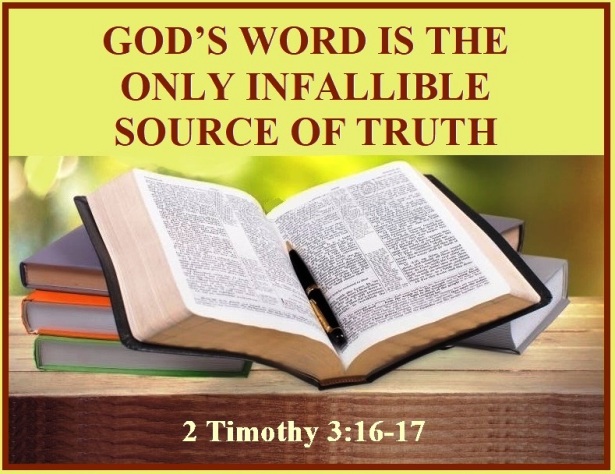
All Scripture is God-breathed and is useful for teaching, rebuking, correcting and training in righteousness, so that the servant of God may be thoroughly equipped for every good work. (2 Timothy 3:16-17) 

The most important decision anyone makes in this life is choosing which authority to trust for their eternal destiny. We can be wrong about a lot of things in this life and still survive, but if we are wrong about eternity, we will pay for that mistake forever. Thankfully, there is one infallible source for truth that we can trust and that is the inspired, inerrant Word of God. 

Religion is described as something one believes in and follows devotedly; it is a matter of ethics or conscience and it seems that every religion has its own authority. Therefore, since every religion has an authority, and every person has an opinion, it is important that when we share the good news of the Gospel, that we ask people about their source for truth. 

As we do this, responses will vary, many will say that they belong to a religion because that is what their families have done for decades. Some will say they rely on the Pope, or in their rabbi, religious leader, religious traditions, human reasoning, church history or in their church founder. 

Lots of people are enslaved by religion and don’t even know it. They think they are following God, but in reality, they are under the influence of religious rules, regulations, and requirements that have less to do with God than with some person’s attempt to gain control creating an empire for themselves. 

Many need to wake up and understand that there is only one source that is right all the time. Our perfect and omniscient God has never been wrong, and He has given us His Word as our only infallible source for truth on this earth. Therefore, there is no higher authority than God and His Word as 2 Timothy 3:16-17 states. 

In other words, Scripture is our supreme authority for knowing truth and correcting all that opposes it. Every word was breathed out by God, who cannot lie (Hebrews 6:18). Because of this, His inerrant Word must be the standard by which we discern truth from error (1 John 4:6). We also know that Scripture is sufficient to function as the sole infallible rule of faith, because it does not refer us to any other source for truth. Everything we must know, understand, and believe to be saved is found in Scripture (2 Timothy 3:14-16; 1 Corinthians 15:1-4). Therefore, after considering any other source for truth, we must ask, “But what does the Scripture say?” (Galatians 4:30). 

No other source for truth can do everything that Scripture does. It brings conviction, gives wisdom, produces faith, refutes error, and can be used as a sword to slay the devil’s lies. Scripture also converts the soul, sets people free, sanctifies us and equips us for every good work. Most importantly, it also reproves and corrects. 

Therefore, we must use it to test the veracity of all of the following: 

  • Scripture versus the teachings of men – “Now the Berean Jews were of more noble character than those in Thessalonica, for they received the message with great eagerness and examined the Scriptures every day to see if what Paul said was true” (Acts 17:11). Meaning ask the Holy Spirit to guide you to all truth and verify it in Scripture to be so. 
  • Religious traditions versus the truth of God’s word – “They worship Me in vain; their teachings are merely human rules.’ You have let go of the commands of God and are holding on to human traditions” (Mark 7:7-8). Jesus was telling the Pharisees that their human rules and traditions were more important to them than obeying God’s commandments. 
  • Testing the spirits – “Dear friends, do not believe every spirit, but test the spirits to see whether they are from God, because many false prophets have gone out into the world” (1 John 4:1). This is so important that the apostle John gives the answer to what we should do: “This is how you can recognize the Spirit of God: Every spirit that acknowledges that Jesus Christ has come in the flesh is from God, but every spirit that does not acknowledge Jesus is not from God. This is the spirit of the antichrist, which you have heard is coming and even now is already in the world” (1 John 4:2-3). Beware since there are many false prophets in the world. 
  • We need to be on guard – “I know that after I leave, savage wolves will come in among you and will not spare the flock. Even from your own number men will arise and distort the truth in order to draw away disciples after them. So be on your guard! Remember that for three years I never stopped warning each of you night and day with tears” (Acts 20:29-31). Paul was warning of this nearly 2000 years ago and as the apostasy intensifies this is getting worse every day. 
  • Do not rest on the wisdom of men – “My message and my preaching were not with wise and persuasive words, but with a demonstration of the Spirit’s power, so that your faith might not rest on human wisdom, but on God’s power” (1 Corinthians 2:4-5). Many preaching strategies centered on the wisdom of men – around emotion, entertainment and human personality – may yield response, but not results for the kingdom of God. So beware and ask the Holy Spirit to guide you when you feel that internal voice tugging at you that something is not right. 

We must be aware that “religion” is what man tells you that God says. The best question to ask when truth is not being told is: “Book, chapter, verse please.” 

Why would someone who is sincerely seeking the truth seek another place other than Christ and His Word? The Lord Jesus is the personification of truth and His Word is truth (John 14:6, 17:17). He came into this world to testify to the truth and everyone who is of the truth hears His voice (John 18:37). Therefore, we must embrace Scripture as our supreme authority for truth because Scripture is what God says; while religion is what man says God says. 

Therefore, “Trust in the Lord with all your heart and lean not on your own understanding; in all your ways submit to Him, and He will make your paths straight” (Proverbs 3:5-6). 

* * * * * * *

DISCLAIMER MVM

Posted by: missionventureministries | July 3, 2024

LIVE IN HARMONY WITH EACH OTHER – Romans 12:16-18

Romans 12 vs 16-18

Live in harmony with each other. Don’t be too proud to enjoy the company of ordinary people. And don’t think you know it all! Never pay back evil with more evil. Do things in such a way that everyone can see you are honorable. Do all that you can to live in peace with everyone. (Romans 12:16-18) 

Paul is not insisting that we all think alike or agree on every issue, which isn’t going to happen in this life. Rather, he is calling us to unity based on our common salvation, our shared purpose in the gospel, and our shared hope in Christ. His command does not suggest that we set aside essential doctrinal truth for the sake of unity, which would be to compromise the gospel. Rather, as in Ephesians 4:2-3, he is saying, “With all humility and gentleness, with patience, showing tolerance for one another in love, being diligent to preserve the unity of the Spirit in the bond of peace.” 

To live in harmony with each other, requires humility from everyone involved. It’s not surprising, then, that Paul’s next instruction is that we not be arrogant and stuck up to enjoy the company of ordinary people. He makes clear what he means with a follow-up command; associate with the lowly. In other words, don’t think of yourselves as being too good to hang out socially with anyone else. Paul is probably referring to people who may be beneath your economic or educational level and that we should reach out in love and make them feel accepted. This means to put yourself on the same level and relate graciously to them as you would want to be related to if you were in their situation. 

Paul’s continues by saying and don’t think you know it all! A Christian must never be wise in their own sight. The idea being that we should not accept our own opinion as the final word. We need to submit to the word of God, as well as to the input and ideas of other godly Christians. 

Then, he gives a difficult command never pay back evil with more evil. Paul declares that we must resist our natural human instinct for revenge and refuse to ever pay back evil when evil is done to us. This would be true whether the person who hurts us is a believer or not. Instead, Paul tells us to be thoughtful when wrongdoing is done to us. He seems to suggest that we see that moment as an opportunity to demonstrate that, in Christ, we are honorable people. We cannot, after all, display the love and forgiveness of Christ until we have the opportunity to forgive. And when we do this, we make a powerful statement that we are choosing to live in service to God instead of to ourselves. 

Do things in such a way that everyone can see you are honorable. Here Paul means that we should think about our testimony to who are watching our actions and conduct. 

What will their thoughts be of the Christian faith when they see or hear about how we responded to the wrong that was done to us? If we react with rage, we’re not being a good witness. However, if we stop to think about our witness, we can then respond in a Christ like manner. 

Scripture calls us to encourage, help, and get along with others, but most of us know at least one person with whom we have more conflict than comfort. Discord can take many forms; personalities may not mesh; different belief systems can lead to arguments; and words or actions might be misunderstood. But through the Lord, almost any difference can be overcome. 

Therefore, do all that you can to live in peace with everyone. So what does it require to live this way? First and foremost, it means we should be kind towards other people. We must be willing to admit our wrongs, to apologize, to make things right, and to forgive. Our own ego, pride, desires, and prejudices should never get in the way of living peaceably with others. 

The Bible is clear, that we must take our stand with grace, mercy, and integrity knowing that God can be trusted to keep His promise (Hebrews 10:23). When making “peace” however, we should never compromise the truth, for “we must obey God rather than any human authority” (Acts 5:29). 

Living in submission to Jesus creates a channel by which His goodness and grace can flow through us and create harmony. Consequently, when we make a habit of lifting up the other person in prayer, divine grace becomes part of the situation. 

God desires that believers live in peace, but He knows we can’t achieve this on our own. That’s why He gave us a Helper, the Holy Spirit, through whom we can attain unity and be bound together in peace (Ephesians 4:1-6). 

Remember that only with the peace of Christ ruling in our hearts are we able to live at peace with other people (Colossians 3:15). And since peace is a fruit of the Spirit (Galatians 5:22; Romans 8:6), we must depend on the Holy Spirit’s work in our hearts to become successful peacemakers in this world. 

* * * * * * *

DISCLAIMER MVM

Posted by: missionventureministries | June 26, 2024

UNDERSTANDING GOD’S GRACE – Romans 6:1-4

Romans 6 vs 1-14

“What shall we say, then? Shall we go on sinning so that grace may increase? By no means! We are those who have died to sin; how can we live in it any longer? Or don’t you know that all of us who were baptized into Christ Jesus were baptized into his death? We were therefore buried with him through baptism into death in order that, just as Christ was raised from the dead through the glory of the Father, we too may live a new life.” (Romans 6:1-4) 

The briefest definition of grace is “favor.” In the Bible, grace is defined as the free and unmerited favor of God. This means that we cannot earn God’s grace through our actions or deeds. It is a gift that is freely given to us by God, and we receive it through faith in Jesus Christ, as we read in Ephesians 2:8–9, “For by grace you have been saved through faith. And this is not your own doing; it is the gift of God, not a result of works, so that no one may boast.” 

Grace is the supernatural strength that God gives us to overcome sin and to live a life that is holy and righteous. Therefore, the role of grace in salvation is central to Christianity. We believe that we are saved by grace through faith in Jesus Christ. This means that we cannot earn our salvation through our own efforts, but it is a gift that is freely given to us by God. “For all have sinned and fall short of the glory of God, and are justified by His grace as a gift, through the redemption that is in Christ Jesus” (Romans 3:23–24). 

The theme of grace runs throughout the Bible. From the Old Testament to the New Testament, we see examples of God’s grace towards His people. In the Old Testament, we see God’s grace towards Noah, Abraham, and Moses. In the New Testament, we see God’s grace through Jesus Christ, who came to save us from our sins. “For the law was given through Moses; grace and truth came through Jesus Christ” (John 1:17). 

Divine grace is the grace that is given to us by God. It is the supernatural power that enables us to do what we cannot do on our own. It is the grace that saves us from our sins and gives us new life in Christ. “For the grace of God has appeared, bringing salvation for all people, training us to renounce ungodliness and worldly passions, and to live self-controlled, upright, and godly lives in the present age” (Titus 2:11–12). 

Grace has the power to transform our lives. It is grace that saves us from our sins, gives us new life in Christ, and enables us to live a life that is pleasing to God. It is the grace that empowers us to overcome sin and to live a life that is holy and righteous. “Therefore, if anyone is in Christ, he is a new creation. The old has passed away; behold, the new has come” (2 Corinthians 5:17). 

As Christians, we are called to live a life of grace. This means that we are to extend grace to others, just as God has extended grace to us. It means forgiving others, even when they don’t deserve it. It means showing kindness and love to those who are hurting. “Let your speech always be gracious, seasoned with salt, so that you may know how you ought to answer each person” (Colossians 4:6). 

Grace is the unmerited favor of God that we receive through faith in Jesus Christ. It is the power that enables us to live a life that is pleasing to God and to fulfill the calling that He has placed on our lives. As Christians, we are called to extend grace to others, just as God has extended grace to us. In Ephesians 4:7, we read, “But grace was given to each one of us according to the measure of Christ’s gift.” Therefore, let us embrace God’s grace and live a life that reflects His love and kindness to others. 

There are some Christians, however, that have a hard time with the doctrine of grace. If you think you must perform in order to please God, guilt is your constant companion. Every time you fail to live up to your own expectations, you may question whether God loves you, or maybe even whether you’re really saved. The Lord doesn’t want us to live like this. We’ve already received His acceptance, and there is nothing more we can add to it. Grace not only sets us free from guilt but also motivates us to obey and serve God out of love and gratitude for everything He has done for us. Instead of feeling burnt out in our service, we will have a burning passion for Him. 

To fully understand grace, we need to consider who we were without Christ and who we become with Christ. We were born in sin (Psalm 51:5), and we were guilty of breaking God’s holy laws (Romans 3:9–20, 23; 1 John 1:8–10). We were enemies of God (Romans 5:6, 10; 8:7; Colossians 1:21), deserving of death (Romans 6:23a). We were unrighteous (Romans 3:10) and without means of justifying ourselves (Romans 3:20). Spiritually, we were destitute, blind, unclean, and dead. Our souls were in peril of everlasting punishment. 

But then grace came and God extended His favor to us. Grace is what saves us (Ephesians 2:8). Grace is the essence of the gospel (Acts 20:24). Grace gives us victory over sin (James 4:6). Grace gives us “eternal encouragement and good hope” (2 Thessalonians 2:16). Paul repeatedly identified grace as the basis of his calling as an apostle (Romans 15:15; 1 Corinthians 3:10; Ephesians 3:2, 7). Jesus Christ is the embodiment of grace, coupled with truth (John 1:14). 

The Bible repeatedly calls grace a “gift” (Ephesians 4:7). This is an important analogy because it teaches us some key things about grace: 

  • Anyone who has ever received a gift understands that a gift is much different from a loan, which requires repayment or return by the recipient. The fact that grace is a gift means that nothing is owed in return. 
  • There is no cost to the person who receives a gift. A gift is free to the recipient, although it is not free to the giver, because they pay for the expense. The gift of salvation costs us sinners nothing. But the price of such an extravagant gift came at a great cost for our Lord Jesus, who died in our place. 
  • Once a gift has been given, ownership of the gift has transferred and it is now ours to keep. God’s grace is ours forever. Grace is the ongoing, benevolent act of God working in us, without which we can do nothing (John 15:5). Grace is too wonderful for words (2 Corinthians 9:15). 

Please remember that as the recipients of God’s grace, Christians are to be gracious to others. Grace is given to us to serve others and to exercise our spiritual gifts for the building up of the body of Christ (Ephesians 3:7; 4:7; 1 Peter 4:10). 

*******

DISCLAIMER MVM

Posted by: missionventureministries | June 19, 2024

TRUSTING IN THE LORD TO SHOW US HIS WAY – Lamentations 3:24-26

Lamentations 3 vs 24-26

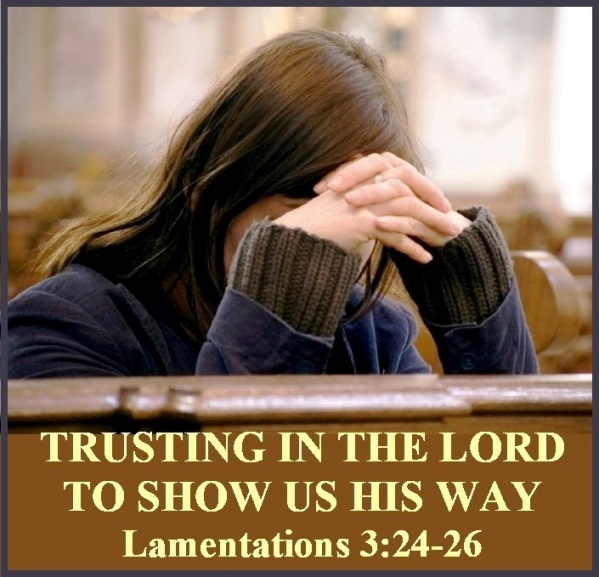
I say to myself, “The Lord is my portion; therefore I will wait for Him.” The Lord is good to those whose hope is in Him, to the one who seeks Him; it is good to wait quietly for the salvation of the Lord. (Lamentations 3:24-26) 

Many of us struggle when it comes to disciplining ourselves in the area of instant gratification. There are so many things we want now. And to make matters worse, we usually have the ability to follow through on our desires. That’s what the credit card industry is all about: Have it now and pay later. But finances aren’t the only area where we get into trouble. Being in a hurry to get married can lead to an unwise choice of a spouse. Or being in a rush for career success might tempt us not to consider whether our pursuit aligns with God’s plans. 

The Lord had proved Himself to be faithful to the erring children of Israel. Jeremiah had witnessed God’s long-suffering mercy, but also understood that God is both righteous and just and must therefore, punish evil. And so, in the midst of all the trauma and pain, Jeremiah is able to declare, “the LORD is my portion, therefore, I have hope in Him.” 

From the inner depths of his very being, Jeremiah was able to proclaim that the Lord was his hope. God was his portion and the Lord was his helper. And so, despite the terrible circumstances through which he was going, Jeremiah chose to place his hope and his trust in God. He decided to wait expectantly for Him to direct and govern his future, and that of the faithful remnant of Israel. 

Despite the inner turmoil that grieved his soul and the outer destruction he witnessed with his own eyes, this man was able to stand firm on his hope in God, knowing that His mercies are new every morning, for the Lord is a faithful God and true to His Word; and the same holds true today. 

As we see the systematic destruction of sound doctrine in Christianity today, as apostate teachers and false prophets infiltrate the churches of Christendom and seek to destroy the very foundation of our faith… and as we watch the shocking inhumanity of man towards his fellows, and the unbelievable corruption that floods the corridors of government, our hearts also grieve as we witness this painful period in our own problematic history. 

But like Jeremiah, we know in Whom we have believed and are persuaded that He is able to keep all those that have committed to Him. No matter what we may be called upon to suffer in this transitory life, we know that God is faithful and will not suffer us to be tempted above that which we are able to bear, but will make a way of escape so that we may be able to bear it (1 Corinthians 10:13). 

God is indeed faithful to His Word which cannot be broken… and so with the brokenhearted Jeremiah, we too can trace the rainbow through the rain and proclaim, “The Lord is my portion; therefore I will wait for Him.” 

So, why do you think the Lord wants us to wait? One reason is to protect us from our own self-destructive ways just as He wanted Israel to do. Those who can’t say no to their own desires end up enslaved to them. God wants us to be mature believers who have the character and self-restraint to wait for Him to provide in His perfect time. Because the heavenly Father is omniscient, He alone knows what’s best. You can trust that if He asks you to wait, He has something more wonderful in mind than you could ever provide for yourself. 

Does anything seem to have power over you? If so, it may be an area that requires the practice of self-restraint. Yield to the Lord and submit your desires to Him. Then, begin saying no to temptations as you wait for God to reveal His perfect plan. 

As you reflect on God’s word, let the book of Lamentations remind you that waiting is not a waste. In your lament, why not release control of your life and say, “God, I don’t know what You’re doing or why, but I’m going to trust in You, since You know what is best for me.” 

If God’s providence requires you to wait, remind your heart that much good can come from this season. The Lord desires to teach us many lessons, and those lessons often come slowly, after we have stopped trying on our own, at the point we are broken and ready for Him to lead us. In the midst of suffering, remember that waiting on the Lord is not a waste and seeking Him would bring renewed expressions of His goodness. 

It is good to remember the faithfulness of the Lord, which is new every morning. It is wise not to despise the chastening of the Lord or be weary of His correction, for the Lord disciplines the one He loves and chastises every son whom He receives (Hebrews 12:6). Therefore, it is good, very good: “To wait quietly for deliverance from the Lord.” 

*******

DISCLAIMER MVM

Posted by: missionventureministries | June 12, 2024

OUR WORDS REFLECT WHAT IS IN OUR HEART – Luke 6:45

Luke 6 vs 45

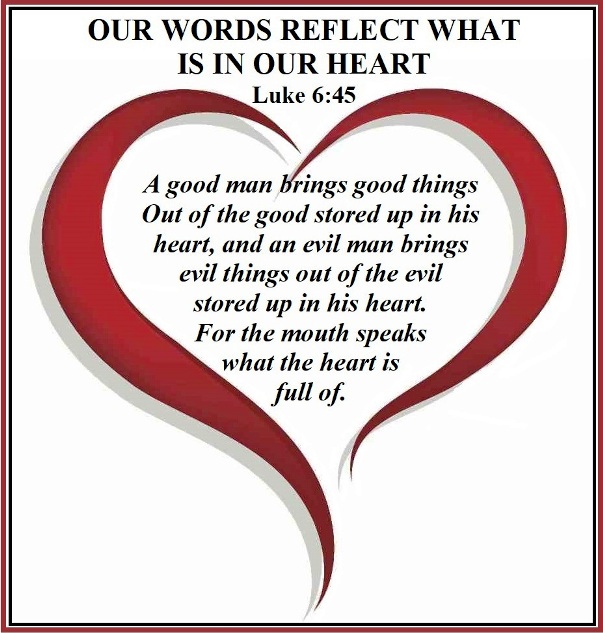
A good man brings good things out of the good stored up in his heart, and an evil man brings evil things out of the evil stored up in his heart. For the mouth speaks what the heart is full of. (Luke 6:45) 

The words that a Christian conveys are of great importance, for Jesus has said: “Every idle word that men shall speak, they shall give account thereof in the day of judgment” (Matthew 12:36). 

In Colossians 4:6 we read, “Let your conversation be always full of grace, seasoned with salt, so that you may know how to answer everyone.” The word “answer” in this text means more than simply an answer to a question, it refers to ordinary conversation, indicating that every verbal response of a Christian should be gracious and tasteful, never crude or hurtful. 

Full of grace means that our presentation of the gospel should be permeated with God’s grace, since as a sinner who has received grace, you won’t speak in a condescending or condemning manner to another. You will be kind and humble, letting the other person know that we’re all sinners who would be on the way to hell, were it not for God’s grace. 

Seasoned with salt, means that our presentation of the gospel should stimulate people’s desire to want to learn more of the Bible, just as salt is used to make food tastier. 

Scriptures include many other specifications for a Christian’s speech. Our words should be carefully chosen, able to be substantiated by, “sound speech that cannot be condemned” (Titus 2:8). People should be able to rely on the truth of what we say (Ephesians 4:25). 

Our words should always be edifying and helpful, wholesome and thoughtful. Christ died both to take away the guilt of our sins and to give us power through the indwelling Holy Spirit to overcome our sins. Paul’s simple command to put aside our anger implies that we can control it. He doesn’t make exceptions for those with short fuses or for those who have been victimized. He just says, “you must also rid yourselves of all such things as these: anger, rage, malice, slander, and filthy language from your lips” (Colossians 3:8). 

So, how do you eliminate foul language? 

Removing the stench of the words that come from our mouths begins with renewing our hearts. Just as people recognize the kind of tree by the fruit it bears (Luke 6:43-44), Jesus said that our speech is a convincing indicator of whether our hearts are in tune with Him and His ways or not. Fruit stands for a person’s speech, “for the mouth speaks what the heart is full of” (Luke 6:45). 

Christ was pointing out that if we really want to change what’s coming out of our mouths, we first have to focus on changing our hearts as He helps us. 

External promises are useless to curb the foul language that comes forth from an untransformed heart. We can only eliminate foul speech by first believing in Jesus (1 Corinthians 12:3) and then inviting the Holy Spirit to fill us since He works within us to inspire and help us to continually offer thanks to God and to speak encouraging and edifying words to others. Therefore, “Do not let any unwholesome talk come out of your mouths, but only what is helpful for building others up according to their needs, that it may benefit those who listen” (Ephesians 4:29). 

The origin of our words is found in our heart. Our mouth gives us away by revealing our true feelings. Our words also defile and condemn us, for we will give an account for every idle word we speak (Matthew 12:36). This word that Jesus used, “idle,” means careless. We need to be intentional with our words because our words reflect our heart. We have a responsibility to be careful with what we say. 

But if this seems humanly impossible to you, remember God is able to tame our tongues, even though we cannot! The key is prayer, earnest and consistent prayer, not just that our speech become inoffensive, but that it may edify, testify, and minister grace for the honor and glory of God. 

Therefore, “whatever you do, in word or deed, do everything in the name of the Lord Jesus, giving thanks to God the Father through Him” (Colossians 3:17). 

*******

DISCLAIMER MVM

Posted by: missionventureministries | June 5, 2024

THE CONFIDENCE OF THE INTERCESSOR’S PRAYER – 1 John 5:14-15

1 John 5 vs 14-15

This is the confidence we have in approaching God: that if we ask anything according to His will, He hears us. And if we know that He hears us—whatever we ask—we know that we have what we asked of Him. 1 John 5:14-15 

Our faith in God’s promise to hear and answer our prayers must have solid footing because Satan constantly assaults us with doubt that our prayers don’t matter. His goal is to get us to quit, while God’s goal is to get us to persist in prayer and to do so with faith. 

James, like John also states that we need to ask with unwavering faith. “But when you ask, you must believe and not doubt, because the one who doubts is like a wave of the sea, blown and tossed by the wind. That person should not expect to receive anything from the Lord. Such a person is double-minded and unstable in all they do” (James 1:6-8). 

Humans have the ability to have faith, to a certain degree. We get in a car trusting that it will start, and will take us where we need to go. We board buses, trains, and planes in faith that they have been well-maintained and have reliable operators that get us safely where we need to go. The list of examples of where we employ faith in daily living is endless. However, true faith “comes by hearing, and hearing by the word of God” (Romans 10:17), by which we believe the Bible to be absolute truth and is teaching us to surrender our life to Christ. 

Intercessory prayer requires a deeper abiding faith. And for us who believe in the power of prayer, the foundation of our faith consists of four attributes of God: 

God Cannot Lie: Hebrews 6:17-18 tells us; “So God gave His word when He made His promise. He wanted to make it very clear that His purpose does not change. He wanted those who would receive what was promised to know this. When God made His promise, He gave His word. He did this so we would have good reason not to give up. Instead, we have run to take hold of the hope set before us. This hope is set before us in God’s promise. So God made His promise and gave His word. These two things can’t change. He couldn’t lie about them.” 

We rely on prayers in the knowledge that God cannot lie and that, therefore, all the promises He gave in Scripture to hear and answer prayer are true and undeniable, meaning that He will never change His mind. 

God Is Omnipotent: Which is a theological word that comes from the Latin “omni” (all) and “potens” (able/powerful). The Scripture points us to this attribute through verses like Jeremiah 32:27, “I am the Lord, the God of all mankind. Is anything too hard for me?” 

God is Omniscient: We now know that “omni” means all. “Scient” is also Latin, and it means “knowing.” God is all-knowing. That is why Jesus told His disciples, “Your Father knows the things you have need of before you ask Him” (Matthew 6:8). 

Intercessors rely heavily on the omniscience of God because we often present situations and concerns to Him that are complex, uncertain in outcome, outside of human control; in other words, too big for us to understand. 

In addition our struggle is not against flesh and blood but against the forces of darkness in the heavenly places, where we need God’s superior knowledge to pray the right things. “In the same way, the Spirit helps us in our weakness. We do not know what we ought to pray for, but the Spirit himself intercedes for us through wordless groans” (Romans 8:26). Our faith rests in believing that the Spirit knows all things and guides our intercession through that knowledge. We tap into it by acknowledging that we don’t know the right things to pray and asking the Holy Spirit to guide us. 

God is Omnipresent: The omnipotence and omniscience of God are immediately available to us because of a third “omni” – His omnipresence. He is the only Being in existence Who is everywhere at the same time. Angels can’t do that, and evil spirits, including Satan Himself, certainly can’t. They are location-bound and usually work in and through people. But God is everywhere in the universe all at once, employing His omnipotence and omniscience. That is why we can pray about any situation anywhere in the world and expect action from the throne of grace. Paul gives us a glimpse of what the omnipresence of God means for us in Ephesians 4:6, where he says that there is “one God and Father of all, who is above all, and through all, and in you all.” 

Think about it for a moment; the Father, Who is present in us through the Holy Spirit, directs us to pray for a situation hundreds or thousands of miles away and many times delivers an instantaneous answer there! Not only does He know the situation because He is present there, but He is also able to work in it by His power. If God were location-bound, He would not be capable of doing that. 

The last three attributes become real to us because of the first; the absolute truth that God cannot lie and that there are no mistakes, untruths, or partial truths in the Scriptures that reveal to us Who He is. God’s truth about Himself holds it all together! 

God gives us access to His throne, works through our prayers, and guides us in what to pray because He is a Father Who loves His children. The Apostle Paul describes it like this: “If God is for us, who can be against us? He who did not spare His own Son, but delivered Him up for us all, how shall He not with Him also freely give us all things?” (Romans 8:31-32). 

God delights in our prayers because He loves the company of His children and their partnership in His kingdom work and as we read and study the Bible, we learn what God’s moral will is; and as we do, we should pray according to what is revealed. We can only be sure of things that are specifically set forth in the word of God. It is vital that you and I know the Word of God so that our prayers may be in harmony with biblical truth. 

There is nothing mechanical or magical about prayer. For it to be effective, however, the will of the intercessor needs to be in line with the will of God. Such conformity of wills is brought about only as the believer abides in Christ. 

The key to answered prayer is being in such close fellowship with God that we ask for the things that are on His heart. In other words, we take up His agenda with our requests and intercession. The spirit of true prayer is “Thy will be done” (Matthew 6:10) where Christ models the importance of submission to God’s will, and speaking to Him in a way which acknowledges it. Praying for what God wants to happen is to accept that His plan is right and good for everyone. 

We ask God to do for us through Christ what we can’t do for ourselves. Prayer is the open admission that without God we can do nothing; and when we pray we must turn away from ourselves and turn to God with the confidence that He will give us the help we need. In short, prayer is a declaration of our dependence of the Lord and must always be offered in submission to the will of God. 

Father, we thank You for providing us with your Word to increase our faith. There is no one like You. Help us to increase our faith to intercede for others through Scripture centered prayers, as we ask this in your beloved Son’s name, our Lord and Savior, Jesus Christ. Amen. 

*******

DISCLAIMER MVM

Posted by: missionventureministries | May 29, 2024

THE WORK OF THE HOLY SPIRIT – John 16:7-15

John 16 vs 7-15

Jesus said: Nevertheless I tell you the truth. It is to your advantage that I go away; for if I do not go away, the Helper will not come to you; but if I depart, I will send Him to you. (John 16:7) 

In verses 16:7-15, the apostle John writes how the Holy Spirit would enable the apostles to witness for Jesus and justify His supernatural credentials before the world (John 15:26-27). They would also have an Advocate at their side through persecution since the Spirit would not only be their Defender but enable them to carry through their message. 

The following verses reveal the threefold role of the Holy Spirit: 

  • He would indictthose who reject Christ as Savior
  • He would convince people of the standard for acceptance before God
  • He would condemn Satan’s belief system  

And when He has come, He will convict the world of sin, and of righteousness, and of judgment: The three things that the Spirit would do when He came revolves around conviction. Conviction is a prelude to salvation. 

“Convict” means to expose facts or convince of the truth. It is the ministry of the Holy Spirit to expose the lost to the gospel. It takes more than proclaiming the gospel to come to Christ; it requires supernatural action. 

The Holy Spirit awakens the conscience to believe what is right but also to prove people guilty of violating God’s norms and standards. The Greek word for “convict” implies more than rebuke; it also includes the idea of building a case for what is true. Thus, the idea of “convict” means the Spirit both personally convinces the world of its guilt and calls them to embrace Jesus as Savior. 

The first area that the Holy Spirit convicts is “sin” (singular). The Holy Spirit will convict of one sin, the sin of not believing that Jesus is the Savior (John 3:18). 

And verses 9 and 10 continue to reveal the particular implications of the words “sin,” “righteousness,” and “judgment.” The first is that people do not believe in Jesus. 

The Spirit will convict the person of sin, meaning unbelief (John 3:18). It does not refer to sins in general but of the single sin of rejection of Christ as Savior. Jesus had just spoken of the guilt of those who reject His message (John 15:22, 24). This verse asserts that people are guilty because they refuse to believe in Jesus and His message. The Holy Spirit will personally witness about this (John 15:26). 

The world in general is willfully ignorant of its need to believe Jesus. Because of this, it takes the  supernatural ministry of the Holy Spirit to bring them to the point of belief in Jesus as their Savior. 

Please note that unbelief in Jesus is the singular sin that casts a person into a Christless eternity. People do not come to God strictly from their own initiative; God draws them to Himself (John 6:44). He does this by the convicting work of the Spirit. The sin of unbelief is the singular or supreme sin that condemns a person to a Christless eternity. The Spirit’s conviction of the world is not of sin in general but of the special sin of rejection of Jesus as Savior. We accept Him by believing that He saves us from all sin. 

The benchmark of believing the gospel is to discern God in Christ. The only sin that can put a person outside fellowship with God is unbelief or rejection of Jesus as their personal Savior. Belief is the only requirement for salvation. 

The Holy Spirit convicts the world in two ways: 

  1. He secures a verdict of “guilty” by producing definite evidence of that guilt and shows there is no excuse for not believing.
  2. He brings them to a point of decision of either negative or positive decision toward the gospel message.

 The second area by which the Holy Spirit convicts the world is “righteousness.” 

Righteousness is the standard for acceptance into heaven is God’s very own righteousness, which is absolute or perfect righteousness. If God were to receive anyone into His presence with even a fleeting sin, He would compromise His own character. He would be inconsistent with Himself. 

Therefore, God’s righteousness is the standard for going to heaven. This is the argument of Romans 3 through chapter 5. When people attempt to please God by their own righteousness, they fail to accept the central  reason Jesus came; to pay for sin and to declare the person who believes this as righteous, as God is righteous. By this God maintains consistency with His own character. He is “the just, and justifier of them which have faith in Jesus” (Romans 3:26). 

By Jesus presenting His righteousness to the Father, He reversed man’s failure to measure up to God’s righteousness and vindicated those who go to heaven based on His righteousness (Romans 10:3; Philippians 3:6-9; Titus 3:5). 

The resurrection and ascension vindicated the righteousness of Christ. The Father justly welcomed Him back into His presence. The Father did not compromise His righteousness by receiving the One who bore the sins of the world. This was the Father’s justification of Jesus’ work on earth. The resurrection and ascension validated His offer of salvation to the world from the Father’s perspective. The ascension of Christ declared that righteousness was available to anyone who believes in Jesus. 

It is the Spirit’s role to convince the world that Jesus met all the demands of God’s absolute righteousness. He revealed that point after the crucifixion of Jesus paid for the sins of the world. 

The Father accepted the righteousness of Christ as the basis for anyone who believes in Him to enter heaven. Since God is an absolute being and not finite, He can only accept perfect righteousness into His presence. Jesus established our righteousness and declared those who believe in Him to be as righteous as He is righteous. 

It is the ministry of the Holy Spirit to convince the world of God’s standard for entering heaven – the righteousness of Christ. The Spirit would point to Christ as the righteous one (Acts 3:14; 7:52; 1 John 2:1; 1 Peter 3:18). 

The Jews of Jesus’ day were “ignorant of God’s righteousness” (Romans 10:3). God’s absolute righteous is a completely different category than man’s relative righteousness. Jesus met all the demands of God’s perfect righteousness. 

Righteousness apart from believing what Jesus did to pay for sin is completely inadequate. No one can be declared righteous apart from God declaring him that way. Only the Holy Spirit can bring people to understand that they cannot become right with God other than believing that Jesus paid the penalty for their sins. 

The third dynamic whereby the Holy Spirit deals with the world is “judgment.” The Spirit convicts the world of its liability of being in league with the one who has a different belief system than God. 

Jesus would defeat the devil on the cross in a few hours (John 12:31; Hebrews 2:14). The word “judged” indicates that Satan stands judged in God’s court because of the cross (1 John 3:8). Therefore, the evil one and those who reject Jesus stand under God’s judgment. They are already judged (John 3:18; 12:31; Hebrews 2:14). The world needs to do nothing to be condemned; it is judged already (John 3:36). We need to understand that both the world and its ruler already stand condemned before God. 

The ruler or prince of this world is in the business of making people spiritually blind (2 Corinthians 4:3-4) and the world in general has come to believe the lies of Satan about Jesus. This is an issue of false judgment that rests on wrong assumptions about truth. 

The Holy Spirit’s judgment is not merely on the world but on Satan himself. Satan and those who follow him stand condemned forever and have no status with God. 

As we continue, we read that the apostles still needed much more revelation of truth but were not quite ready to accept everything that Jesus had to say about their immediate future. 

However, even though the apostles did not have the capacity to receive more revelation at this time, they would have that capacity when the Holy Spirit came to permanently indwell the believers on the day of Pentecost. 

When the Spirit of truth comes indicates that the Spirit is a person. The Holy Spirit would convey truth and divine revelation of the New Testament to the apostles; He would also give illumination to believers in their understanding of Scripture once He came on the day of Pentecost and thereafter. 

God would in a few weeks launch the church and set aside Israel as His way of dealing with the world (Hebrews 1:1-2). There would be new revealed truth found in the New Testament that had not been revealed in the Old Testament (Ephesians 3:2-5). 

We need to understand that the Holy Spirit does not speak on His own initiative. Everything that He communicates comes from the Trinity. The role of the Holy Spirit as a guide is not independent of Jesus’ authority (John 14:16; 15:26). The Spirit reveals only what He hears from the Father. We need to understand that Persons of the Trinity are one in their unity and purpose, but also independent of performing their designated task. They are one being, one essence, but different persons. 

Without direction from the Holy Spirit, the apostles would be totally confused about the events coming within hours. The Spirit would complete the message of Jesus when He launched the church and revealed the New Testament. 

Without divine guidance believers are left to incomprehensible options about truth. The Holy Spirit would complete the revelation that began with Jesus during the church age (John 14:26). Eventually He would complete the canon of Scripture by the writing of the New Testament. The Spirit would both “speak” and “tell” the apostles what was needed (2 Peter 3:15). 

The apostles would finally see clearly what the death of our Lord meant. The Spirit would especially glorify Jesus when He was crucified and resurrected in just a few hours. There would be insights for Jesus’ followers that no one knew during His life on earth since the Holy Spirit would reveal everything that the apostles needed to know about Jesus; He would make it plain to them. They would understand the implications of His work on the cross. This would especially be seen when the Spirit revealed the epistles to the apostles. 

It is the mission of the Holy Spirit to make those truths real to the hearer. Jesus Christ is the center of revelation; it points to Him and reaches its climax in Him (Hebrews 1:1-4). 

Please understand that those who deliver the message cannot convict people of their need for Jesus; that is strictly the ministry of the Holy Spirit. Man can make no move toward God without the Spirit’s initiative to do so. No one can become aware of his or her eternal need without the Spirit’s work. The first and foremost responsibility is upon God in that matter. It requires the supernatural ministry of the Holy Spirit to do that. The human will, independent from God’s will, is powerless, incapable, inadequate, and unable on its own terms to have faith in Jesus. It is important to recognize the impotence of the human will without the work of God.

The Trinity collaborates in the doctrine of revelation. What the Father has, the Son has (John 17:10). The Holy Spirit would reveal both things from the Father and the Son and the New Testament would complete the canon of Scripture. Amen!

*******

DISCLAIMER MVM

Posted by: missionventureministries | May 22, 2024

MAKING WISE DECISIONS – Proverbs 16:3

Proverbs 16 vs 3

Commit to the Lord whatever you do, and He will establish your plans. (Proverbs 16:3) 

Most of us make mistakes because we do not know the right choice or decision to make. We do not consciously say, “I am now going to make a mistake.” Rather, we tend to make mistakes by being careless regarding the needs or desires of others, by not asking the right questions, or by not taking into consideration all the factors that are important to consider. . . 

When we seek God’s wisdom, He leads us to decisions that are right, just, equitable, and good not only for us personally, but for everybody involved. 

Jesus said to His disciples, “Anything you ask for in My name, I will do, that My Father may be glorified in the Son” (John 14:13). The first step, therefore, should always be to bring concerns and needs before God in prayer. It is important to note that Jesus’ main focus is not fulfilling our requests, but glorifying the Father. If any request is not glorifying to the Father, then it is not worthy of being asked for in the name of Christ and should be avoided. 

Paul tells us that “whether you eat or drink, or whatever you do, do all to the glory of God” (1 Corinthians 10:31). There is a lot of freedom in what can glorify God once you are in Christ, therefore, we need to pray and ask for guidance in choosing God’s best for us when we make decisions. 

The Bible is the primary way in which God speaks to us. The Holy Spirit may stir something within us, God may guide us with circumstances, but there is no work of God in any believer’s life that will not conform to the revealed word of God in the Bible. We are to “not be conformed to this world, but be transformed by the renewal of your mind, that by testing you may discern what is the will of God, what is good and acceptable and perfect” (Romans 12:2). 

Those of us in Christ, who have laid our daily decisions before Him, can choose with confidence, knowing that part of our freedom is the reassurance that God will not allow anything to impede His good and perfect will. 

Many of us think that it is up to us to decide where we are going to be five years from now, or even that it is up to us to decide exactly what were are going to do tomorrow, next week, or next year. 

If we claim Jesus as our Lord, then those decisions are up to Him, not us. We can make plans, and we are wise to do so, but our plans must always be the result of prayer and made with total flexibility that if this is not what God desires for us to do, we will be quick to alter our course. 

We need to remember that decisions need to be committed to God. All of us have daily decisions that we have to make. We are fallible and we will make mistakes along the way, but when we base them on wise counsel and commit them to God, He will bless them. And if we make wrong decisions, He knows how to correct them and redeem our mistakes. 

The book of Proverbs repeatedly reminds us to seek godly counsel before deciding what to do. 

  • For lack of guidance a nation falls, but victory is won through many advisers. (Proverbs 11:14)
  • The way of fools seems right to them, but the wise listen to advice. (Proverbs 12:15)
  • All who are prudent act with knowledge, but fools expose their folly. (Proverbs 13:16)
  • The wisdom of the prudent is to give thought to their ways, but the folly of fools is deception. (Proverbs 14:8)
  • The simple believe anything, but the prudent give thought to their steps. (Proverbs 14:15)
  • Plans fail for lack of counsel, but with many advisers they succeed. (Proverbs 15:22) 

We need to remember that God’s love for us is inexhaustible and beyond any form of measurement. It cannot be multiplied, added, divided, or subtracted…because, He will be by our side leading us, if we trust and obey. 

*******

DISCLAIMER MVM

« Newer Posts - Older Posts »

Categories