Posted by: missionventureministries | October 30, 2024

WHAT IS THE BIBLICAL MEANING OF A SOUND MIND? – 2 Timothy 1:7

2 Timothy 1 vs 7 (Oct 2024)

“For God hath not given us a spirit of fear; but of power, and of love, and of a sound mind.” (2 Timothy 1:7) 

This verse was written by the apostle Paul to his protégé Timothy, likely to encourage him in his leadership role. However, its message applies broadly to all born again believers, reminding them that God equips His people with the spiritual resources needed to live faithfully and serve effectively. 

The “spirit of a sound mind” is the Holy Spirit, who empowers believers to live with discernment, discipline, and self-control. 

Romans 8:6 provides further insights into the spirit of a sound mind: “To be carnally minded is death; but to be spiritually minded is life and peace.” To be spiritually minded means to have our thoughts, wills, and actions governed by the Spirit instead of our sinful flesh. In this way, we will experience life and peace rather than death. The Holy Spirit brings life and peace because He aligns our thoughts with the truth of God’s Word, helping us to confront sin and temptation with biblical truth and sound judgment. 

Another passage that illuminates our understanding of the spirit of a sound mind is 1 Corinthians 2:12–16. In this passage, Paul contrasts the natural man, who does not accept the things of the Spirit, with the spiritual man who has the mind of Christ. To have the mind of Christ is to think and behave in God-honoring ways. This is accomplished not by our own power but by the power of the Holy Spirit, who is “the spirit of a sound mind” (2 Timothy 1:7). 

Ephesians 4:22–24 says, “Put off your old self, which belongs to your former manner of life and is corrupt through deceitful desires, and to be renewed in the spirit of your minds, and to put on the new self, created after the likeness of God in true righteousness and holiness.” A renewed mind is essential to living in the spirit of a sound mind. The Holy Spirit transforms our inner selves, enabling us to live righteously and reflect the holiness of God. 

Paul also speaks about the grace of God that teaches us to live self-controlled, upright, and godly lives: “The grace of God has appeared that offers salvation to all people. It teaches us to say ‘No’ to ungodliness and worldly passions, and to live self-controlled, upright and godly lives in this present age” (Titus 2:11–12). Again, the spirit of a sound mind is linked to self-control, as the Holy Spirit instructs us to reject sin and pursue godliness. 

Peter, too, highlights that God has given us everything we need for a godly life, including self-control: “His divine power has given to us all things that pertain to life and godliness, through the knowledge of Him who called us by glory and virtue, by which have been given to us exceedingly great and precious promises, that through these you may be partakers of the divine nature, having escaped the corruption that is in the world through lust. But also for this very reason, giving all diligence, add to your faith virtue, to virtue knowledge,  to knowledge self-control, to self-control perseverance, to perseverance godliness, to godliness brotherly kindness, and to brotherly kindness love” (2 Peter 1:3-7). 

When Paul says God has given us the spirit of a sound mind (or self-control, discipline, and sound judgment), Paul recognizes that God’s Spirit yields obedience, right living, and moral judgment. From the inside out, the Holy Spirit reshapes and transforms not just how we think, but who we are. 

The influence of the Spirit of God is required to produce a genuinely sound mind. The sound mind Paul speaks of is a mind under the control of God’s Holy Spirit, which only a true born again believer can have. When the Spirit indwells us, He begins the work of harvesting His fruit in our life (Galatians 5:22-23). These are not works of our flesh, which is incapable of producing such fruit, but they are products of the Spirit’s presence in our life. 

The Holy Spirit is the one that produce Christlikeness in us, and, as we yield to Him, we can live a holy life (Galatians 5:16). Please understand that “Christianity” without the power of Holy Spirit is mere religion. The Pharisees knew the law better than anyone else but still ignore their time of visitation by the Messiah. They held to a form of godliness but denied its power (2 Timothy 3:1-5). 

Here are some further biblical examples of a sound mind: 

  • A sound mind is a stable, healthy mind that is linked to our attitude and outlook as believers. 
  • It is not overly concerned with the cares and problems of this life but is set on God and His Kingdom (Colossians 13-5). 
  • A sound mind is alert and sober, focused on the eternal hope we have in Jesus Christ (1 Peter 1:13). 
  • It recognizes who we are in Christ, and does not depend on human wisdom and strength (2 Corinthians 10:3–5). 
  • A sound mind is guarded through prayer and purity: “Do not be anxious about anything, but in every situation, by prayer and petition, with thanksgiving, present your requests to God. And the peace of God, which transcends all understanding, will guard your hearts and your minds in Christ Jesus. Finally, brothers and sisters, whatever is true, whatever is noble, whatever is right, whatever is pure, whatever is lovely, whatever is admirable—if anything is excellent or praiseworthy—think about such things” (Philippians 4:6–8). 

For this reason, the Word of God encourages the believer to cultivate a healthy, renewed mind that can process right-thinking based on God’s truth. Therefore, “Do not conform to the pattern of this world, but be transformed by the renewing of your mind. Then you will be able to test and approve what God’s will is—His good, pleasing and perfect will” (Romans 12:2). 

As true born again believers when we fail, our response should be to confess (1 John 1:9) and keep moving forward in our Christian walk, keeping our focus on having a sound mind thru the power of the Holy Spirit.  

*******

DISCLAIMER MVM

Posted by: missionventureministries | October 23, 2024

THE BIBLICAL UNDERSTANDING OF GRACE AND FAITH – Ephesians 2:8

Ephesians 2 vs 8 

For it is by grace you have been saved, through faith—and this is not from yourselves, it is the gift of God. (Ephesians 2:8) 

Grace alone means that God loves, forgives, and saves us not because of who we are or what we do, but because of the work of Christ. Our best efforts can never be good enough to earn salvation, but God declares us righteous for Christ’s sake. We receive that grace through faith, and it is God who gives us the faith that trusts Him. We are not saved by obeying a list of do’s and don’ts, but by grace through faith in Christ. Our salvation is in God’s hands. Through the cross, we are given a second chance to be in a relationship with the Lord since when we trust in Christ, He pours out His unconditional love and grace upon us. 

Because of grace, we have been justified by faith. Justification is a declaration by God that we are not guilty in His sight. When we understand and accept that Jesus died on the cross and rescued us from the penalty for our transgressions all our past, present, and future sins are fully forgiven because we believe in Him and He becomes the Lord of our life. 

We gain this remarkable pardon through genuine faith in Jesus Christ; in other words, by acknowledging God’s judgment that we are sinners who need a Savior because we’re unable to save ourselves. True faith rests on the belief that Jesus’ death atoned for our sins, God accepted His Son’s sacrifice on our behalf, and we are fully forgiven. Grace gives us peace with God because we’ve trusted in Christ and now we’ve been adopted into the heavenly Father’s family (John 1:12-13) and have His favor forever. 

When God grants the gift of faith that enables us to be saved (Ephesians 2:8), this should not be seen as a static power that merely resides in our minds, but rather an empowerment that is expected to grow into a dynamic and demonstrable “divine nature” (2 Peter 1:4-9). 

Salvation is by grace, but it is through faith that we lay hold of that grace. This truth is echoed throughout the New Testament. In Romans 5:1-2, Paul writes, “Therefore, since we have been justified by faith, we have peace with God through our Lord Jesus Christ. Through him we have also obtained access by faith into this grace in which we stand.” It is through faith that we are justified, and it is through faith that we access the grace in which we stand. 

Importantly, even the faith by which we receive grace is itself a gift of grace. As Paul writes in Philippians 1:29, “For it has been granted to you that for the sake of Christ you should not only believe in Him but also suffer for His sake.” Faith is not something we gather on our own; it is granted to us by God. 

Faith preserves and protects us as Jesus said: “Most assuredly, I say to you, he who hears My word and believes in Him who sent Me has everlasting life, and shall not come into judgment, but has passed from death into life” (John 5:24). These words are precise. Once faith is exercised, an eternal transaction takes place wherein a person is “passed” from spiritual death to eternal life. This is an absolute change and eliminates the possibility of hell (John 10:28-29). 

Understanding the connection between grace and faith is not just a matter of theological precision; it has profound implications for how we live as Christians. The Bible makes it clear that we are not just saved by faith, but we are also called to live by faith. 

In Galatians 2:20, Paul provides a powerful description of the faith-filled life: “I have been crucified with Christ. It is no longer I who live, but Christ who lives in me. And the life I now live in the flesh I live by faith in the Son of God, who loved me and gave himself for me.” Living by faith means daily trusting in Christ, relying on His grace, and surrendering to His will.

This kind of faith impacts every area of our life. It shapes how we make decisions, how we face trials, how we interact with others. As the author of Hebrews writes, “Without faith it is impossible to please God.” (Hebrews 11:6) Faith is not an optional add-on to the Christian life; it is the very essence of it. 

Living by faith also means trusting God’s promises, even when our circumstances seem to contradict them. As Paul writes in 2 Corinthians 5:7, “for we walk by faith, not by sight.” Faith looks beyond what is seen to what is unseen, anchoring itself in the trustworthiness of God. 

Importantly, living by faith does not mean a life free from doubts or struggles. Even the heroes of faith in Hebrews 11 faced challenges, setbacks, and uncertainties. But they persevered in faith, trusting in God’s character and promises. As Jesus said to doubting Thomas, “Have you believed because you have seen me? Blessed are those who have not seen and yet have believed.” (John 20:29) 

Grace and faith are truly two sides of the same coin in the Christian life. It is by grace that we are saved, and it is through faith that we receive this grace. But the connection between grace and faith does not end at salvation; it defines the entirety of our Christian journey. 

We are called to live by faith, daily trusting in God’s grace. This faith will manifest itself in a life of good works, not as a means of earning salvation, but as an outpouring of the grace we have received. And as we feed our faith through the Word, prayer, and even trials, we will find our faith growing and maturing. 

At the heart of it all is the incredible grace of God, His unmerited favor towards us in Christ. May we never lose sight of the wonder of this grace, and may we continually respond to it with a life of vibrant, living faith. 

“May the God of hope fill you with all joy and peace in believing, so that by the power of the Holy Spirit you may abound in hope” (Romans 15:13). 

*******

DISCLAIMER MVM


Posted by: missionventureministries | October 16, 2024

WELL DONE, GOOD AND FAITHFUL SERVANT – Matthew 25:21 and 23

Matthew 25 vs 21 and 23

“Well done, good and faithful servant! You have been faithful with a few things; I will put you in charge of many things. Come and share your master’s happiness!” (Matthew 25:21, 23) 

Every Christian longs to hear those words from Jesus’ lips someday in heaven. 

When be become believers, we are saved by grace through faith (Ephesians 2:8–9), and we are saved to do good works (Ephesians 2:10). Jesus spoke of laying up treasures in heaven (Matthew 6:20), and His parable of the talents hints at various rewards for those who faithfully serve Him in this world. 

These verses should encourage believers to follow God with an expectation of an ultimate reward and participation in the joy of the Lord since the imagery used by Jesus in this parable reflects the joy and reward awaiting those who have been faithful stewards of the resources, abilities, and opportunities entrusted to them by God during their earthly lives. It encourages us to live with a perspective on eternity, understanding that our actions on earth have lasting significance in the kingdom of heaven. 

This parable serves as a call for the believer to live faithfully according to God’s will, using their talents, time, and resources in a way that honors Him. It’s an encouragement to be diligent and reliable in all aspects of life—be it in work, relationships, or service to others; knowing that these are opportunities to demonstrate faithfulness. This outlook urges believers to consider their lives as stewardship, where they are caretakers of the gifts God has bestowed upon them, and called to use them for the common good and God’s glory. 

The parable reassures believers that their faithfulness and diligence do not go unnoticed and that there is profound joy and fulfillment in entering into the “joy of the Master.” 

For present-day Christians, the parable of the faithful servant is a powerful reminder of the importance of conscientious living. It challenges believers to examine how they are utilizing their gifts and to pursue excellence in all their endeavors as an act of worship. It also underscores the significance of being faithful in small things, encouraging believers that even seemingly mundane tasks are opportunities for demonstrating faithfulness to God. 

Additionally, this message has profound implications for leadership and service within the Christian community. It calls for leaders to be servant-hearted, prioritizing the welfare of those they lead, and for every believer to contribute to the body of Christ through service, using their unique gifts and talents.

This narrative encourages believers to live with integrity, diligently making the most of the resources and opportunities entrusted to them, all the while keeping their eyes on the eternal reward promised to those who are faithful. As Christians navigate the complexities of modern life, the principles found in this parable serve as a beacon, guiding them toward a life of purpose, service, and ultimate fulfillment in the approval of their Master.

Here are some ways to be a “good and Faithful Servant.” 

  • Recognize Your Responsibility – Before Jesus left and ascended into heaven, He left His disciples three commands: “Therefore go and make disciples of all nations, baptizing them in the name of the Father and of the Son and of the Holy Spirit, and teaching them to obey everything I have commanded you.” (Matthew 28:19-20). These are the most important responsibilities of every Christian. 

Every true born again Christian is tasked with being the light of Christ and sharing the gospel in our circles of influence. We are tasked with helping other believers grow in their walk, which is discipleship. We are also tasked with doing this not in our own strength but with the power of the Holy Spirit helping us. Some of us will have bigger circles of influence or larger bags of gold, but we are all given the same responsibility. 

  • Share the Gospel – The Bible teaches that God desires all people to come to repentance and be saved. Sharing the gospel aligns with God’s passion for everyone to know and accept the gift of salvation. Jesus reinforces this purpose and tasks us with the Great Commission (Matthew 28:19-20). This commission emphasizes the universal scope of the gospel message and the responsibility of believers to share it with others. 
  • Love God and Others – In Matthew 22:37-39, Jesus provides a summary of the commandments: “Jesus replied: ‘Love the Lord your God with all your heart and with all your soul and with all your mind.’ This is the first and greatest commandment. And the second is like it: ‘Love your neighbor as yourself.’ All the Law and the Prophets hang on these two commandments.” Here, Jesus elevates love to the highest priority, emphasizing a wholehearted and comprehensive love for God and a love for others through acts of kindness, compassion, and service. 

The core moral lesson of the parable revolves around the value of faithfulness and integrity in handling the responsibilities entrusted to us. It teaches that the true measure of success in God’s eyes is not necessarily tied to the magnitude of our achievements but to our faithfulness in fulfilling our duties, no matter how small or insignificant they may seem. This faithfulness is not just about the end results but also about the process, how we manage our tasks, treat others, and uphold integrity in our actions. 

So remember if you want to hear “well done, good and faithful servant,” one day from Jesus, first make sure that you are saved since the unbelieving will never hear those words, because, “without faith it is impossible to please God, because anyone who comes to Him must believe that He exists and that He rewards those who earnestly seek Him.” (Hebrews 11:6). 

*******

DISCLAIMER MVM

Romans 8 vs 22

“We know that the whole creation has been groaning as in the pains of childbirth right up to the present time.” (Romans 8:22) 

This verse is part of a larger passage in Romans 8 that discusses the future glory awaiting believers and creation itself. Here are the key points about this verse: 

The verse personifies all of creation as experiencing pain and distress, likening it to the groaning of childbirth. This metaphor suggests that creation is in a state of suffering and longing for something better. 

The phrase “right up to the present time” indicates that this groaning has been continuous since sin entered the world and continues to the present day. 

While the verse describes suffering, the childbirth metaphor also implies hope. Just as labor pains lead to new life, creation’s groaning is seen as leading to a future renewal. 

The groaning of creation is linked to the anticipation of future redemption and restoration, when God will make all things new. 

Paul connects the suffering of creation with that of believers, who also “groan inwardly” while awaiting their full adoption and redemption. 

The groaning of creation points towards the eventual new heavens and new earth, where the effects of sin and the curse will be fully reversed. 

In essence, Romans 8:22 paints a picture of a creation in distress, yet with an underlying hope for future renewal and restoration. It presents the concept of redemption as a cosmic event, not limited to individual human salvation, but encompassing the renewal and restoration of the entire created order. 

Basically what we need to understand is that when Adam fell, creation fell, too. It was never God’s desire that we live in a climate of fear of natural disasters, shifting tectonic plates, tornadoes, hurricanes, erupting volcanoes, etc. 

Life in a fallen world is far different than life in the initial created world. Adam and Eve went from walking in the garden in the cool of the day with the Lord, to being barred from that very garden. An angel with a flaming sword guarded the way to the tree of life which was in the center of the garden; lest man’s fallen condition became eternal. 

We live in a time when the travails of the earth are increasing in frequency and intensity in a labor-pain-like fashion. Earthquakes are increasing, weather phenomena are getting more intense, and plagues are far-reaching the globe and another comes as soon as the previous one subsides. 

How do we keep from being overwhelmed at such a time as this? Remember that Jesus has overcome the world and will someday create a new heaven and new earth in which righteousness dwells. No earthquakes or hurricanes, no famines or plagues. What man caused in the garden, Jesus reconciled on the cross! 

Revelation 22:1-5 states: “Then the angel showed me the river of the water of life, as clear as crystal, flowing from the throne of God and of the Lamb down the middle of the great street of the city. On each side of the river stood the tree of life, bearing twelve crops of fruit, yielding its fruit every month. And the leaves of the tree are for the healing of the nations. No longer will there be any curse. The throne of God and of the Lamb will be in the city, and his servants will serve him. They will see his face, and his name will be on their foreheads. There will be no more night. They will not need the light of a lamp or the light of the sun, for the Lord God will give them light. And they will reign for ever and ever.” 

In this life we will have the experiences that come with living in a fallen world. When Jesus reminds us in John 16:33 that He has overcome the world, He used the word “tribulation” which means “burdens, anguish, and afflictions,” and He followed this by calling us to be of good cheer because He has overcome this world. 

So as the world groans and travails as it awaits its deliverance from the curse, let’s remember that the curse that came with the fall of man is going to lifted someday and what is in store for us in the next life is this: God promises a magnificent future for the believer, complete with a brand-new, glorified body. At present, we only have a taste of our glorious future, through the presence of the Holy Spirit who is within us. He is the down payment, or deposit, guaranteeing our full adoption as God’s children and the release of our bodies from sin and suffering (2 Corinthians 1:22; 5:5; Ephesians 1:13–14; 4:30). 

In the meantime, all creation groans, believers, along with the rest of the fallen universe, travail as a woman in childbirth, longing to be clothed in their heavenly bodies (2 Corinthians 5:2). Significantly, the pain of childbirth is not endured without the hope of new life. Paul, knowing that hope transforms suffering, gave believers this inspiring metaphor. Just as a woman labors through the agony of birth pangs with the hope of new life, all creation groans as it waits for the promise of full and final restoration and redemption. We may suffer now, but our heavenly reward is worth the wait. 

Now, as we await His return we call out . . . Maranatha, come quickly Lord Jesus! 

*******

DISCLAIMER MVM

Posted by: missionventureministries | October 2, 2024

DOES SALVATION REQUIRE THAT YOU ASK JESUS INTO YOUR HEART? – Ephesians 3:16-17

Ephesians 3 vs 16-17

As the following verses express, when you get saved, Jesus “comes into your heart” (Romans 8:9–11; Ephesians 3:17; Colossians 1:27–28; Galatians 2:20). 

Therefore, asking Jesus to “come into our heart” is not inappropriate, but we need to keep in mind that the only necessary implementations for laying hold of salvation are repentance and faith. The gospel is the good news of Jesus’ death and resurrection for the forgiveness of our sin (1 Corinthians 15:3–4). 

The Bible clearly teaches that the moment a person turns from his wrongdoings and trusts in Jesus to be forgiven of his sins, he is saved (Acts 2:37-41). He has passed from spiritual death to spiritual life (John 5:24) and has been declared not guilty in God’s court of law (Romans 3:21-26). From God’s perspective, his salvation is an objective reality that cannot be changed (Romans 8:28-30). 

There are lots of things that happen at the moment of salvation – our sins are washed by the blood Jesus shed on the cross, sealed by His Spirit, we are guaranteed a home in heaven, grafted into the vine, our names are written in the book of life, Satan’s claims against us are nullified, and Jesus comes to dwell in our hearts, just to name a few. 

Beware though, that people with no remorse for their sins might still have the false belief and be excited about Jesus providing them with an eternal home. Judas Iscariot believed certain facts about Jesus, but he never trusted Jesus for salvation. To be truly saved you must repent and believe in the gospel. 

Salvation is a request for forgiveness of sins and for union with Jesus, but the request is obtained not so much by the expression of a request but by faith in Christ’s finished work. 

Our concern is not on what words we might use to express our faith, but that we understand saving faith and how we can gain assurance that we have it. Many Christians see salvation as a transaction one conducts with Jesus rather than the beginning of a position they take toward the finished work of Christ thru a transformed life. 

In fact, if Christians do not urge the hearer to respond personally to God’s offer in Christ, we have not fully taught the gospel. Conversion is not so much a one-time ceremony you go through and that you’d better get right or else be eternally lost; it is a posture toward Christ that you begin in repentance and faith and maintain for the rest of your life. 

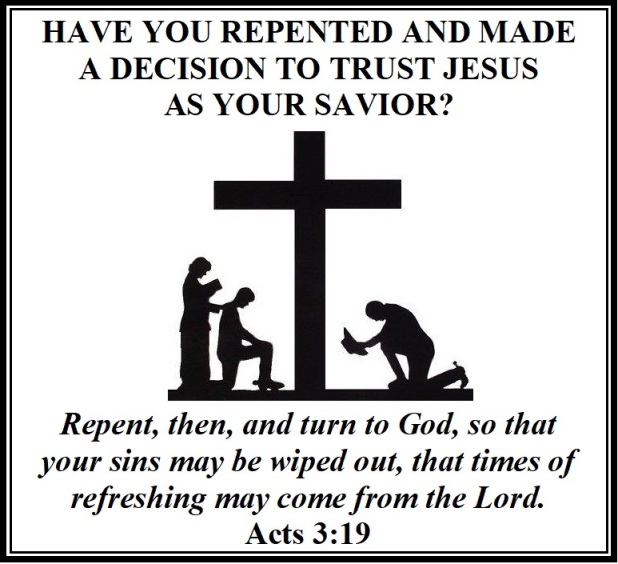
The gospel is the good news of Jesus’ death and resurrection for the forgiveness of our sin (1 Corinthians 15:3–4). Gospel presentations in the Bible exhort a proper response to that message – believe (John 3:16; Acts 16:31), receive (John 1:12), and repent (Acts 3:19). We need to change our mind about our sin and about who Christ is; and need to believe that Jesus died and rose again, and receive the gift of eternal life by faith. 

Remember, Salvation is about trusting in Jesus as your Savior, receiving the forgiveness He offers by grace through faith. Salvation is about being made new through the sacrifice of Jesus Christ and the power of the Holy Spirit (Titus 3:5). 

How do you know if you’re really saved? Put simply, our salvation depends solely on the person and work of Jesus Christ. As we continue to trust in Him, we will experience the power of the Holy Spirit at work in our lives to make us more like Jesus. When we see this happening, our assurance that we truly are one of God’s children grows. 

The Lord Jesus said in John 3:6, “That which is born of the flesh is flesh, and that which is born of the Spirit is spirit.” Born of the flesh” refers to our physical birth, and “born of the Spirit” refers to our spiritual birth. 

“The Spirit” is the Spirit of God, and “spirit” refers to our human spirit. When we believe in Jesus Christ, our human spirit is born of the Spirit with the divine life of God. 

Therefore, “Whatever you do in word or deed, do everything in the name of the Lord Jesus, giving thanks through Him to God the Father” (Colossians 3:17). 

Father, help me to see that following you is not merely a one-time decision, but a daily way of life. Show me where I fail to understand that my walk with You is a posture toward Christ – one that I maintain for a lifetime. Equip me to share the gospel with those that are close to me yet far from You so that they may experience the hope of Jesus. Thank you for eternal life and the gift of your Spirit. Amen! 

*******

DISCLAIMER MVM

Posted by: missionventureministries | September 25, 2024

COME TO JESUS AND YOU WILL FIND REST – Matthew 11:28-30

Matthew 11 vs 28-30

In the following verses, Jesus extends a gracious invitation to all who are weary and burdened: “Come to Me, all you who are weary and burdened, and I will give you rest. Take My yoke upon you and learn from Me, for I am gentle and humble in heart, and you will find rest for your souls. For My yoke is easy and My burden is light.” 

Matthew 11:28-30 offers a profound invitation for rest and relief, emphasizing Jesus’ gentle nature and the lightness of His burden. He offers a rest that the world cannot provide, that com es from knowing and trusting in Him, as He invites us to: 

Come to Me, all you who are weary and burdened – Meaning that we need to approach Jesus in faith, bringing all our cares and troubles to Him. 

And I will give you rest – For believers today, this promise serves as a reminder that amidst life’s stresses, be it loneliness, anxiety, grief or whatever it might be, turning to Jesus provides comfort and relief. It encourages individuals to lay down their burdens at His feet, trusting that He will carry what they cannot manage by them self. It is a promise of spiritual peace and personal relationship, inviting all who are weary to find solace in Him rather than in their own efforts or worldly solutions. 

Take My yoke upon you and learn from Me – Inviting us to participate in a transformative relationship where believers learn to live according to Jesus’ principles. This connection fosters growth in character, leading to a deeper understanding of God and a lighter burden in life. 

For I am gentle and humble in heart – Jesus is revealing the tender, welcoming, understanding, and accommodating nature of His heart towards sinners and sufferers. This is the heart we are called to learn from and imitate. 

Jesus was patient with the faults and failures of others. He did not react harshly or seek revenge when wronged. Instead, He showed mercy and gave people room to grow. As such Jesus calls us to learn humility from Him and take His “yoke” upon ourselves (Matthew 11:29). We are to cultivate the same gentle, humble, servant-hearted, merciful spirit in our dealings with others. 

And you will find rest for your souls – This rest addresses the weariness that stems from life’s burdens, be they financial, relational, or health-related and provides a sense of reassurance and tranquility. The rest He provides is not contingent on external circumstances changing; instead, it is an inner peace that can be experienced even amid trials. This invitation reflects a deep understanding of human need for connection with God, suggesting that our souls are inherently restless until they find their peace in Him. 

For My yoke is easy and My burden is light – In stating this Jesus invites individuals to embrace a life of faith characterized by grace and support rather than fear and obligation. This teaching reassures believers that they are not alone in their struggles; instead, they can rely on Christ’s strength to carry their burdens alongside them. 

In essence, the life lived by faith is a much lighter yoke and a much easier burden to carry than the heavy and burdensome yoke of self-righteousness under which some continually strive to make themselves acceptable to God through works. 

Matthew 11:28-30 can be compared to several other Bible verses that also speak about rest and relief, highlighting similar themes of comfort and spiritual rejuvenation. Let’s take a look: 

Psalm 23:1-3 states: “The Lord is my shepherd, I lack nothing. He makes me lie down in green pastures, He leads me beside quiet waters, He refreshes my soul. He guides me along the right paths for His name’s sake.” 

Both passages emphasize the idea of God providing rest and refreshment. While Matthew speaks directly to the weary seeking Jesus’ assistance, Psalm 23 depicts God as a shepherd who leads to peaceful places, offering a similar sense of comfort and restoration. 

In Isaiah 40:29-31 we read: “He gives strength to the weary and increases the power of the weak. Even youths grow tired and weary, and young men stumble and fall; but those who hope in the Lord will renew their strength. They will soar on wings like eagles; they will run and not grow weary, they will walk and not be faint.”  

Isaiah emphasizes God’s provision of strength to those who are weary, paralleling Jesus’ offer of rest in Matthew. Both highlight reliance on God as a source of renewal, suggesting that true relief comes from divine support rather than self-effort. 

1 Peter 5:7 tells us to: “Cast all your anxiety on Him because He cares for you.” 

This verse resonates with Matthew’s message by encouraging believers to bring their burdens to Jesus. Both passages reflect the compassionate nature of Christ and His willingness to bear our burdens, reinforcing the message that we can find relief through Him. 

Matthew 11:28-30 stands out for its direct invitation from Jesus to those who are burdened, offering immediate relief through His gentle guidance. This theme is echoed throughout Scripture in various forms, whether through God’s shepherding care in Psalms, the renewing strength found in Isaiah, or the call to cast anxieties in Peter’s letters. Each passage collectively reinforces the biblical principle that true rest and relief come from a relationship with God, characterized by trust and surrender rather than striving alone. 

*******

DISCLAIMER MVM

Posted by: missionventureministries | September 18, 2024

SEIZING THE RIGHT MOMENT – Colossians 4:5

Colossians 4 vs 5

Be wise in the way you act toward outsiders; make the most of every opportunity. (Colossians 4:5) 

This verse provides guidance on how Christians should conduct themselves, particularly in their interactions with non-believers. It emphasizes two key points: 

It instructs believers to “be wise in the way you act toward outsiders” or those outside the Christian faith. This means Christians should exercise discernment and thoughtfulness in their behavior and words when interacting with non-believers. The goal is to present a consistent, positive witness that clearly reflects the message of Jesus Christ. 

The second part of the verse encourages Christians to “make the most of every opportunity.” This can be interpreted as using time effectively and taking advantage of chances to share one’s faith. Paul, who wrote this letter, was acutely aware of how precious time is having faced many hardships in his ministry. The underlying message being that life is short, and believers should be motivated to share the gospel with others while they can. 

So how does a Christian put this verse in action? 

  • Be prepared to share about their beliefs when opportunities arise.
  • Use time wisely, recognizing its value in light of eternity. 

The overall intent is for believers to live in a way that attracts others to the Christian faith, while actively seeking to make a positive impact with the time they have. This requires both wisdom in one’s approach and a sense of urgency in using opportunities effectively. 

The key to stay close to God is being alert to His leading, using wisdom and discernment, and stepping out in faith when you sense a divine opportunity, trusting God’s presence and power rather than in your own strength. 

So, how do we sense a divine opportunity? 

Christians always need to be attentive to the Holy Spirit’s prompting. For instance there are times when opportunities present themselves that seem too perfect to be random; this happens when we have this incredible feeling that we should talk or share with someone.     

When this happens, this is the moment when you need to step out in faith and trust God. The Bible tells us in many places that the Holy Spirit will endeavor to prompt you, lead you and guide you (Romans 8:14). Therefore, it is vital for you to follow His lead and obey His prompting. He will lead you, guide you, and help you to make right choices as John 16:13 states: “But when He, the Spirit of truth, comes, He will guide you into all the truth. He will not speak on His own; He will speak only what He hears, and He will tell you what is yet to come.” 

Additionally 1 John 2:27 tells us that one of the main job of the Holy Spirit is to “abide in Christ,” that is to live in fellowship with Him, trust Him, and depend on Him. 

Remember to rely on the Holy Spirit is to use wisdom and discernment when evaluating potential divine opportunities. Seek God’s guidance through prayer, even if it is in the spur of the moment, and be open to His leading, even if the opportunity comes in unexpected form. 

Once you get the go ahead, don’t vacillate since some doors close, never to open again. Let me explain.           

There was a pastor who traveled to a large city each week and on his way he stopped at a gas station to fill his car up and to get a cup of coffee. He always wanted to witness to Veronica the cashier but never had enough time to do so since he was constantly late once he got there. One day he determined that he would make time and leave his house earlier, and so he did. Once he reached the gas station, as usual he filled his car with gas and went inside to pay and to get his cup of coffee, but Veronica was not there. Inquiring about her whereabouts, he found out that she had passed away just a week ago. He was devastated to say the least. He knew that the Lord forgave him for not taking the time to witness to her, however, he lived the rest of his life thinking about the lost opportunity he had had of not knowing where Veronica would spend eternity. 

This is a true story and it made a very big impact on my Christian life. Looking back, I have had lost opportunities also, not as tragic as this one. Never the less, lost opportunity to witnessing to someone or being there to pray for them when a need is displayed have now been the focus of my life. 

This lesson is near and dear to my heart and I hope it will make an impact on your life as the story of this pastor did for me. 

Therefore, always remember that if you are a Christian, “the Holy Spirit will teach you in that very hour what you ought to say” (Luke 12:12). 

*******

DISCLAIMER MVM

Posted by: missionventureministries | September 11, 2024

WHAT IS BIBLICAL FAITH? – Hebrews 11:1

Faith - Hebrews 11 vs 1

Now faith is the substance of things hoped for, the evidence of things not seen.  (Hebrews 11:1) 

Genuine faith involves abandoning all human reliance on self-efforts and placing total dependence upon God’s character, His actions, and His promises, as revealed in His Word. “So then faith comes by hearing, and hearing by the word of God” (Romans 10:17). 

According to Hebrews 11:1, faith gives substance and reality to the things we hope for, treating them as if they already exist and therefore is: 

The substance of things hoped for – Faith is a firm persuasion, expectation and assurance of the things we hope for but have not yet received. 

And the evidence of things not seen – Through faith, we are convinced of the reality of things we cannot see with our physical eyes that grant certainty about the unseen providences of God. 

Faith is a confident trust in God and the unseen spiritual realities He has revealed, which gives substance to our hopes and conviction about the truth of His promises, even when they are not yet realized in our experience. Faith involves relying on God’s promises and trusting that they will come to fruition, even when they are not immediately apparent. 

Faith is not passive; it requires active trust and reliance on God and His word. This is further illustrated by the examples of faith that follow in the chapter, showcasing how faith leads to action and obedience.           

So, how can I apply the concept of faith from Hebrews 11:1 to my daily life? 

Applying the concept of faith to our daily life involves understanding and embodying the principles of confidence and assurance in what we hope for, as well as acting on that faith in tangible ways. Here are several practical steps to integrate this concept into your everyday routine: 

  • Recognize that true faith is not merely wishful thinking but a deep assurance in God’s promises. This means actively believing that what you hope for, whether it is personal growth, healing, or guidance, is grounded in God’s faithfulness. To do this, start each day with affirmations that reinforce your confidence in God’s promises. For example, remind yourself that you are not alone and that God is working in your life, even when you cannot see it. 
  • Faith is demonstrated through actions. Hebrews 11 recounts how various biblical figures acted on their faith, showing that belief must translate into behavior. Therefore set goals aligned with your faith by identifying specific areas in your life where you want to see God’s promises fulfilled. Take actionable steps towards these goals, trusting that God will guide you. For example, if you hope for better relationships, make an effort to communicate more openly with loved ones. 
  • Pray and Seek Guidance. Prayer is essential for nurturing your faith. It’s a way to communicate with God, seek His will, and receive assurance. Consequently, dedicate time each day for prayer, asking God to strengthen your faith and provide clarity in your decisions. This practice helps reinforce your confidence in His plans. 
  • Reflect on past experiences by looking back on times when you felt God’s presence or guidance in your life. Reflecting on these moments can bolster your faith and provide assurance in current uncertainties. Journaling can serve as a powerful reminder during challenging times. 
  • Faith often grows through trials. When faced with difficulties, view them as opportunities to deepen your trust in God. Instead of succumbing to fear or doubt during tough times, consciously choose to respond with faith. 

These are just some actions that you can take; and by implementing these practices, you can effectively apply the concept of faith from Hebrews 11:1 to your daily life, fostering a deeper relationship with God and a more fulfilling spiritual journey. 

Remember that faith includes believing that God exists and that He is wholly trustworthy, so much so that we base our lives on Him and His Word, doing what it says, no matter what our physical eyes tell us. Through faith in Jesus Christ, we obtain “the victory that has overcome the world” (1 John 5:4–5). 

In essence faith is a confident trust in God’s promises, providing both assurance of future hope and conviction regarding unseen realities as we trust in Him. It is God who gives us faith and He is not only the Giver of faith, but He is also the Author, the Originator, of our faith as Hebrews 12:1-2 states: “And let us run with perseverance the race marked out for us,  fixing our eyes on Jesus, the pioneer and perfecter of faith.” 

Real faith comes from the Spirit of God. It is a fruit of the Holy Spirit. “But the fruit of the Spirit is love, joy, peace, long-suffering, gentleness, goodness, faith, meekness, temperance: against such there is no law” (Galatians 5:22-23). No one can have faith or even be a true Christian without God’s Spirit. 

Therefore, “Trust in the Lord with all your heart, and lean not on your own understanding; in all your ways acknowledge Him, and He shall direct your paths” (Proverbs 3:5-6). 

*******

DISCLAIMER MVM

Posted by: missionventureministries | September 4, 2024

HOW TO ACCEPT CORRECTION – Proverbs 10:17

Proverbs 10 vs 17

Whoever heeds discipline shows the way to life, but whoever ignores correction leads others astray. (Proverbs 10:17) 

Nobody likes to be corrected, which is often unsolicited and rarely enjoyed. Yet God can use the correction from others to help us grow. 

That is why it is wise to pay attention when people tell us something we do not want to hear because our pride is hurt. Invited or not, correction gives us an opportunity to examine ourselves, take notice of weak areas, and avoid future unnecessary mistakes. If we fail to listen, our potential for mental, emotional, and spiritual growth is limited. Proverbs 15:31 states, “Whoever heeds life-giving correction will be at home among the wise.” This verse emphasizes the value of accepting constructive correction as a pathway to wisdom. It suggests that those who are open to receiving guidance and reproof will find themselves in the company of wise individuals, highlighting the importance of humility and the willingness to learn from others. 

While not all correction is valid, it’s important to respond well and evaluate what we are being told in a correct manner. So how do we do this? 

First, we should not immediately reject the correction or defend ourselves. Instead, we need to consider what was said and ask God if He is trying to tell us something. Then, thank the person for the interest in your growth, and reflect on the observation. Next, evaluate the critique and determine what exactly is under scrutiny; your beliefs, your character or your behavior? Finally, view this as an opportunity for growth, and, if necessary, apologize to the person you’ve offended. 

Jesus died on the cross for us, so we as believers are certain of His acceptance. When we remember this, the disapproval of others will feel less significant and hurtful. And as we learn to respond correctly, we’ll be blessed to find ourselves growing. 

We need to understand that ignoring correction can have significant repercussions not just for the individual but also for others around them. Here are some key facts to ponder: 

Individuals who ignore correction often miss opportunities for personal growth and learning. This can lead to a stagnation of skills and knowledge, as they fail to recognize and rectify their mistakes. As Proverbs 10:17 states, ignoring correction can lead to a misguided path, ultimately impacting one’s life trajectory negatively. 

When correction is disregarded, individuals may continue to engage in harmful or unproductive behaviors. This not only affects their personal development but can also lead to a cycle of repeated mistakes that could have been avoided through heeding the advice received. 

It can also have and impact on others, possibly leading them astray. For instance, when a person fails to accept guidance, they may inadvertently influence others negatively. For example, leaders or mentors who dismiss advice can lead their followers or subordinates into poor decision-making, as those around them may emulate their behavior or decisions. 

Ignoring correction can also strain relationships. Advisors and peers may feel undervalued or frustrated when their guidance is ignored, leading to a breakdown of trust. This can create a hostile environment where open communication is stifled, and others may become reluctant to offer advice in the future; further isolating the individual who ignores correction and guidance. 

Looking further into this verse we uncover two key points: 

Embracing discipline leads to life: Those who accept and follow godly guidance are on a path that leads to wisdom, growth and success. 

Rejecting correction leads us to go astray: Ignoring wise counsel not only jeopardizes one’s own path but can also negatively influence others, leading them away from the right way. Fools reject discipline, while the wise accept it. 

As we see, Proverbs consistently teaches that embracing discipline and correction is a mark of wisdom, while rejecting it is foolish and destructive. Discipline is necessary for acquiring godly knowledge and understanding. It is the loving Father’s way of training and refining His children. 

The relationship between discipline and wisdom is reinforced throughout the Book of Proverbs: 

  • Proverbs 12:1 states, “Whoever loves discipline loves knowledge, but he who hates reproof is stupid.” This highlights that a love for discipline is foundational for acquiring knowledge and wisdom. 
  • Proverbs 15:5 notes, “A fool despises his father’s instruction, but whoever heeds reproof is prudent.” This further illustrates that wisdom is linked to the acceptance of correction. 
  • Proverbs 19:20 encourages, “Listen to counsel and accept discipline, that you may be wise the rest of your days.” This suggests that discipline is not just a temporary measure but a lifelong pursuit that leads to sustained wisdom. 

In summary, Proverbs 10:17 emphasizes that heeding discipline and correction is essential for gaining wisdom, avoiding destruction, and showing the way to life. It is a key to growing in knowledge, prudence and humility. 

*******

DISCLAIMER MVM

Posted by: missionventureministries | August 28, 2024

YOU ARE A PRIEST FOREVER IN THE ORDER OF MELCHIZEDEK – Psalm 110:4

Psalm 110 vs 4

“The Lord has sworn and will not change His mind: “You are a priest forever, in the order of Melchizedek.” (Psalm 110:4) 

This verse refers to the fascinating personage that appeared briefly in Genesis 14:18-20. Melchizedek, meaning “King of Righteousness,” is said to have been “King of Salem” or “King of Peace,” but there is no record, either in secular history or elsewhere in the Bible, that there ever was such a city or earthly king. He was also called “priest of the Most High God” (Hebrews 7:1), who suddenly appeared, then disappeared as swiftly as he had come. 

He was obviously greater than Abraham (Hebrews 7:4) and Aaron, the founder of the Levitical priesthood. Furthermore, he was “without father or mother, without genealogy, without beginning of days or end of life, resembling the Son of God, he remains a priest forever” (Hebrews 7:3). 

The significance of Melchizedek being described as “without father or mother, without genealogy” in Hebrews 7:3 is multifaceted, primarily serving to highlight the unique nature of his priesthood in contrast to the Levitical priesthood. 

Melchizedek’s lack of genealogy signifies that his priesthood does not rely on hereditary lineage, which was crucial for Levitical priests. In ancient Israel, priests were required to prove their lineage back to Aaron to serve in the temple. Melchizedek, however, is introduced as a priest of the Most High God without any recorded ancestry, indicating that his priesthood is established on divine appointment rather than human genealogy. 

The phrase “without beginning of days or end of life” emphasizes the eternal nature of Melchizedek’s priesthood. This characteristic is likened to that of the Son of God, suggesting that Melchizedek serves as a type or foreshadowing of Christ’s eternal priesthood. The absence of a recorded birth or death implies that his priestly role is perpetual, reinforcing the idea that Jesus, as the ultimate High Priest, holds an everlasting position. 

Melchizedek is often seen as a type of Christ, serving as a precursor to Jesus’ dual roles as King and Priest. The Book of Hebrews explicitly draws parallels between Melchizedek and Jesus, emphasizing that Jesus is a high priest in the order of Melchizedek, which is characterized by an eternal and superior priesthood. 

These verses establish several key points:

  • The Messiah will be a priest forever.
  • His priesthood will be in the order of Melchizedek, not the Levitical priesthood.
  • The Messiah’s priesthood is eternal and unending, unlike the Levitical priests who served for a time and then passed the role to the next generation. The Messiah’s priesthood is modeled after the mysterious figure of Melchizedek, who was both a king and a priest (Genesis 14:18-20).
  • The Superiority of the Messiah’s Priesthood which was based on physical descent rather than divine appointment (Hebrews 7:11-14).
  • The Messiah’s priesthood is eternal, as He lives forever (Hebrews 7:15-17, 23-25).
  • His sacrifice is perfect and complete, unlike the repeated sacrifices of the Levitical system (Hebrews 7:26-28). 

The Messiah’s eternal, superior priesthood guarantees the effectiveness of His sacrifice and the permanence of His work. We can trust in His finished work and have confidence in approaching God through Him (Hebrews 4:14-16). 

Psalm 110:4 also highlights God’s immutability – He does not change His mind or go back on His word. God’s promises are sure and steadfast. We can have full assurance that what He has declared about the Messiah’s eternal priesthood will come to pass. This should fill us with hope and confidence in God’s plan of salvation. 

In summary, Psalm 110:4 points to the Messiah’s eternal, superior priesthood and God’s unchanging commitment to His promises. It is a profound declaration of the Messiah’s identity and the efficacy of His work on our behalf. 

The oath in Psalm 110:4 is considered unbreakable for several reasons, primarily rooted in the nature of God’s character and the significance of the priesthood established in this verse. 

The phrase “The LORD has sworn and will not change His mind” emphasizes God’s immutability. Unlike humans, who may break promises or change their minds, God’s word is steadfast and unchangeable. This guarantees that His declarations are eternal and reliable. 

The divine oath signifies a formal commitment from God, which underscores the gravity and permanence of His promises. When God makes a vow, it is binding and reflects His absolute authority and faithfulness. 

The reference to Melchizedek, who is both a king and a priest, indicates a priesthood that transcends the temporal and hereditary nature of the Levitical priesthood. Melchizedek’s priesthood is characterized by its timelessness and divine appointment, which is echoed in the priesthood of Jesus Christ. This eternal aspect reinforces the unbreakable nature of the oath, as it establishes a priesthood that does not depend on lineage or mortal life. 

The New Testament, particularly in Hebrews 7, elaborates on this priesthood, stating that Jesus was made a priest with an oath, unlike the Levitical priests who were appointed without one. Jesus’ priesthood is based on “the power of an indestructible life” (Hebrews 7:16), further solidifying the unbreakable nature of the oath in Psalm 110:4. 

The unbreakable nature of God’s oath assures believers of their secure salvation. “And having been made perfect, He became to all those who obey Him the source of eternal salvation, being designated by God as a high priest according to the order of Melchizedek” (Hebrews 5:9-10). Therefore, since Jesus’ priesthood is eternal, it provides a lasting foundation for faith and confidence in God’s promises. 

In summary, the oath in Psalm 110:4 is considered unbreakable due to God’s immutable nature, the eternal significance of the priesthood of Melchizedek, and the fulfillment of this promise in Jesus Christ, who serves as the eternal High Priest. 

*******

DISCLAIMER MVM

« Newer Posts - Older Posts »

Categories