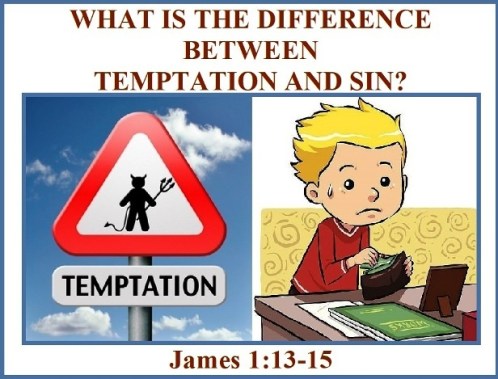
When tempted, no one should say, “God is tempting me.” For God cannot be tempted by evil, nor does he tempt anyone; but each person is tempted when they are dragged away by their own evil desire and enticed. Then, after desire has conceived, it gives birth to sin; and sin, when it is full-grown, gives birth to death.” (James 1:13-15)
Sin entered the world due to an act of disobedience by Adam and Eve. As a consequence all of us have inherited their sin nature.
Sin is described as a deliberate disobedience to the known will of God as occurred in the Garden of Eden when they ate of the forbidden fruit.
Temptation is the natural inclination or urge to do something that goes against God’s will or moral principles. It can come from various sources, such as our desires, the world around us, or even the devil. Temptation, by its very nature, feels wrong since God’s moral law is written in the heart of every human being (Romans 1:20), and when a sinful temptation is introduced, our consciences immediately sense danger. However, the temptation itself is not the sin. The Bible acknowledges that temptation is a reality in human life, as seen in the account of Jesus being tempted in the desert (Matthew 4:1-11; Mark 1:13; Luke 4:1-13), but He never sinned (Hebrews 4:15).
Another example of resisting temptation in the Bible is the story of Joseph and Potiphar’s wife. As a slave in Egypt, Joseph finds himself in the service of Potiphar, a high-ranking official when his wife becomes attracted to Joseph and tries to seduce him.
The sinful act occurs when someone succumbs to temptation and engages in actions or thoughts that go against God’s will.
James 1:14-15 explains, “But each person is tempted when they are dragged away by their own evil desire and enticed. Then, after desire has conceived, it gives birth to sin; and sin, when it is full-grown, gives birth to death.”
Therefore, it is essential to distinguish between experiencing temptation or going ahead and committing the sin. The Bible encourages believers to resist temptation and combat it through prayer, self-control, and godly wisdom.
1 Corinthians 10:13 offers encouraging words about overcoming temptation. “No temptation has overtaken you except what is common to mankind. And God is faithful; he will not let you be tempted beyond what you can bear. But when you are tempted, he will also provide a way out so that you can endure it.”
Another great Bible verse that instructs us to keep away from temptation is found in Proverbs 4:14-15, “Do not enter the path of the wicked, and do not walk in the way of evil. Avoid it, do not travel on it; Turn away from it and pass on.” This passage emphasizes the importance of resisting the allure of sin and choosing the right path in life.
These verses encourage believers to rely on God’s guidance and strength when confronting temptation and resisting sinful desires.
Temptation itself is not a sin, but giving in to temptation and committing sinful acts is. The Bible encourages believers to develop spiritual strength and rely on God’s help to overcome temptation and live righteously.
The difference between temptation and sin lies in an individual’s response and actions. Free will plays a significant role in this distinction, as each person is given the choice to either resist or succumb to temptation.
Romans 13:13-14 gives us a guideline for avoiding situations that can lead to temptation. “Let us behave decently, as in the daytime, not in carousing and drunkenness, not in sexual immorality and debauchery, not in dissension and jealousy. Rather, clothe yourselves with the Lord Jesus Christ, and do not think about how to gratify the desires of the flesh.”
If we determine not to gratify the desires of the flesh, we will keep ourselves out of situations that may prove too tempting. When we put ourselves in situations where we know we will be tempted, we are asking for trouble. God promises to provide a “way of escape” when we are tempted (1 Corinthians 10:13), but the best way is to avoid the situation altogether. “Flee the evil desires of youth” (2 Timothy 2:22). Jesus taught us to pray, “Keep us from falling into temptation” (Luke 11:4), but we have a responsibility to pay attention to the direction God is leading us and avoid temptation whenever we can.
So how do we overcome temptation as believers?
- Pray and seeking guidance from God.
- Focus on scripture and spiritual discipline.
- Surround oneself with supportive and like-minded individuals.
- Establish boundaries and avoid situations that may lead to temptation.
- Develop a strong sense of self-control and discipline.
By implementing these strategies, you as a child of God can be better prepared to face and overcome the temptations that occur in daily life.
Remember that giving into temptation and committing sin can lead to feelings of guilt, disappointment, and separation from God. However, through repentance and seeking forgiveness, one can restore their relationship with God and receive grace to overcome future temptations. Therefore, “If we confess our sins, He is faithful and just and will forgive us our sins and purify us from all unrighteousness” (1 John 1:9).
*******



Leave a comment