The way in which Jesus fulfilled the Jewish feasts is a fascinating study. In the Hebrew Scriptures, the Jewish prophet Amos records that God declared He would do nothing without first revealing it to His servants, the prophets (Amos 3:7). From the Old Testament to the New Testament, Genesis to Revelation, God provides picture after picture of His entire plan for mankind and one of the most startling prophetic pictures is outlined for us in the Jewish feasts of Leviticus 23.
The Hebrew word for “feasts” (moadim) literally means “appointed times.” God has carefully planned and orchestrated the timing and sequence of each of these seven feasts to reveal to us a special story. The seven annual feasts of Israel were spread over seven months of the Jewish calendar, at set times appointed by God. They are still celebrated by observant Jews today. These special days demonstrate the work of redemption through God’s Son for both Jews and non-Jews who have placed their faith in Yeshua.
At this time we will focus on the first four of the seven feasts occur during the springtime (Passover, Unleavened Bread, First Fruits, and Weeks). These have already been fulfilled by Christ in the New Testament. The final three feasts (Trumpets, the Day of Atonement, and Tabernacles) occur during the fall, all starting within a short fifteen-day period and we will be addressing these at their appropriate time of the year.
Before we pursue how the spring feasts were fulfilled in Jesus, let’s first familiarize ourselves with the Jewish feasts since the feasts were a part of the Mosaic Law that were given to the Children of Israel by God through Moses in (Exodus 12; 23:14-17; Leviticus 23; Numbers 28 & 29; and Deuteronomy 16). The Jewish nation was commanded by God to celebrate seven feasts over a seven month period of time, beginning in the spring of the year and continuing through the fall. The timing and sequence of the spring feasts are illustrated below.
THE CHRONOLOGY OF THE JEWISH SPRING FEAST AS THEY RELATE TO JESUS
Feast of Passover – Christ’s death – Jesus the Lamb of God
Feast of Unleavened Bread – Jesus’ sinlessness and
Feast of First Fruits – Christ’s resurrection
Feast of Weeks (Pentecost) – The coming of the Holy Spirit
The first three feasts Passover, Unleavened Bread, and First Fruits occur in rapid succession in the spring of the year over a period of eight days. They came to be referred to collectively as “Passover.”
The fourth feast of Weeks occurs fifty days later at the beginning of the summer. By New Testament times this feast had come to be known by its Greek name, Pentecost, a word meaning fifty.
The last three feasts Trumpets, Atonement, and Tabernacles extend over a period of twenty-one days and occur in the fall. They will be explained at that time of the year.
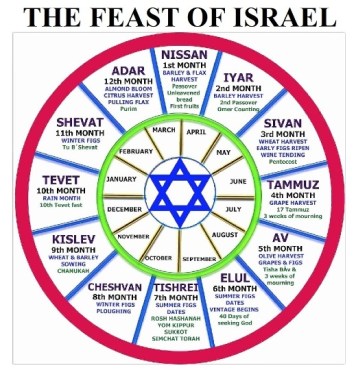
All the feasts were prophetic in nature, each one pointing in a unique way to some aspect of the life and work of the promised Messiah.
- Passover – (Leviticus 23:5) – Pointed to the Messiah as our Passover Lamb (1 Corinthians 5:7) whose blood would be shed for our sins. Jesus was crucified during the time that the Passover was observed (Luke 22:7). He was crucified on the day of preparation for the Passover, at the same time that the lambs were being slaughtered for the Passover meal that evening.
Christ is a “lamb without blemish or defect” (1 Peter 1:19) because His life was completely free from sin (Hebrews 4:15). As the first Passover marked the Hebrews’ release from Egyptian slavery, so the death of Christ marks our release from the slavery of sin (Romans 8:2).
During the first Passover which occurred during the exodus of Israel from Egypt, along with the instruction to apply the Passover lamb’s blood to their doorposts and lintels, God instituted a commemorative meal; fire-roasted lamb, bitter herbs, and unleavened bread (Exodus 12:8). The Lord told the Israelites to “observe this rite as a statute for you and for your sons forever” (Exodus 12:24), even when in a foreign land.
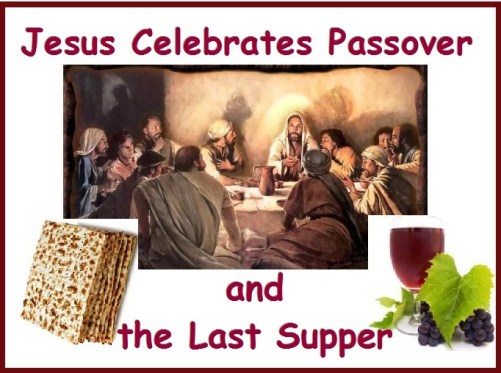
To this day, Jews all over the world celebrate the Passover in obedience to this command. Passover and the story of the exodus have great significance for Christians also, as Jesus Christ fulfilled the Law, including the symbolism of the Passover (Matthew 5:17). Jesus is our Passover (1 Corinthians 5:7; Revelation 5:12). The Last Supper was a Passover meal that Jesus celebrated with His disciples before He was crucified (Luke 22:7-8).
The Israelites who, in faith, applied the blood of the Paschal lamb to their homes became a model for us since, by spiritually applying His blood to our lives by faith, we trust Christ to save us from death. It was not the Israelites’ ancestry or good standing or amiable nature that saved them; it was only the blood of the Lamb that made them exempt from death (see John 1:29 and Revelation 5:9-10).
- Unleavened Bread – (Leviticus 23:6) – Pointed to the Messiah’s sinless life, making Him the perfect sacrifice for our sins.
Leaven is often seen as a symbol of corruption or evil influence in the Bible. There is a good reason for this interpretation, “leaven” is a remnant of dough that was allowed to rot or ferment. As it is spoiled or fermented, yeast (a fungus) from the air lands on and breeds in the dough. This remnant of “corrupted” dough was then added to the next day’s batch of dough, creating bread that would rise and grow. Leaven signifies anything that rots and corrupts physically, spiritually, and morally.
The Feast of Unleavened Bread points to Jesus as the bread from heaven without leaven (sin). He is our Bread of life (John 6:48).
- First Fruits – (Leviticus 23:10) – Pointed to the Messiah’s resurrection as the first fruits of the righteous. Jesus was resurrected on this very day, which is one of the reasons that Paul refers to Him in 1 Corinthians 15:20 as “the firstfruits of those who have fallen asleep.”
- Weeks or Pentecost – (Leviticus 23:16) – Occurred fifty days after the beginning of the Feast of Unleavened Bread and pointed to the great harvest of souls and the gift of the Holy Spirit for both Jew and Gentile, who would be brought into the kingdom of God during the Church Age (see Acts 2). The Church was actually established on this day when God poured out His Holy Spirit and 3,000 Jews responded to Peter’s great sermon and his first proclamation of the gospel.
The long interval of three months between Pentecost and the feast of Trumpets points to the current Church Age, a period of time that was kept as a mystery to the Hebrew prophets in Old Testament times.
The Jewish rituals were only temporary visual aids. God used them as object lessons to teach the Jewish people about their coming Messiah. We no longer need these rituals to show us the way to God, but that doesn’t mean that these Hebrew visuals aren’t still valuable to us as Christians. They still are very useful in helping us to better understand how to know God and walk with Him through a personal relationship with Jesus Christ.
Blessings to all as we celebrate the glorious resurrection of our Lord and Savior Jesus Christ!
* * * * * * *



Leave a comment