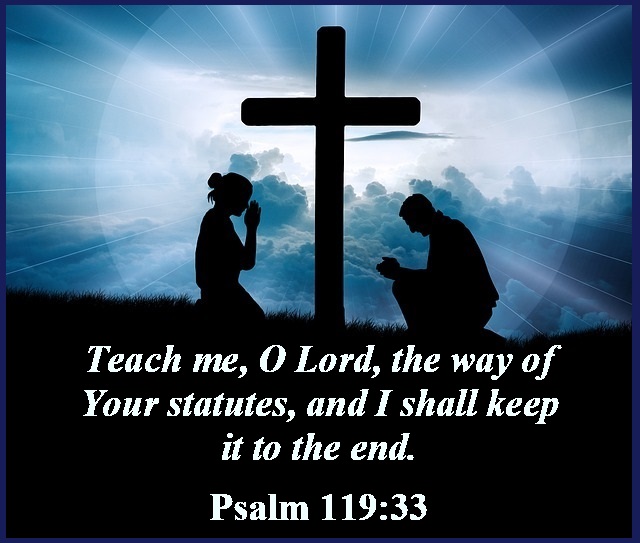
“Teach me, O Lord, the way of Your statutes, and I shall keep it to the end.”
Psalm 119:33 is a verse from the longest psalm and the longest chapter in the Bible. It is a heartfelt request for divine teaching and guidance, not just for knowledge, but for a transformed life lived in obedience to God’s instructions.
This prayer emphasizes spiritual dependence, recognizing that learning, understanding, and the will to obey ultimately come from God, not human effort alone. It encourages seeking ongoing instruction from God, cultivating a humble and teachable spirit and underscores the importance of commitment. The psalmist seeks not only to know God’s ways but to persevere in them for a lifetime.
The psalmist’s request to be taught is not just about understanding God’s commands, but about walking in them as a journey, a “way” that is followed continually, right up until life’s conclusion. “To the end” refers to a goal of remaining steadfast in God’s ways for a lifetime, making obedience a central, lifelong pursuit rather than a brief effort.
The verse acknowledges that such perseverance is possible only through continual guidance and strength from God, exposing human limitations and the need for regular renewal from God’s grace.
Lifelong obedience is portrayed as rooted in God’s ongoing instruction and the believer’s humble reliance, not in self-sufficiency. This steadfast approach inspires readers to seek God’s help not simply for a momentary change but for enduring transformation, a pattern of obedience marked by faithfulness “unto the end,” reflecting perseverance in every stage and circumstance of life.
Practicing obedience deepens one’s relationship with God by expressing love, building trust, and fostering spiritual growth through alignment with His will. When a person consistently chooses to obey God’s commands, this commitment moves beyond words, translating devotion into tangible actions that reflect faith and reverence.
Obedience is not simply about rule-following; it becomes a heartfelt response to God’s love and a demonstration of genuine devotion. Jesus taught that to love Him is to keep His commands (John 14:15), making obedience a visible proof of love and deepening relational intimacy. It leads to spiritual maturity as believers not only hear God’s Word but put it into practice, resulting in transformed hearts and minds (Romans 12:2). And faithful obedience positions one to experience God’s presence and blessings while cultivating character through daily choices that reflect trust and surrender.
Obeying God builds trust; each act of obedience is an affirmation of reliance on God’s wisdom, strengthening the relational bond. This surrender results in deeper joy and peace, as believers are comforted by God’s guidance and drawn closer to His heart. It invites greater revelation and understanding, allowing for richer experiences of God’s love and purpose.
In summary, obedience deepens the relationship with God because it demonstrates authentic love, opens the way for spiritual growth, nurtures trust, and draws the believer into closer fellowship with the One who transforms and fulfills.
Let us look at some major biblical examples of obedience:
Noah (Genesis 6–9): Noah built the ark as commanded, despite no sign of imminent danger. His obedience preserved his family and all animal kinds during the flood, and set a pattern of righteousness and faithfulness for others.
Abraham (Genesis 12; 22): God called Abraham to leave his homeland and later to offer Isaac, his promised son, as a sacrifice. Abraham’s obedience deepened his faith and resulted in God’s promises of blessing, making him the ancestor of many nations. His journey demonstrates that obedience, even when costly, leads to spiritual growth and blessing.
Moses (Numbers 20): Though Moses is known for obedience overall, his failure to follow God’s detailed instructions regarding the rock at Meribah (striking instead of speaking) led to consequences. The story illustrates the importance of precise obedience in continued spiritual growth.
Joshua (Joshua 1): Joshua was charged to meditate on and obey God’s law as he led Israel into the Promised Land. His faithful obedience empowered him for successful leadership, fulfillment of God’s promises, and spiritual courage in daunting circumstances.
Shadrach, Meshach, and Abednego (Daniel 3): These men obeyed God by refusing to worship the golden image. God’s miraculous rescue in the fiery furnace and their promotion display growth in faith and public testimony for God’s power.
Jonah (Jonah 1–3): After initially disobeying, Jonah repented and fulfilled his commission to Nineveh. His story shows growth through learning from failure and returning to surrendered obedience.
Peter (Gospels; Acts): Peter grew through learning to obey Jesus. He left his nets, walked on water at Jesus’ command, and later followed difficult instructions in Acts, showing that obedience brought increasing maturity and fruitful ministry.
Scripture repeatedly connects acts of obedience with personal spiritual growth, increased trust, God’s blessing, and expanded influence for His purposes; Psalm 119:33 serves as an example to continually ask for God’s guidance and to aim for enduring, wholehearted obedience in the journey of faith. It emphasizes lifelong obedience by expressing a deep desire to follow God’s teachings persistently and faithfully throughout all of life. The verse’s key phrase, “that I may follow it to the end,” highlights a commitment to perseverance and faithfulness that extends far beyond mere outward conformity or temporary zeal, it points to an enduring, whole-hearted obedience lasting through every season of life; a pursuit made possible only by God’s teaching and sustaining grace.
*******



Leave a comment