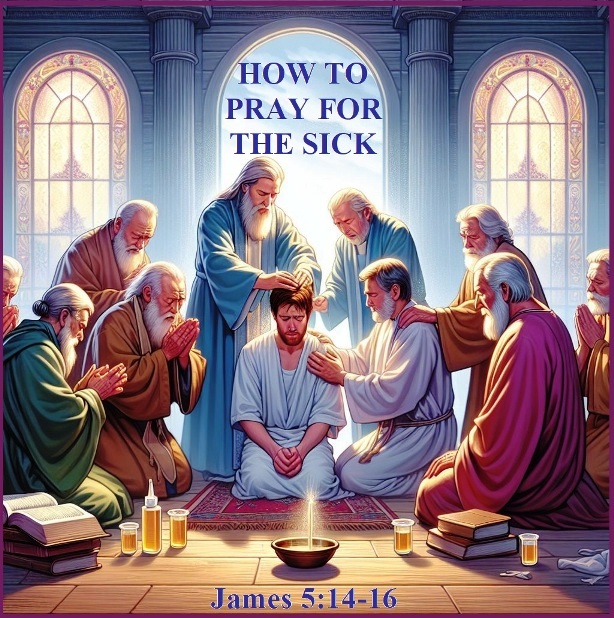
Is anyone among you sick? Let them call the elders of the church to pray over them and anoint them with oil in the name of the Lord. And the prayer offered in faith will make the sick person well; the Lord will raise them up. If they have sinned, they will be forgiven. Therefore confess your sins to each other and pray for each other so that you may be healed. The prayer of a righteous person is powerful and effective. (James 5:14-16)
The letter of James was written to Jewish Christians facing hardship, instructing them in practical matters of faith, endurance, and holiness. The immediate context discusses confessing sins and praying together for healing, physical and spiritual, connecting this to practices found in Jewish liturgy such as public confession for repentance and restoration (Leviticus 5:5-6; Numbers 5:5-10).
Jewish tradition held that sin could cause sickness, so confession and seeking the elders’ prayers were intertwined for spiritual and physical restoration. Therefore, verse 16 is set within the context of the early Christian community, drawing on Jewish traditions of confession and communal prayer, and specifically addressing practices around healing, support, and spiritual restoration.
Historically, early Christians practiced open confession within the congregation, where offenders would publicly declare their sins and the community, led by elders, would pray for their healing. Over time, due to concerns for privacy or scandal, this practice shifted toward more private confession.
Prayer for healing here can refer to both physical ailments and spiritual weaknesses, encouraging believers to seek restoration through intercessory prayer.
James highlights that sincere prayer from someone living faithfully before God can do much to bring about change and healing, for God listens and responds to the prayers of the righteous. The “prayer of a righteous person” in James 5:16 as a reference to the unique spiritual power and effectiveness of prayers offered by individuals who are right with God, through faith and obedient living.
As we see, Christians are encouraged to cultivate transparent, accountable relationships with others to overcome sin and experience God’s healing work in their lives. Praying for each other regularly is presented as essential, with James offering a promise that such prayer truly matters to God and can transform lives.
A righteous person, is characterized by a person’s standards of morality or justice. Someone that lives an obedient life, meaning they submit their life to God and pursue holiness. When faith is accompanied by obedience and upright conduct, the believer’s prayers are described as “powerful and effective.”
Prayer is most effective when the believer is walking closely with God, confessing faults, and living out genuine faith as taught by James. This reflects spiritual alignment with God’s will, which, increases the likelihood of seeing answers to prayer.
The passage is seen as an encouragement to cultivate faith and integrity, entrusting prayers to God’s grace. The Bible point to examples like Elijah, a “man with a nature like ours,” to show that ordinary people, who seek God wholeheartedly, can pray effectively and see extraordinary results.
James 5:16 is a call for all Christians to pray boldly, knowing that through Christ, their prayers have great effect when offered with a clean heart, sincerity and faith. Remember that, “If I had cherished sin in my heart, the Lord would not have listened” (Psalm 66:18).
Because our God is holy, there is a barrier that exists between Him and us when we come to Him with unconfessed sin in our lives. “But your iniquities have separated you from your God; your sins have hidden his face from you, so that he will not hear” (Isaiah 59:2).
Another major hindrance to effective prayer is unbelief and doubt. Praying without doubt means praying in the secure belief and understanding of God’s character, nature, and motives. “And without faith it is impossible to please God, because anyone who comes to Him must believe that He exists and that He rewards those who earnestly seek Him” (Hebrews 11:6). When we come to God in prayer, doubting we insult Him terribly. Our confidence must be in His ability to grant any request that is in accordance with His will and purpose for our lives. We must pray with the understanding that whatever He purposes is the best possible scenario. “But when he asks, he must believe and not doubt, because he who doubts is like a wave of the sea, blown and tossed by the wind. That man should not think he will receive anything from the Lord; he is a double-minded man, unstable in all he does” (James 1:6-7).
James is not giving a blanket promise of healing. Instead, he is presenting practical advice. When it is God’s will to grant healing, the “prayer offered in faith will heal the sick” (James 5:15). In the event unconfessed sin is the reason for an illness, James wants believers to begin their prayer for healing with confession and repentance. He knows that turning away from evil “will bring health to your body and nourishment to your bones” (Proverbs 3:8).
In closing, remember what Jesus told us: “Have faith in God. Truly I tell you, if anyone says to this mountain, ‘Go, throw yourself into the sea,’ and does not doubt in their heart but believes that what they say will happen, it will be done for them. Therefore I tell you, whatever you ask for in prayer, believe that you have received it, and it will be yours. And when you stand praying, if you hold anything against anyone, forgive them, so that your Father in heaven may forgive you your sins” (Mark 11:22-25).
*******



Leave a comment