Posted by: missionventureministries | October 22, 2025

PEACE IN THE MIDDLE EAST? – WHAT COMES NEXT? – Ezekiel 38 – 39

October 13, 2025 marks the date when the final hostages of the brutal assault of October 7th, 2023 were released. We praise the Lord for that, but, now what will happen next?

Some wonder if this peace deal is the prophesied Antichrist’s peace covenant found in Daniel 9:27. It is not, as there is no seven-year requirement in this accord.

Some are asking if in signing this peace deal and returning to the Abraham Accords marks the temporary time of peace Israel will enjoy, while the determined countries affirmed in Scripture plan the horrific Gog-Magog invasion stated in Ezekiel 38-39.

Regardless, God is in control and we are indeed living in exciting times as we are witnessing Bible prophecy being fulfilled right before our very eyes!

  • In the past century, we have seen the Jewish people being re-gathered from the four corners of the earth (Isaiah 11:11-12).
  • The state of Israel was re-established on May 14, 1948 (Isaiah 66:7-8; Ezekiel 37:21-22).
  • The land of Israel has been reclaimed from its desolation, becoming once again a land of agricultural abundance (Ezekiel 36:34-35).
  • The Hebrew language has been revived from the dead (Zephaniah 3:9).
  • The Jews once again reoccupy the city of Jerusalem and have made it their capital (Zechariah 8:4-8).
  • And all the nations of the world have come together against Israel over the issue of who controls Jerusalem and the Holy Land (Zechariah 12:1-3).

We have witnessed the Arab nations of the world attacking Israel repeatedly in a coordinated effort to annihilate the state and always failing. Those who “have taken crafty counsel against Your people” are “put to shame and perish,” “that they may know that You, whose name alone is the Lord, are the Most High over all the earth” (Psalm 83; Zechariah 12:6).

Israel has proven that it will never be removed from its promised land (Amos 9:15). 

While we can only speculate, we can know with surety what biblical prophecies lie ahead for the nation of Israel and the Jewish people.

  • Gog-Magog Invasion of Israel – A coalition consisting mainly of Muslim nations will invade Israel. “After many days you [Israel] will be visited. In the latter years you [Gog] will come into the land of those brought back from the sword and gathered from many people on the mountains of Israel, which had long been desolate; they were brought out of the nations, and now all of them dwell safely. You will ascend, coming like a storm, covering the land like a cloud, you and all your troops and many peoples with you.” (Ezekiel 38-39)
  • Destruction of Magog and its Allies – This coalition will be destroyed supernaturally by God. “You shall fall upon the mountains of Israel, you and all your troops and the peoples who are with you; I will give you to birds of prey of every sort and to the beasts of the field to be devoured… And I will send fire on Magog and on those who live in security in the coastlands. Then they shall know that I am the Lord.” (Ezekiel 38-39)
  • God Reveals Himself to the World – God’s supernatural defeat of the Gog and Magog invaders makes Him known to the world and turns Israel’s heart back to Him, though not yet to His Son. “So I will make My holy name known in the midst of My people Israel, and I will not let them profane My holy name anymore. Then the nations shall know that I am the Lord, the Holy One in Israel. ‘Surely it is coming, and it shall be done,” says the Lord God. ‘This is the day of which I have spoken.’” (Ezekiel 38-39)
  • Antichrist Makes a Peace Covenant with Israel – The Antichrist will intervene and guarantee the security of Israel, possibly enabling the Jews to rebuild their Temple. “Then he shall confirm a covenant with many for one week…” (Daniel 9:27)
  • Antichrist Desecrates the Third Temple – At the end of three and a half years, the Antichrist will enter the rebuilt Temple in Jerusalem and declare himself to be God. “…but in the middle of the week he shall bring an end to sacrifice and offering. And on the wing of abominations shall be one who makes desolate, even until the consummation, which is determined, is poured out on the desolate.” (Daniel 9:27) 

“Therefore when you see the abomination of desolation, spoken of by Daniel the prophet, standing in the holy place, then let those who are in Judea flee to the mountains…” (Matthew 24:15-18) 

“Let no one deceive you by any means; for that Day will not come unless the falling away comes first, and the man of sin is revealed, the son of perdition, who opposes and exalts himself above all that is called God or that is worshiped, so that he sits as God in the temple of God, showing himself that he is God.” (2 Thessalonians 2:3-4)

  • The Second Holocaust – The Jews will reject the Antichrist, and he will respond with an attempt to annihilate them, killing two-thirds of them in the process. “Now when the dragon [Satan] saw that he had been cast to the earth, he persecuted the woman [Israel] who gave birth to the male Child [Jesus]… And the dragon was enraged with the woman, and he went to make war with the rest of her offspring, who keep the commandments of God and have the testimony of Jesus Christ.” (Revelation 12:13-17)

“‘And it shall come to pass in all the land,’ says the Lord, ‘That two-thirds in it shall be cut off and die, but one-third shall be left in it: I will bring the one-third through the fire, will refine them as silver is refined, and test them as gold is tested. They will call on My name, and I will answer them. I will say, “This is My people”; and each one will say, “The Lord is my God.” (Zechariah 13:8-9)

  • Remnant Delivered by the Messiah – At the end of the Tribulation, as the Jews face their extinction, they will call out to Jesus their Messiah. “And so all Israel will be saved, as it is written: ‘The Deliverer will come out of Zion, and He will turn away ungodliness from Jacob; for this is My covenant with them, when I take away their sins.’” (Romans 11:26-27)

“And I will pour on the house of David and on the inhabitants of Jerusalem the Spirit of grace and supplication; then they will look on Me whom they pierced. Yes, they will mourn for Him as one mourns for his only son, and grieve for Him as one grieves for a firstborn.” (Zechariah 12:10) 

“Though the number of the children of Israel be as the sand of the sea, the remnant will be saved. For He will finish the work and cut it short in righteousness, because the Lord will make a short work upon the earth.” (Romans 9:27-28)

  • Messiah Blesses the Believing Jewish Remnant – Jesus will return and re-gather all believing Jews to Israel. “…the Lord your God will circumcise your heart and the heart of your descendants, to love the Lord your God with all your heart and with all your soul, that you may live… You will again obey the voice of the Lord and do all His commandments which I command you today… The Lord your God will make you abound in all the work of your hand, in the fruit of your body, in the increase of your livestock, and in the produce of your land for good. For the Lord will again rejoice over you for good as He rejoiced over your fathers.” (Deuteronomy 30:1-9)
  • Messiah Rules From Jerusalem – Israel will be established as the prime nation in the world. “Now it shall come to pass in the latter days that the mountain of the Lord’s house shall be established on the top of the mountains, and shall be exalted above the hills; and all nations shall flow to it… For out of Zion shall go forth the law, and the word of the Lord from Jerusalem.” (Isaiah 2:2-3)

“So the Lord will reign over them in Mount Zion from now on, even forever.” (Micah 4:1-7)

  •  Israel Receives Her Inheritance – The Lord will bless the Jewish remnant by fulfilling  all the promises He has made to Israel. “Arise, shine; for your light has come! And the glory of the Lord is risen upon you… and His glory will be seen upon you. The Gentiles shall come to your light, and kings to the brightness of your rising…” (Isaiah 60:1-62:7)

‘…At that time I will bring you back, even at the time I gather you; for I will give you fame and praise among all the peoples of the earth, when I return your captives before your eyes,’ says the Lord.(Zephaniah 3:17-20)

“Kings shall be your foster fathers, and their queens your nursing mothers; they shall bow down to you with their faces to the earth, and lick up the dust of your feet. Then you will know that I am the Lord.” (Isaiah 49:22-23)

  • The World will be Blessed by the Jewish People – The blessings of God will flow out to all the nations through the Jewish people during the millennial rule of Jesus Christ. “Yes, many peoples and strong nations shall come to seek the Lord of hosts in Jerusalem, and to pray before the Lord… In those days ten men from every language of the nations shall grasp the sleeve of a Jewish man, saying, ‘Let us go with you, for we have heard that God is with you.’” (Zechariah 8:22-23)

As we see, regardless of what people think, Bible prophecy will be fulfilled. God’s will, will be done, and there’s no stopping it. We must remember that none of the events are happening by chance, nor have they caught the Lord off guard.

The Lord our God is in total control; He is at work, allowing safety and creating calamity to accomplish the sovereign purposes of His will. Because of His faithful character and promises of future hope, as His followers, we can rest in His sovereign plans, comforted by His gracious love for us.

“For My thoughts are not your thoughts, neither are your ways My ways,” declares the Lord. “As the heavens are higher than the earth, so are My ways higher than your ways and My thoughts than your thoughts.” (Isaiah 55:8-9)

******* 

SOURCE – Excerpts taken from Lamb and Lion Ministries

Posted by: missionventureministries | October 15, 2025

UNDERSTANDING THE PRINCIPLE OF GRACE – Romans 6:1

“Shall we go on sinning so that grace may increase?” (Romans 6:1) 

The underlying teaching of Romans 6:1 is that for those united with Christ, having died to sin through faith, symbolized by baptism into Christ’s death. If they continue to live in sin contradicts their new identity as people alive to God. Sin no longer has dominion over them. Grace is meant to conquer sin, not to encourage it. The verse serves to emphasize Christian moral responsibility in light of salvation and grace, rejecting any notion that sin can be deliberately continued to increase grace. 

We are saved by grace (Ephesians 2:8). When we place our faith in Jesus Christ, all of our sins are forgiven and we are guaranteed eternal life in heaven. Salvation is God’s gift of grace. 

Does this mean that a Christian can live however they want and still be saved? Yes. But a true Christian will not live “however as they want.” A Christian has a new Master and does not serve himself any more. A Christian will grow spiritually, progressively, in the new life God has given them. Grace is not a license to sin. 

Willful, unrepentant sin in a person’s life makes a mockery of grace and calls into question that person’s salvation (1 John 3:6). Yes, there are times of failure and rebellion in a Christian’s life. And, no, sinless perfection is not possible this side of glory. Christians are to live out of gratitude for God’s grace, not take advantage of God’s grace. 

Ephesians 4:13 says that the spiritual gifts are given to build up the body of Christ “until we all reach unity in the faith and in the knowledge of the Son of God and become mature, attaining to the whole measure of the fullness of Christ.” Some translations say that we will become “perfect” (instead of “mature”), and from this some people have mistakenly thought that we can reach sinless perfection in this life. The Bible teaches that, while we are in the flesh, we will always struggle with a sin nature (see Romans 7:14–24). No one will be “perfect” (sinless) until we reach heaven. 

The word translated “mature” in Ephesians 4:13 is used throughout the New Testament to mean “perfect,” “complete,” “full-grown,” and “mature.” What Ephesians 4:13 teaches is that, the more we grow in Christ, the stronger and more unified we will be as a church. The verse does not teach that we will stop sinning. 

Another passage that people sometimes get confused about is Colossians 1:28, which says, in some translations, that Paul wants to “present every man perfect in Christ Jesus.” Also, in Colossians 4:12 Paul prays that we would “stand perfect and complete in all the will of God.” In both verses, the Greek word for perfect should be understood to mean “mature” or “full-grown,” not “having NO sin.” 

As human beings we are bound under Adam’s nature in this world. No matter how hard we try not to, we will still sin against God. This holds true for everyone. The apostle Paul rebuked Peter for showing favoritism (Galatians 2:11–13). Late in his ministry, Paul calls himself the chief of sinners (1 Timothy 1:15). Peter, James, John, and Paul all admitted that they were imperfect. How could you or I claim anything different? 

True perfection will not come until the rapture of the church, when we rise to meet Jesus in the air (1 Thessalonians 4:17). At that time the dead in Christ will be resurrected and the bodies of the living will be changed (Philippians 3:20, 21; 1 Corinthians 15:54). We will stand before the Judgment Seat of Christ (2 Corinthians 5:10) where our works will be judged and rewards will be given (1 Corinthians 3:9–15). Our redemption will be complete, and our sin will be gone forever. We will live and reign with Christ in sinless perfection forever. 

Here are several related New Testament passages about grace and sin: 

Romans 5:20-21 highlights that where sin increased, grace abounded all the more, so grace reigns through righteousness leading to eternal life through Jesus Christ. 

Romans 6:12-14 instructs believers not to let sin reign in their mortal bodies or obey its desires, as they are under grace, not law, so sin shall not have dominion over them. 

1 John 2:1 encourages believers not to sin, but if anyone does, Jesus Christ is their advocate with the Father. 

Hebrews 4:15-16 shows Jesus as the high priest who was tempted but without sin, allowing believers to confidently approach God’s throne of grace to find help. 

John 1:16-17 contrasts the law given through Moses with the grace and truth that come through Jesus Christ. 

1 John 1:9 promises forgiveness and cleansing from sin when confessed. 

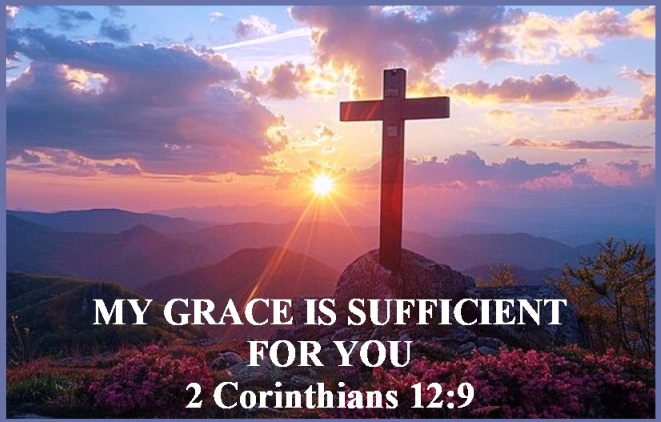
2 Corinthians 12:9 emphasizes that God’s grace is sufficient, and His power is made perfect in weakness. 

Titus 2:11 speaks of God’s grace appearing to bring salvation for all people. 

These passages together teach that grace is not only God’s unmerited favor that forgives sin but also empowers believers to overcome sin, live holy lives, and draw near to God confidently knowing they have an advocate in Jesus Christ.​ 

In summary, Romans 6:1 challenges the misconception that the gospel encourages sin by offering grace, instead urging believers to live transformed lives free from sin’s control because of their union with Christ’s death and resurrection. Romans 6:23 affirms that the wages of sin is death, but the gift of God is eternal life through grace in Christ Jesus. 

Remember that God saves us by His grace, and then we need to “grow in grace” (2 Peter 3:18). This we can do because “the God of all grace, who called you to His eternal glory in Christ” (1 Peter 5:10). 

******* 

SOURCE: Portions taken from Gotquestions.org

Posted by: missionventureministries | October 8, 2025

HOW TO RAISE Godly Kids in an Ungodly World – Proverbs 22:6

Train up a child in the way he should go; even when he is old he will not depart from it. (Proverbs 22:6) 

This verse acts as a cornerstone for biblical parenting advice, emphasizing the responsibility of parents to intentionally shape their children’s character and values from an early age. 

Raising godly kids in an ungodly world is not impossible but it takes love, persistence and discipline. 

In today’s world economy trying to raise godly kids can feel at times like and impossible task. Everywhere we turn in our culture, on television, in movies, and now through sexual education in elementary schools, our kids are being told to embrace and accept the abnormal and unbiblical morality as simply a matter of personal choice. 

Consequently, what does every young person need? They need to understand the difference between world morality and godly behavior. The true ways that is taught in the Bible versus false behavior as taught thru world secularism.

Throughout history, every society that abandons the concept of a moral standard decays into depravity and eventual destruction. So, how do you raise children with a biblical moral compass in a culture that has normalized the abnormal? How do we teach our children that the words of Jesus are the standard for living, and not the mind-set of our culture? 

First, talk about the teachings of Jesus regularly. Family devotions and time together are wonderful especially when we look for unplanned opportunities to bring up the words and practices of Jesus as a part of everyday life. We need to use Jesus’ methods, who taught, “You have heard it said, but I say to you…” (Matthew 5:21, 33. 38, 43) when pointing out how our culture is often in direct contrast with the ways of Jesus. 

Therefore, blending the practices of the kingdom into everyday life is the parents’ responsibility to train their children (see Deuteronomy 6:1-9 and Ephesians 6:4). So we encourage you to take your God-given role as a parent seriously. 

Second, talk about cultural issues with your children. Of course, your conversation with a six- year-old will be different than a talk with your teenager. But you must develop a connection of conversation  within your family. This is achieved over time, and it is created by having intentional discussions about what your kids are seeing and hearing in our broken world. 

When doing this listen intently and ask them a lot of questions for instance: 

  • What did you think about what we observed in the park today?
  • How did you feel when that man said  _________ to that woman? What do you think Jesus would want you to do in a similar situation?
  • Ask clarifying questions such as, so, what did you mean when you said…?
  • Furthermore, don’t put down your child with a negative reaction. What? How could you think that?! 

Learning the art of asking God centered questions is a skill that takes time and forethought. Keep in mind; it’s always important to genuinely listen to your kids when you ask a question.

Practice the effective communication tool of mirroring back what you think you heard. For instant: “So, are you saying?” “Is that what you mean?” If your child feels heard, it will go a long way toward building the open relationship you want. 

Remember that godly kids are not perfect. Therefore, be careful to teach grace and truth by abstaining from using belittling answers in a cruel or hateful way. Teach your children the way of mercy toward others by showing them how, while helping them to learn how to be unbending in their convictions. Becoming like Jesus is always the objective. So, help your child learn how to hold on to truth without shunning or shaming. 

Proverbs 22:6 approach is consistent throughout scripture. For example, Deuteronomy 6:6–7 instructs parents to impress God’s commandments on their children daily, making faith an integral part of family life. It resonates with Ephesians 6:4, “bring them up in the training and instruction of the Lord” and reinforces the biblical mandate for parents to instruct, discipline, and nurture children within a loving relationship. 

In summary, biblical parenting is marked by intentionality, setting boundaries, teaching God’s word, and leading by example, all of which echo the principle set forth in Proverbs 22:6, which provides a foundational blueprint for parenting, urging parents to combine intentional instruction, loving guidance, and reliance on God’s wisdom to nurture their children in faith and character. 

Always remember that the Lord has promised to give us everything we need for life and godliness through our knowledge of Him who called us to eternal life (2 Peter 1:3). Although each child is unique and individual circumstances vary greatly, God has promised that His Word is profitable for teaching, reproof, correction and training in righteousness so that the man of God may be thoroughly equipped for every good work (2 Timothy 3:16–17). 

*******

Posted by: missionventureministries | October 1, 2025

HOW TO PRAY FOR THE SICK – James 5:14-16

Is anyone among you sick? Let them call the elders of the church to pray over them and anoint them with oil in the name of the Lord. And the prayer offered in faith will make the sick person well; the Lord will raise them up. If they have sinned, they will be forgiven. Therefore confess your sins to each other and pray for each other so that you may be healed. The prayer of a righteous person is powerful and effective. (James 5:14-16) 

The letter of James was written to Jewish Christians facing hardship, instructing them in practical matters of faith, endurance, and holiness. The immediate context discusses confessing sins and praying together for healing, physical and spiritual, connecting this to practices found in Jewish liturgy such as public confession for repentance and restoration (Leviticus 5:5-6; Numbers 5:5-10). 

Jewish tradition held that sin could cause sickness, so confession and seeking the elders’ prayers were intertwined for spiritual and physical restoration. Therefore, verse 16 is set within the context of the early Christian community, drawing on Jewish traditions of confession and communal prayer, and specifically addressing practices around healing, support, and spiritual restoration. 

Historically, early Christians practiced open confession within the congregation, where offenders would publicly declare their sins and the community, led by elders, would pray for their healing. Over time, due to concerns for privacy or scandal, this practice shifted toward more private confession. 

Prayer for healing here can refer to both physical ailments and spiritual weaknesses, encouraging believers to seek restoration through intercessory prayer. 

James highlights that sincere prayer from someone living faithfully before God can do much to bring about change and healing, for God listens and responds to the prayers of the righteous. The “prayer of a righteous person” in James 5:16 as a reference to the unique spiritual power and effectiveness of prayers offered by individuals who are right with God, through faith and obedient living. 

As we see, Christians are encouraged to cultivate transparent, accountable relationships with others to overcome sin and experience God’s healing work in their lives. Praying for each other regularly is presented as essential, with James offering a promise that such prayer truly matters to God and can transform lives. 

A righteous person, is characterized by a person’s standards of morality or justice. Someone that lives an obedient life, meaning they submit their life to God and pursue holiness. When faith is accompanied by obedience and upright conduct, the believer’s prayers are described as “powerful and effective.” 

Prayer is most effective when the believer is walking closely with God, confessing faults, and living out genuine faith as taught by James. This reflects spiritual alignment with God’s will, which, increases the likelihood of seeing answers to prayer. 

The passage is seen as an encouragement to cultivate faith and integrity, entrusting prayers to God’s grace. The Bible point to examples like Elijah, a “man with a nature like ours,” to show that ordinary people, who seek God wholeheartedly, can pray effectively and see extraordinary results. 

James 5:16 is a call for all Christians to pray boldly, knowing that through Christ, their prayers have great effect when offered with a clean heart, sincerity and faith. Remember that, “If I had cherished sin in my heart, the Lord would not have listened” (Psalm 66:18). 

Because our God is holy, there is a barrier that exists between Him and us when we come to Him with unconfessed sin in our lives. “But your iniquities have separated you from your God; your sins have hidden his face from you, so that he will not hear” (Isaiah 59:2). 

Another major hindrance to effective prayer is unbelief and doubt. Praying without doubt means praying in the secure belief and understanding of God’s character, nature, and motives. “And without faith it is impossible to please God, because anyone who comes to Him must believe that He exists and that He rewards those who earnestly seek Him” (Hebrews 11:6). When we come to God in prayer, doubting we insult Him terribly. Our confidence must be in His ability to grant any request that is in accordance with His will and purpose for our lives. We must pray with the understanding that whatever He purposes is the best possible scenario. “But when he asks, he must believe and not doubt, because he who doubts is like a wave of the sea, blown and tossed by the wind. That man should not think he will receive anything from the Lord; he is a double-minded man, unstable in all he does” (James 1:6-7). 

James is not giving a blanket promise of healing. Instead, he is presenting practical advice. When it is God’s will to grant healing, the “prayer offered in faith will heal the sick” (James 5:15). In the event unconfessed sin is the reason for an illness, James wants believers to begin their prayer for healing with confession and repentance. He knows that turning away from evil “will bring health to your body and nourishment to your bones” (Proverbs 3:8). 

In closing, remember what Jesus told us: “Have faith in God. Truly I tell you, if anyone says to this mountain, ‘Go, throw yourself into the sea,’ and does not doubt in their heart but believes that what they say will happen, it will be done for them. Therefore I tell you, whatever you ask for in prayer, believe that you have received it, and it will be yours. And when you stand praying, if you hold anything against anyone, forgive them, so that your Father in heaven may forgive you your sins” (Mark 11:22-25). 

*******

Posted by: missionventureministries | September 24, 2025

GROWTH THRU OBEDIENCE – Psalm 119:33

“Teach me, O Lord, the way of Your statutes, and I shall keep it to the end.” 

Psalm 119:33 is a verse from the longest psalm and the longest chapter in the Bible. It is a heartfelt request for divine teaching and guidance, not just for knowledge, but for a transformed life lived in obedience to God’s instructions. 

This prayer emphasizes spiritual dependence, recognizing that learning, understanding, and the will to obey ultimately come from God, not human effort alone. It encourages seeking ongoing instruction from God, cultivating a humble and teachable spirit and underscores the importance of commitment. The psalmist seeks not only to know God’s ways but to persevere in them for a lifetime. 

The psalmist’s request to be taught is not just about understanding God’s commands, but about walking in them as a journey, a “way” that is followed continually, right up until life’s conclusion. “To the end” refers to a goal of remaining steadfast in God’s ways for a lifetime, making obedience a central, lifelong pursuit rather than a brief effort. 

The verse acknowledges that such perseverance is possible only through continual guidance and strength from God, exposing human limitations and the need for regular renewal from God’s grace. 

Lifelong obedience is portrayed as rooted in God’s ongoing instruction and the believer’s humble reliance, not in self-sufficiency. This steadfast approach inspires readers to seek God’s help not simply for a momentary change but for enduring transformation, a pattern of obedience marked by faithfulness “unto the end,” reflecting perseverance in every stage and circumstance of life. 

Practicing obedience deepens one’s relationship with God by expressing love, building trust, and fostering spiritual growth through alignment with His will. When a person consistently chooses to obey God’s commands, this commitment moves beyond words, translating devotion into tangible actions that reflect faith and reverence. 

Obedience is not simply about rule-following; it becomes a heartfelt response to God’s love and a demonstration of genuine devotion. Jesus taught that to love Him is to keep His commands (John 14:15), making obedience a visible proof of love and deepening relational intimacy. It leads to spiritual maturity as believers not only hear God’s Word but put it into practice, resulting in transformed hearts and minds (Romans 12:2). And faithful obedience positions one to experience God’s presence and blessings while cultivating character through daily choices that reflect trust and surrender. 

Obeying God builds trust; each act of obedience is an affirmation of reliance on God’s wisdom, strengthening the relational bond. This surrender results in deeper joy and peace, as believers are comforted by God’s guidance and drawn closer to His heart. It invites greater revelation and understanding, allowing for richer experiences of God’s love and purpose. 

In summary, obedience deepens the relationship with God because it demonstrates authentic love, opens the way for spiritual growth, nurtures trust, and draws the believer into closer fellowship with the One who transforms and fulfills. 

Let us look at some major biblical examples of obedience: 

Noah (Genesis 6–9): Noah built the ark as commanded, despite no sign of imminent danger. His obedience preserved his family and all animal kinds during the flood, and set a pattern of righteousness and faithfulness for others. 

Abraham (Genesis 12; 22): God called Abraham to leave his homeland and later to offer Isaac, his promised son, as a sacrifice. Abraham’s obedience deepened his faith and resulted in God’s promises of blessing, making him the ancestor of many nations. His journey demonstrates that obedience, even when costly, leads to spiritual growth and blessing. 

Moses (Numbers 20): Though Moses is known for obedience overall, his failure to follow God’s detailed instructions regarding the rock at Meribah (striking instead of speaking) led to consequences. The story illustrates the importance of precise obedience in continued spiritual growth. 

Joshua (Joshua 1): Joshua was charged to meditate on and obey God’s law as he led Israel into the Promised Land. His faithful obedience empowered him for successful leadership, fulfillment of God’s promises, and spiritual courage in daunting circumstances. 

Shadrach, Meshach, and Abednego (Daniel 3): These men obeyed God by refusing to worship the golden image. God’s miraculous rescue in the fiery furnace and their promotion display growth in faith and public testimony for God’s power. 

Jonah (Jonah 1–3): After initially disobeying, Jonah repented and fulfilled his commission to Nineveh. His story shows growth through learning from failure and returning to surrendered obedience. 

Peter (Gospels; Acts): Peter grew through learning to obey Jesus. He left his nets, walked on water at Jesus’ command, and later followed difficult instructions in Acts, showing that obedience brought increasing maturity and fruitful ministry. 

Scripture repeatedly connects acts of obedience with personal spiritual growth, increased trust, God’s blessing, and expanded influence for His purposes; Psalm 119:33 serves as an example to continually ask for God’s guidance and to aim for enduring, wholehearted obedience in the journey of faith. It emphasizes lifelong obedience by expressing a deep desire to follow God’s teachings persistently and faithfully throughout all of life. The verse’s key phrase, “that I may follow it to the end,” highlights a commitment to perseverance and faithfulness that extends far beyond mere outward conformity or temporary zeal, it points to an enduring, whole-hearted obedience lasting through every season of life; a pursuit made possible only by God’s teaching and sustaining grace. 

*******

Posted by: missionventureministries | September 17, 2025

HOW SHOULD I LIVE MY LIFE AS A BELIEVER IN CHRIST? – Romans 12:2   

“Do not conform to the pattern of this world, but be transformed by the renewing of your mind. Then you will be able to test and approve what God’s will is—His good, pleasing and perfect will.” (Romans 12:2) 

This verse exhorts believers not to adopt the behaviors and values of the present worldly system but rather to experience an inward transformation through mental renewal. This renewal enables them to discern and embrace God’s will, which is described as good, pleasing, and perfect. The transformation contrasts external conformity with an internal change powered by spiritual renewal, leading to right understanding and conduct aligned with God’s purposes. 

Christ lives in us, and he leads us by the Holy Spirit toward obedience. Part of faith is trusting God to do his work in us. The greatest command to love for God (Mark 12:29), is also the greatest motive for obedience. We obey Him because we love Him. It is God who works in us, both to will and to behave according to His good purpose (Philippians 2:13). 

1 Thessalonians 5:12-22 contains a basic list on how to live a Christian life: 

  1. Recognize those who diligently labor among you and are in leadership over you in the Lord, and give you instruction,
  2. Regard (respect) them very highly in love because of their work.
  3. Live in peace with one another.  
  4. Admonish the unruly,
  5. Encourage the fainthearted,
  6. Help the weak,
  7. Be patient with everyone.
  8. See that no one repays another with evil for evil,
  9. Always seek what is good for one another and for all people.
  10. Rejoice always,
  11. Pray without ceasing,
  12. In everything give thanks; for this is the will of God for you in Christ Jesus.
  13. Do not quench the Spirit,  
  14. Do not utterly reject prophecies,
  15. Examine everything; hold firmly to that which is good,
  16. Abstain from every form of evil. 

As we see, Paul knew that the Thessalonian church needed some basic exhortations or reminders about the Christian life. We all live for something, however, living for Jesus means that pleasing Him is our highest endeavor (Colossians 1:10). Those filled with the Spirit of Christ are motivated primarily by Jesus’ goals and His plans for their lives. Those who are living for Jesus follow His way and not their own since they obey the word of God. “Trust in the Lord with all your heart and lean not on your own understanding; in all your ways submit to Him, and He will make your paths straight” (Proverbs 3:5–6). 

Jesus warned that living for Him would be costly (Luke 14:26–33). The first disciples were willing to pay that price. They suffered tremendous persecution and even death in order to glorify God (Acts 5:41). Stephen was stoned (Acts 7:58–60), James was beheaded (Acts 12:2), and history records that all the apostles but John were also martyred. Even today, Christians around the world are killed, beaten, robbed, tortured, and imprisoned simply because they live and speak the commandments and warnings found in the Bible. 

Here are some additional points of what living for Jesus means: 

  • We have died to sin. Romans 6:6-8 is a beautiful description of a Christian who chooses daily to consider themselves dead to sin and alive to Christ. Though we will still stumble at times, sin no longer masters us. Just as a corpse does not lust, covet, or gossip, those who are dead to sin do not heed to temptation because they know that: “I have been crucified with Christ and I no longer live, but Christ lives in me. The life I now live in the body, I live by faith in the Son of God, who loved me and gave himself for me” (Galatians 2:20). 
  • We have only one God. “You shall have no other gods before Me” (Exodus 20:3). It means we search ourselves for idols that steal our time and affection away from total devotion to Christ (2 Corinthians 11:3). 
  • We diligently study His Word. Second Timothy 2:15 says, “Do your best to present yourself to God as one approved, a worker who does not need to be ashamed and who correctly handles the word of truth.” Correctly handling God’s Word is vital for one who wants to avoid deception and live as salt and light in this world (Matthew 5:13–16). Unless we know Scripture, we will violate His standards and lead others to do the same. 
  • We use our gifts to serve God and others. We strive to live as Jesus lived. We study Christ in the Scriptures and pattern our lives after His (1 Corinthians 11:1). He gave unselfishly, so we need to set aside our preferences and devote our time, resources, and energy to His purposes. “Therefore, whether you eat or drink, or whatever you do, do all things for the glory of God” (1 Corinthians 10:31). 
  • We find our greatest fulfillment in serving Him. “Therefore we also have as our ambition, whether at home or absent, to be pleasing to Him. (2 Corinthians 5:9). 
  • We know where our real treasure is. People who live for Jesus are not as concerned about earthly treasures as is the rest of the world. While we are free to enjoy all God’s blessings in this life, Jesus made it clear that we are not to put our whole focus on them (Matthew 6:19–20). People who are living for Jesus focus on eternity and dedicate themselves to endeavors that have eternal significance. Our passion and energy are directed toward investing in the lives of others who will hopefully join us in heaven one day (Luke 10:2–3). 

Becoming a Christian means we are choosing to live for Jesus instead of living for ourselves. He made His requirements clear: “If anyone would come after Me, let him deny himself, take up his cross daily and follow Me” (Luke 9:23). Carrying a cross means we are dying to our right to be our own boss. We cannot have two masters; therefore, “whoever does not carry their cross and follow Me cannot be My disciple” (Luke 14:26–27; Galatians 1:10; Matthew 6:24). 

We need to remember that either we live for Jesus or for something or someone else. Consequently as we live for Jesus, He empowers us to live the godly lives we were created to live (1 Peter 1:16; Hebrews 12:14). 

*******

One of the various laws stated in Leviticus 19:18 is restated by Jesus in Matthew 22:37-39 and Mark 12:30-31 where He starts by saying: “‘Love the Lord your God with all your heart and with all your soul and with all your mind.’ This is the first and greatest commandment. And the second is like it: ‘Love your neighbor as yourself.’” 

Jesus first mentions loving God with all your heart, soul, mind, and strength, and follows with loving your neighbor as yourself. According to Jesus, this commandment, together with loving God, encompasses all of the Law’s requirements regarding how people relate to both God and each other. 

First-century readers of Matthew 22:39 and Mark 12:31would have understood the phrase “as yourself” as an obvious and natural assumption of human nature, that people naturally care for and love themselves. The command to “love your neighbor as yourself” implies that just as individuals look after their own well-being, they should similarly care for others with the same attention and concern since loving oneself included basic self-care, seeking one’s own good, and preserving life, so the command called for extending this natural self-love outward to others. 

The Bible indicates that it is proper, even necessary, to love yourself to a reasonable degree. Such love includes caring for yourself, respecting yourself, and having a sense of self-worth, (Matthew 10:31). Rather than glorifying selfishness, the Bible puts self-love in its rightful place. 

God’s command for us to love ourselves means, in part, that we are to do nothing that will bring harm to ourselves. 

  • We will take no substance into our bodies that is known to cause bodily arm or mental deficiency.
  • We will engage in no activities that we know will bring detriment to us.
  • We will forge no alliance or relationships that we know will be hurtful to us financially, materially, physically or emotionally. 

God gave His law to mankind not to diminish man’s fun or to put a damper on man’s ability to experience life fully; rather, He gave the law so that man might avoid circumstance that would produce physical, material, emotional or spiritual harm. 

The command does not encourage selfishness, but suggests that just as people naturally care for their own needs, they should seek the good of others with the same attentiveness. 

The Bible addresses the concept of self-love, yet it frames it within the broader context of loving others and one’s relationship with God. 

Whom should we love first?  Love for God should come first in our hearts. The Bible teaches that the greatest commandment is: “You shall love the Lord your God with all your heart and with all your soul and with all your strength”​ (Mark 12:30; Deuteronomy 6:5). 

Jesus showed how to balance love for God, love for neighbor, and love for self, and he instructed His disciples to follow His example (John 13:34-35). 

He loved God the Father first and devoted Himself to accomplishing His work. “But so that the world may know that I love the Father, I do exactly as the Father commanded Me” (John 14:31). 

The second greatest commandment is: “You must love your neighbor as yourself”​ (Matthew 22:39; Mark 12:31; Leviticus 19:18). Jesus loved His neighbor, showing this by caring for the needs of others even to the point of giving His own life (Matthew 20:28). 

Although the Bible does not include a specific command to love yourself, the command to “love your neighbor as yourself” indicates that a reasonable degree of self-love and self-respect is normal and beneficial. Jesus showed a reasonable love for Himself by taking time to rest, eat, and enjoy association with His followers and disciples (Mark 6:​31-32; Luke 5:​29; John 2:​1-2, 12:2). 

Here are some additional biblical viewpoints on loving oneself: 

Genesis 1:27 states that humans are created in the image of God, suggesting that each person has inherent worth and dignity. This provides a biblical basis for self-respect and valuing others. 

While the Bible encourages valuing oneself, it also warns against pride and self-exaltation. For instance, Romans 12:3 counsel believers to – “Do not think of yourself more highly than you ought, but rather think of yourself with sober judgment, in accordance with the faith God has distributed to each of you. 

A healthy self-love sets the standard for how one should treat others; since the care one gives to oneself is used as a model of the sacrificial and proactive love that Christian relationships should embody. 

Jesus states that “all the Law and the Prophets hang on these two commandments” (Matthew 22:40), making them the foundation of ethical and religious life. 

So, who is my neighbor? It is anyone in our proximity with whom we can share God’s love. We are called not only to love those who are similar to us or with whom we are comfortable, but all whom God places in our path. Since God shows love to all people (John 3:16–18; Romans 1:19–20; 2 Peter 3:9); we as born again believers –   His children (John 1:12), are called to do the same. 

As Christians we know that we possess eternal life because someone shared the love of God with us, therefore, if we truly love our neighbor we will do the same and share the good news of the gospel with them. 

“Go, therefore, and make disciples of all the nations, baptizing them in the name of the Father and the Son and the Holy Spirit, teaching them to follow all that I commanded you; and behold, I am with you always, to the end of the age” (Matthew 28:19-20).

*******

Posted by: missionventureministries | September 3, 2025

WHERE DO YOU GO FOR GODLY ADVICE? – Psalm 24:5-6

They will receive blessing from the Lord and vindication from God their Savior. Such is the generation of those who seek Him, who seek your face, God of Jacob. (Psalm 24:5-6) 

Our thinking shapes what we believe, and beliefs in turn determine our lifestyle. Therefore, a biblical mindset is essential to our growth and understanding where to go for advice. 

Hence, where do you go when you want advice about a big decision or lifestyle choice? Websites, social media, and streaming services offer a wealth of information that can be either beneficial or harmful. Coworkers, family, and friends are also readily available sources of counsel, but do they speak with godly wisdom? 

Our only sure resource for true and wise guidance is Scripture. God’s word allows us to gain understanding and wisdom, true biblical guidance. Psalm 19:8 tells us that, “The precepts of the Lord are right, rejoicing the heart; the commandment of the Lord is pure, enlightening the eyes;” therefore we are to trust and seek God’s leading as we wait for His direction. 

The Bible is full of godly and sound advice as we see in the next verses: 

“The fear of the Lord is the beginning of knowledge; fools despise wisdom and instruction” (Proverbs 1:7). 

“If any of you lacks wisdom, let him ask God, who gives generously to all without reproach, and it will be given him” (James 1:5). 

In Hebrews 4:12, God’s Word is described as “living and active and sharper than any two-edged sword,” something that pierces into the deepest parts of the soul. Those who refuse to heed its guidance lose out on the invaluable direction and reassurance it provides. But those who are willing to be nourished by Scripture, accepting its reproof and correction, will discover the riches of a life of faith. 

2 Timothy 3:16-17 tells us that, “All Scripture is breathed out by God and profitable for teaching, for reproof, for correction, and for training in righteousness, that the man of God may be complete, equipped for every good work.” 

As we see, letting the Word be our guide requires changes in thought, attitude, and behavior. Yet any lifestyle adjustments or disciplines that produce godliness also result in eternal profit. A solid foundation of faith and wisdom always includes going to Scripture for direction. 

As believers, we have also come to understand the incredible value of seeking godly Christian advice when making decisions. With so many opinions and options available in our modern world, it can be overwhelming to determine what path we should take. But by seeking out wise counsel from other believers who are also committed to following Jesus Christ, we can gain clarity and insight that is rooted in God’s Word. Not only does this help us make better decisions in our day-to-day lives, but it also allows us to grow in faith and become more like Christ. 

Our Christian advice is to keep our faith simple as we remember the importance of maintaining a routine time of prayer, Bible reading and fellowship with other believers. These practices keep us connected to God’s heart and provide a foundation for receiving His guidance. 

Psalm 1:1 tells us, “Blessed is the one who does not walk in step with the wicked or stand in the way that sinners take or sit in the company of mockers.” This verse sets the tone for a life of deliberate Christian living, urging believers to seek and follow godly counsel for a blessed life. 

So, how do we search for godly advice? Not from the world, but from the Lord. The only way to make really good decisions is to fully investigate an issue from many angles, seeking the Lord’s wisdom, and waiting on God’s lead before moving forward. All advice needs to be rooted in Scripture by asking the Holy Spirit for discernment, and surrounding ourselves with mature Christians that also focus on the Word and therefore can give godly advice. 

Ultimately, the key to making wise decisions is basing all of our decisions on the principles of the Bible, for the word of God never fails. Therefore, “Trust in the Lord with all your heart, and lean not on your own understanding; in all your ways acknowledge Him, and He shall direct your paths” (Proverbs 3:5-6). 

******* 

NOTE: Excerpts taken from In Touch Ministries

Posted by: missionventureministries | August 27, 2025

WHO IS A SAINT ACCORDING TO THE BIBLE? – 1 Corinthians 1:2

According to the Bible, all believers in Jesus Christ are called “saints.” The term refers to anyone who has been set apart by God through faith in Christ, not because of personal achievements, heroic virtue, or miracles. Sainthood in the Bible is about being made holy by God’s grace, not by earning it through works or recognition by a church authority. As soon as someone believes in Christ and accepts Him as their Savior and make Him the Lord of their life, they are considered a saint, whether mature or immature in faith. In the New Testament, especially in Paul’s letters, the word “saint” means being holy or set apart – not by one’s own merit, but by the sanctifying work of Christ. 

Let us see how different churches hold diverse understandings of sainthood, shaped by a relationship with Christ, established tradition or liturgical practice in comparison of what is stated in Scripture. 

The Roman Catholic Church teaches that sainthood is a special status achieved by a select few, usually after death, based on evidence of a virtuous life and miracles attributed to the person. This status is conferred through a formal process called canonization, overseen by church authorities. Catholics often venerate these saints, pray for their intercession, and sometimes assign them as patrons over various causes or places. 

The Eastern Orthodox Church teaches that sainthood is revealed by God through miracles and local veneration, not strictly through formal canonization. Community recognition leads to broader acceptance. The church does not require miracles but emphasizes evidence of virtue and prior veneration. Saints are considered alive in heaven, able to intercede for the living on earth. 

The Anglican Communion teaches that saints are viewed as holy individuals elevated by popular opinion, seen as examples in “elder brothers and sisters.” Official creeds recognize saints in heaven, and some Anglicans venerate them, especially in Anglo-Catholic traditions. However, invocation of saints is mostly discouraged. The term can apply both to biblical figures and exemplary Christians. 

Lutheranism teaches that saints are all Christians, living or dead. Lutherans honor certain saints for their exemplary lives and encourage learning from their virtues, but prayer to saints is prohibited. Saints may pray for the church, but are not mediators of salvation. Their liturgical calendars honor notable saints. 

Methodism teaches that saints are believed to be all Christians, yet the term is mainly reserved for biblical figures, martyrs, and influential Christian leaders. Methodists honor saints and observe ‘All Saints’ Day,’ but do not venerate or pray to them. 

In Protestant Churches, saints are used generally for all believers, anyone “sanctified in Christ Jesus.” Sainthood is interpreted as an imputed status, not earned by merit. Intercessory prayers to saints are usually rejected; as such treatment is seen as idolatry. 

As we see, the Bible views sainthood as a gift of grace for all Christians, not achieved by works; while the traditional view, especially in Catholicism, regards it as a special status for a few, conferred after rigorous examination of one’s deeds, often posthumously (after death). 

So, can anyone become a saint according to biblical teaching? Yes. 

When a person repents, believes in Jesus, and is spiritually united with Him, they are set apart by God and called a saint. This transformation is entirely a gift of God’s grace, received at the moment of conversion, and not something that can be earned through good works or human effort. The biblical concept emphasizes that all believers, regardless of their background or past, who put their trust in Christ are saints, holy and special in God’s sight. 

The Bible contains many passages that explain who qualifies as a saint. These passages consistently teach that saints are those who are believers in Jesus Christ, set apart by God, and called to live holy lives through their faith: 

1 Corinthians 1:2: “To the church of God that is in Corinth, to those sanctified in Christ Jesus, called to be saints together with all those who in every place call upon the name of our Lord Jesus Christ.” This verse highlights that all who call upon Jesus as Lord are considered saints, set apart and sanctified in Christ. 

Romans 1:7: “To all in Rome who are loved by God and called to be his holy people (saints): Grace and peace to you from God our Father and from the Lord Jesus Christ.” Saints here are defined as those who are loved by God and called to holiness. 

Ephesians 1:1: “Paul, an apostle of Christ Jesus by the will of God, to the saints who are in Ephesus, and are faithful in Christ Jesus.” Paul consistently uses “saints” to describe all believers in Jesus Christ. 

Philippians 1:1: “To all the saints in Christ Jesus who are at Philippi, with the overseers and deacons.” Again, saints refers to every believer united with Christ, not just a special group. 

1 Peter 1:14-16: “As obedient children, do not conform to the passions of your former ignorance, but as he who called you is holy, you also be holy in all your conduct, since it is written, ‘You shall be holy, for I am holy.’” This echoes the call for saints to live in holiness, grounded in God’s own character. 

Acts 9:13, 32; Romans 16:2; Ephesians 4:12: Various passages in Acts and the epistles show “saints” as ordinary, living Christians, not a select group, and describe the expected character of saints as set apart, consecrated, and involved in the work of evangelization (Matthew 28:19-20). 

In summary, the biblical passages emphasize that anyone who believes in Christ, is sanctified by God, and is called to live a holy life qualifies as a saint. 

Christianity is not about signing up for a religion. Christianity is about being born into the family of God (John 3:3). It is a relationship. Just as an adopted child has no power to create an adoption, we have no power to join the family of God by our own efforts. We can only accept His invitation to know Him as Father through adoption (Ephesians 1:5; Romans 8:15). When we join His family through faith in the death and resurrection of Jesus, the Holy Spirit comes to live inside our hearts (1 Corinthians 6:19; Luke 11:13; 2 Corinthians 1:21–22). 

If you have turned away from your sins and trusted in Jesus and what He has done on the cross, you are a saint, a “holy one.” It means God has set you apart for His special purposes in this world and has sent the Holy Spirit to dwell in you. The Holy Spirit is at work in you to transform your life so that you reflect the Ultimate Holy One, the Lord Jesus Christ. 

*******

For it is by grace you have been saved, through faith—and this is not from yourselves, it is the gift of God. (Ephesians 2:8) 

We are NOT saved by our works. Only the sacrifice of Christ’s shed blood can cleanse us from our sins. None of our actions can accomplish this; Jesus is the only way to heaven for several reasons. First and foremost, He is the only way to heaven because He is the only one who came from heaven (John 3:13). He is the heaven-sent, unique Son of God. He is God in the flesh (John 1:1, 14). Jesus was “chosen by God” to be the Savior (1 Peter 2:4). He is the only person to have lived a perfect human life (Hebrews 4:15). He is the only sacrifice for sin (1 John 2:2; Hebrews 10:26). He alone fulfilled the Law and the Prophets (Matthew 5:17). He is the only man to have conquered death forever (Hebrews 2:14–15). He is the only man whom God has “exalted . . . to the highest place” (Philippians 2:9). 

The apostle Paul made this clear: “But God demonstrates His own love toward us, in that while we were still sinners, Christ died for us. Much more then, having now been justified by His blood, we shall be saved from wrath through Him. For if when we were enemies we were reconciled to God through the death of His Son, much more, having been reconciled, we shall be saved by His life” (Romans 5:8-10). Christ living in us enables us to do good works (see Galatians 2:20). God’s forgiveness of our past sins and His helping us to obey His law are both aspects of His grace toward us.

The word grace comes from a Greek word that means “gift” or “favor.” Salvation, or eternal life, is a gift we receive by grace (Romans 6:23; Ephesians 2:8-9). No amount of works or effort to obey God on our part could ever earn us eternal life. This is not to say that eternal life is free in an ultimate sense, since, Christ paid with His life so that we could receive the gift of salvation (Acts 20:28). 

Yet while salvation is given to us as a gift, there are conditions attached. The first is that we repent. Repentance earns us nothing; we deserve no favors because we repent. But repentance is required. Why? Because repentance is a condition for forgiveness (Acts 2:38). Paul declared “I preached . . ., that they should repent and turn to God and demonstrate their repentance by their deeds” (Acts 26:20). 

It is God who leads us to obey Him (Romans 2:4; Acts 11:18; 2 Timothy 2:25) and then empowers us to succeed (Ephesians 3:20; Ephesians 6:10; Colossians 1:11). Both of these actions by God are aspects of His grace toward us. Our role is to cooperate with Him (Acts 26:29). 

God expects good works in our lives to demonstrate repentance and His love and faith active within us. The apostle James explicitly states that “faith without works is dead” (James 2:20-26), and Paul makes it plain that God saves us by grace through faith for the very purpose of producing good works, even though those good works cannot earn our salvation: “For we are His workmanship, created in Christ Jesus for good works, which God prepared beforehand that we should walk in them” (Ephesians 2:10). 

Jesus said to His disciples, “Let your light so shine before men, that they may see your good works and glorify your Father in heaven” (Matthew 5:16). Though works do not earn us eternal life, they do glorify God, and He requires that we honor Him by the way we live. People who refuse to include good works in their lives are, whether they realize it or not, dishonoring God. “They claim to know God, but in works they deny Him, being abominable, disobedient, and disqualified for every good work” (Titus 1:16). 

In John 14:2-3, we find Jesus explaining that He would “prepare a place” for His followers. In the coming Kingdom of God, He will grant various positions of authority to those who overcome (Revelation 2:26; Revelation 3:21). The resurrected saints will rule with Jesus Christ in His Kingdom (Revelation 20:4-6). Through submission to God, allowing His Spirit to lead us and living a life of good works, we build righteous, godly character that will enable us to rule with Jesus Christ. 

Though our works will not earn us salvation, they will determine our reward in His Kingdom. Jesus explained this in His parable of the talents (Matthew 25:20-29). Our Lord also made this clear in Revelation 22:12 when He said, “I am coming quickly, and My reward is with Me, to give to every one according to his work.” 

Please remember that eternal life in heaven is made possible only through Christ. Jesus prayed, “Now this is eternal life: that they may know you, the only true God, and Jesus Christ, whom you have sent” (John 17:3). To receive God’s free gift of salvation, we must look to Jesus and Jesus alone. He is the only mediator between God and mankind (1 Timothy 2:5). 

We must trust in Jesus’ death on the cross as our payment for sin; believe in His resurrection and ascension to heaven were He sits at the right hand of the Father interceding for us. As we read further in Ephesians 2:9 we are told that we are not saved “by works, so that no one can boast,” it restates and clarifies the meaning of verse 8, that salvation cannot come from works but only by grace through faith – and this is not from yourselves, it is the gift of God. 

*******

« Newer Posts - Older Posts »

Categories